


Nigeria has witnessed a wave of corporate exits, business closures and operational restructuring since 2022, affecting major international brands and homegrown companies across manufacturing, retail, technology, energy, pharmaceuticals and transportation.
From global consumer goods manufacturers to technology startups that attracted substantial international investment, several businesses have reduced their presence in Africa’s most populous country or withdrawn from specific markets and services.
The decisions have unfolded amid foreign exchange volatility, inflation, rising operating expenses, funding constraints and changing global investment priorities. However, not every departure represents a complete shutdown. Some companies sold Nigerian assets, transferred ownership to local investors, discontinued selected services or replaced direct operations with third-party distribution arrangements.
Behind these developments are prominent chief executives and Nigerian entrepreneurs whose leadership periods coincided with significant changes in the country’s business landscape.
Here are 10 CEOs and founders associated with notable corporate exits and withdrawals from Nigeria between 2022 and 2026.
10. Shailesh G. Jejurikar — Procter & Gamble
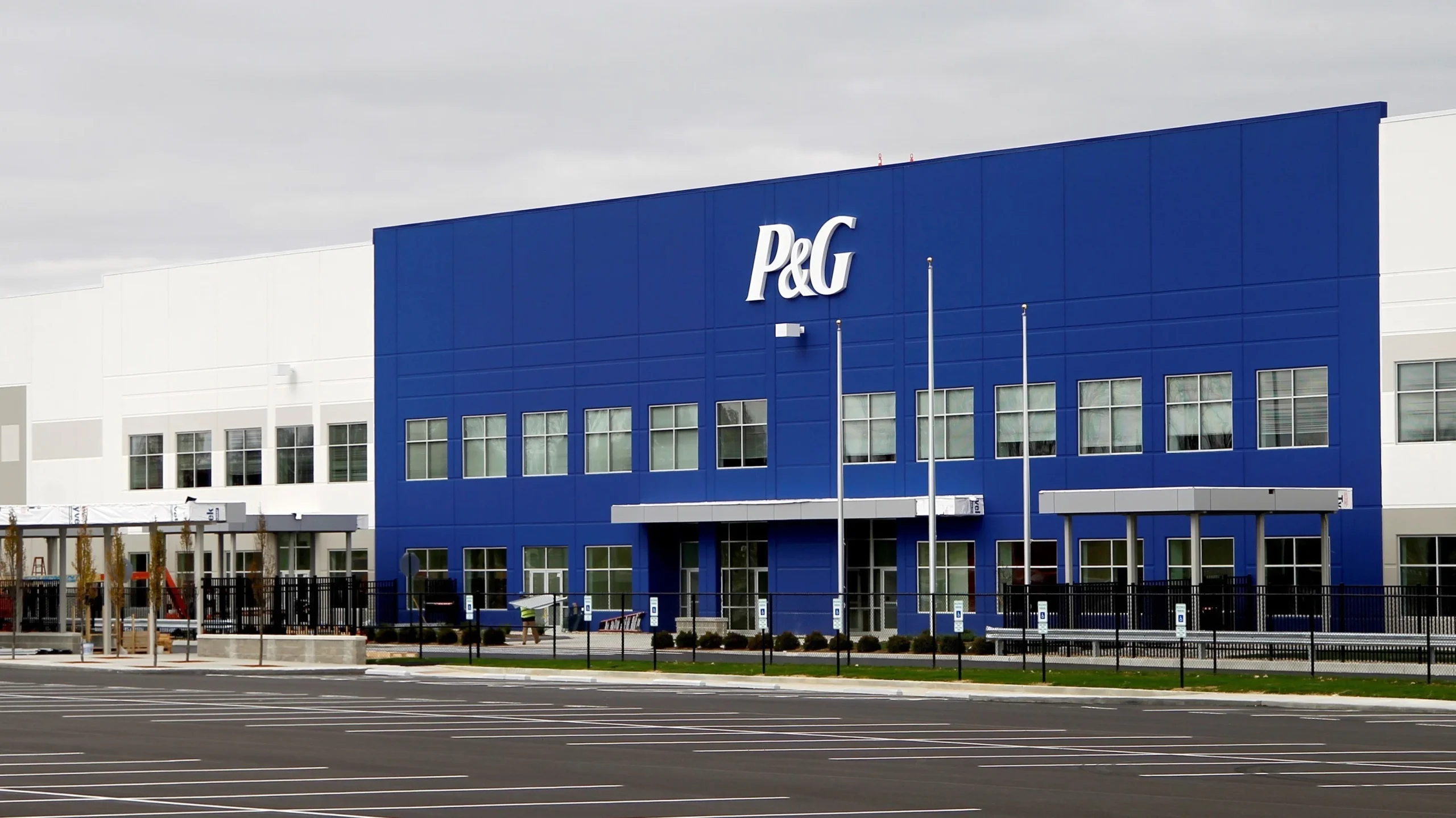
Shailesh G. Jejurikar became Chairman of the Board, President and Chief Executive Officer of Procter & Gamble (P&G) in January 2026, succeeding Jon R. Moeller, who led the American consumer goods giant when it announced plans to discontinue local manufacturing operations in Nigeria in 2023.
Jejurikar has spent more than three decades at P&G, occupying senior positions across North America, Europe, Asia and Africa. His experience covers several of the company’s major businesses, including healthcare, beauty, home care and fabric care.
Before becoming CEO, he served as Chief Operating Officer, overseeing P&G’s enterprise markets across Latin America, India, the Middle East, Africa, Southeast Asia and Eastern Europe.
In December 2023, P&G announced plans to discontinue local manufacturing in Nigeria and transition to an import-focused business model. The decision affected its manufacturing facility in Agbara, Ogun State, which had been commissioned in 2017 as part of the company’s investment in domestic production.
The restructuring came amid foreign exchange volatility, rising production expenses and difficulties obtaining foreign currency, challenges that placed pressure on multinational manufacturers operating in Nigeria.
Although P&G’s decision marked a major change in its Nigerian manufacturing strategy, it did not necessarily mean the company had completely abandoned the Nigerian market. Its planned import-led approach allowed it to continue serving consumers through a different operating model.
9. Tayo Amusan — Shoprite
Tayo Amusan is a Nigerian businessman, property developer and founder of Persianas Group, the investment company that led the acquisition of Shoprite’s Nigerian operations in 2021.
Founded in 1990, Persianas developed a significant presence in Nigeria’s retail property sector. Its investments include The Palms Shopping Mall in Lagos, one of the country’s early modern shopping centres, alongside other commercial real estate developments.
In June 2021, Amusan led a consortium of investors through Ketron Investment Limited to acquire Retail Supermarkets Nigeria Limited, the company operating Shoprite stores in Nigeria, from South Africa’s Shoprite Holdings.
The transaction transferred ownership of approximately 25 outlets to Nigerian investors, while the business continued operating under the Shoprite brand through a franchise arrangement. The financial terms of the acquisition were not disclosed.
Shoprite Holdings’ decision to divest followed a review of its African investments amid foreign exchange difficulties, rising operating costs and other commercial pressures.
However, the locally owned operation subsequently encountered its own challenges, including inflation, higher rental expenses, supply disruptions and currency pressures.
In March 2026, reports emerged that Shoprite had closed several Nigerian outlets, raising questions about the future of the retail brand in the country. However, Retail Supermarkets Nigeria Limited disputed reports of a nationwide shutdown.
Its Chief Strategy Officer, Bunmi Adeleye, told Nairametrics in March 2026 that the business was undergoing restructuring rather than shutting down completely.
Amusan’s inclusion in the story therefore reflects his connection to the Nigerian business that acquired and operated the brand, rather than a conventional multinational withdrawal directly overseen by him.
8. Luke Miels — GSK
Luke Miels became Chief Executive Officer of British pharmaceutical company GSK on January 1, 2026, succeeding Emma Walmsley, who led the company when it announced plans to discontinue direct commercial operations in Nigeria in 2023.
Miels joined GSK in 2017 as Chief Commercial Officer after building a career in the pharmaceutical industry. Before joining the company, he held senior positions at AstraZeneca, including responsibilities covering European operations, product strategy and corporate affairs.
He also worked at Roche and Sanofi-Aventis, gaining experience across several international markets.
In August 2023, GSK announced that it would discontinue its direct commercial operations in Nigeria after more than five decades in the market. The company planned to transition to a third-party distribution model for its medicines and vaccines.
The decision came amid foreign exchange constraints, increasing operating expenses and difficulties associated with maintaining a direct commercial presence in the country.
GSK’s Nigerian subsidiary subsequently began winding down its operations and returning capital to shareholders as part of the transition.
The change was significant because GSK had long been a familiar name in Nigeria’s pharmaceutical sector. However, the move did not automatically mean that every GSK medicine or vaccine would disappear from the country, as the distribution arrangement was intended to preserve market access through third parties.
Miels assumed leadership after the decision and now oversees the company’s global portfolio of vaccines, specialty medicines and general medicines.
7. Ladi Delano and Jide Odunsi — Moove
Ladi Delano and Jide Odunsi are Nigerian entrepreneurs who co-founded Moove in Lagos in 2020 to address vehicle financing challenges faced by commercial drivers.
The company developed a financing model that enabled eligible drivers to access vehicles and make payments through earnings generated from their work. It subsequently expanded beyond Nigeria into international markets.
Delano previously founded Grace Lake Partners, an investment and venture development firm, and worked in the outdoor advertising industry. Odunsi, meanwhile, built professional experience in investment banking at Goldman Sachs and management consulting at McKinsey & Company.
Moove’s growth attracted international investor interest. In August 2026, the company reportedly raised $250 million in Series C funding at a valuation of $2.1 billion.
However, in October 2026, the company announced its withdrawal from Nigeria, marking a major change for a startup that began its journey in Lagos.
According to reports, Moove planned to transfer eligible vehicles worth approximately ₦35 billion to customers at no cost. The company also disclosed that more than 9,000 customers had used its Nigerian services, generating approximately ₦57 billion in revenue through its vehicles.
The development highlighted the difficulties a business can encounter even after attracting substantial investment and expanding internationally.
Moove’s exit also drew attention to the pressures surrounding vehicle financing, operational costs and the economics of ride-hailing services in Nigeria.
Unlike the exits of some multinational manufacturers, Moove’s departure involved a homegrown company whose original market was Nigeria, making the decision particularly significant for the country’s technology and mobility sectors.
6. Dara Khosrowshahi — Uber
Dara Khosrowshahi has served as Chief Executive Officer of Uber Technologies since 2017, overseeing the company’s global ride-hailing and delivery operations.
Born in Iran, Khosrowshahi moved to the United States during childhood and graduated from Brown University with a degree in engineering. He began his career in finance before taking up leadership roles at IAC and later becoming Chief Executive Officer of Expedia, a position he held from 2005 to 2017.
At Uber, he has overseen the company’s evolution into a major global mobility and delivery platform while pursuing improved profitability and operational efficiency.
In September 2026, Uber announced that it would shut down its operations in Nigeria and Uganda following a review of its business performance.
The Nigerian withdrawal ended approximately 12 years of operations. Uber launched in the country in 2014 and became one of the companies that helped popularise app-based ride-hailing services in major cities.
Its platform connected passengers with drivers through mobile applications, changing how many urban residents accessed transportation.
However, the ride-hailing sector has faced mounting pressure from fuel costs, vehicle maintenance expenses, inflation and the financial demands placed on drivers. These challenges have also intensified discussions about commissions, fares and the sustainability of the business model.
Uber’s decision marked a major development for Nigeria’s mobility market, although the company said the move would not affect its operations in other African markets.
Khosrowshahi’s connection to the withdrawal reflects his position as the company’s global CEO when the decision was announced.
5. Sean Summers — Pick n Pay
Sean Summers returned as Chief Executive Officer of South African supermarket group Pick n Pay in 2023, having previously led the retailer between 1999 and 2007.
His career at the company spans several decades and includes senior responsibilities in retail operations, corporate strategy and business development.
Summers returned to the role at a time when Pick n Pay was facing financial pressure and implementing a turnaround strategy intended to improve profitability and strengthen its core business.
In October 2024, the retailer announced plans to leave Nigeria by selling its 51% stake in a joint venture with A.G. Leventis.
Pick n Pay had entered the Nigerian market through a partnership established in 2016. It opened its first Nigerian store in 2021 and eventually operated two outlets.
The decision formed part of a broader restructuring programme under Summers, as the company sought to redirect resources towards its domestic operations and improve its financial position.
Unlike a business that closes its factories or terminates all local activity, Pick n Pay’s withdrawal involved the sale of its investment in a Nigerian retail joint venture.
The move nevertheless reflected the difficulties international retailers can encounter when entering a market with high operating expenses, complex supply chains and changing consumer purchasing power.
For Nigeria, the departure was another example of a foreign retail brand reassessing the viability of its local investment.
4. Mike Hsu — Kimberly-Clark
Mike Hsu served as Chief Executive Officer of Kimberly-Clark, the American consumer goods company behind internationally recognised brands including Huggies, Kotex and Kleenex.
He became CEO in 2019 after holding senior positions at the company, including President and Chief Operating Officer. Before joining Kimberly-Clark, he worked at Kraft Foods and H.J. Heinz, building experience in consumer products, marketing and corporate management.
During his tenure, Kimberly-Clark pursued restructuring initiatives intended to improve efficiency and strengthen its international business portfolio.
In 2024, the company announced plans to close its manufacturing facility and commercial office in Lagos, bringing its direct manufacturing and commercial presence in Nigeria to an end after nearly 15 years.
The company had reportedly invested approximately $100 million in a Nigerian manufacturing facility to support local production.
The closure represented a significant shift for a business whose products served consumers in the personal care and hygiene markets.
Manufacturing operations in Nigeria can require substantial spending on raw materials, energy, logistics and distribution. When these costs rise alongside foreign exchange pressures, companies may reassess whether local production remains commercially sustainable.
Kimberly-Clark’s decision therefore became another prominent example of a multinational consumer goods company changing its approach to the Nigerian market.
Hsu is associated with the decision because he was the company’s chief executive during the period in which the withdrawal was announced.
3. Anders Opedal — Equinor
Anders Opedal became President and Chief Executive Officer of Norwegian energy company Equinor in November 2020.
He joined the company in 1997 and progressed through technical and managerial roles before becoming CEO. His previous responsibilities included serving as Chief Operating Officer and Executive Vice President for Technology, Projects and Drilling.
Opedal also had experience with international oilfield services companies before joining Equinor.
Under his leadership, the company announced plans in November 2023 to sell its Nigerian business to Chappal Energies, bringing its long-standing direct investment in Nigeria’s upstream petroleum industry towards an end.
The transaction was completed in December 2024 and was valued at up to $1.2 billion, including an initial purchase price of $710 million and additional contingent payments.
The assets transferred included Equinor’s interests in Oil Mining Lease 128 and the Agbami oil field.
Unlike the exits of companies that shut down their operations, Equinor’s departure involved the sale of its Nigerian assets to another energy company. The transaction transferred ownership rather than simply ending production activities.
The move formed part of the changing investment landscape in Nigeria’s oil and gas sector, where international energy companies have reassessed portfolios, capital allocation and exposure to individual assets.
Equinor’s exit was notable because the company had operated in Nigeria for more than three decades, making the transaction a major development in the country’s upstream petroleum industry.
2. Richard Teng — Binance
Richard Teng became Chief Executive Officer of Binance in November 2023, succeeding co-founder Changpeng Zhao at the helm of one of the world’s largest cryptocurrency exchanges.
Teng brings extensive experience in financial regulation, capital markets and digital assets. Before joining Binance, he served as Chief Executive Officer of the Financial Services Regulatory Authority at Abu Dhabi Global Market and held senior positions at the Singapore Exchange and the Monetary Authority of Singapore.
He joined Binance in 2021 and subsequently took responsibility for the exchange’s global operations.
In March 2024, Binance announced that it would discontinue services involving the Nigerian naira amid increased regulatory scrutiny of cryptocurrency exchanges in the country.
The company removed naira trading pairs, stopped naira deposits and withdrawals, and converted remaining naira balances into USDT, a cryptocurrency designed to track the value of the US dollar.
The decision followed tensions between Nigerian authorities and cryptocurrency platforms over foreign exchange movements, regulatory compliance and the role of digital asset trading in the currency market.
However, the withdrawal of naira-related services should be distinguished from a complete exit by Binance from every aspect of the Nigerian market. The change specifically concerned its Nigerian naira services and reflected the regulatory challenges surrounding cryptocurrency operations.
The episode highlighted the growing friction between digital asset platforms and national authorities as governments seek to establish clearer rules for cryptocurrency trading.
Teng’s inclusion reflects his role as Binance CEO during the period when the company discontinued its naira services.
1. Miles van Rensburg — Massmart/Game Stores
Miles van Rensburg is a South African business executive who became Chief Executive Officer of Massmart in March 2025. Massmart is the retail group behind Game Stores, which withdrew from Nigeria in December 2022 after approximately 17 years of operations.
Although van Rensburg now leads Massmart, Mitchell Slape was the company’s CEO when Game Stores’ Nigerian exit was implemented. Slape remained in the position until the end of December 2022.
Van Rensburg brings more than 25 years of experience in the fast-moving consumer goods industry. Before joining Massmart, he held several leadership positions at Coca-Cola across Southern and East Africa, as well as other international markets.
His experience includes serving as Commercial Director for Coca-Cola South Africa and leading the company’s International McDonald’s Division.
Massmart’s decision to withdraw Game Stores from Nigeria followed efforts to dispose of its retail operations across East and West Africa amid mounting losses and operational challenges.
The company had operated five Game Stores in Nigeria and initially sought buyers for its African outlets before announcing plans to discontinue operations in December 2022.
The withdrawal was part of a broader restructuring strategy intended to address the performance of the group’s international operations and strengthen its remaining businesses.
Game Stores had offered Nigerian consumers a range of household goods, electronics and other retail products. Its departure illustrated the challenges faced by large-format retailers attempting to sustain operations in markets with high logistics costs, currency pressures and changing consumer spending patterns.
Van Rensburg’s connection to the exit is through his present leadership of Massmart, rather than direct responsibility for the original 2022 decision.
What These Corporate Exits Mean for Nigeria
The exits and restructuring decisions associated with these 10 executives reveal a range of challenges facing businesses in Nigeria. Foreign exchange volatility, inflation, high operating costs, regulatory uncertainty and changing investment priorities have all featured in discussions surrounding corporate decisions in the country.
However, the cases are not identical. P&G and GSK changed their operating models, while Equinor sold its Nigerian assets. Pick n Pay disposed of its stake in a retail joint venture, and Binance discontinued naira services. Moove and Uber announced withdrawals from the Nigerian market, while reports surrounding Shoprite’s future were disp uted by its local operator.
These distinctions matter because a company selling assets, discontinuing a particular service or shifting to third-party distribution does not necessarily mean that all its products or services disappear from Nigeria.
The developments also raise important questions about investment conditions, domestic production, employment, consumer choice and the ability of Nigerian businesses to attract and retain long-term capital.
For policymakers, the challenge is to create conditions that encourage sustainable investment while ensuring that companies comply with applicable laws and regulations. For business owners, the cases demonstrate the importance of managing currency exposure, controlling costs, understanding local demand and maintaining resilient operating models.
Nigeria remains a large consumer market with significant commercial opportunities. Whether businesses choose to expand, restructure or leave will depend on how they assess those opportunities against the costs and risks of operating in the country.
Visit www.rapidospace.com for more Nigerian business, finance, technology and economic news.


