


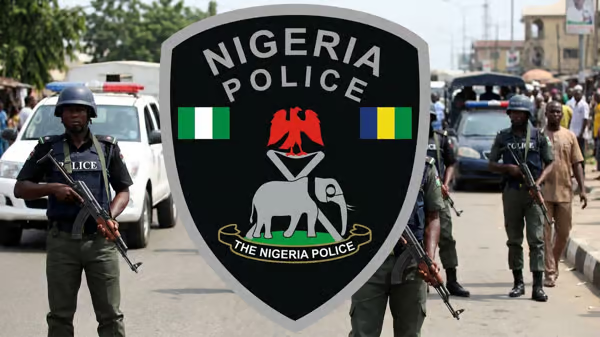
Nigeria has taken a significant legislative step towards establishing state police, following the approval of a proposed constitutional amendment by 24 of the country’s 36 State Houses of Assembly.
The Chief of Staff to President Bola Tinubu and Chairman of the Presidential Working Group on the National Policing Bill, Femi Gbajabiamila, disclosed this on Friday, October 23, 2026, saying the approvals have met the constitutional threshold required for the amendment.
The proposed Constitution (Sixth Alteration) Bill, 2026, seeks to establish a dual policing system comprising the Federal Police Service and state police services.
According to a statement issued by the Presidential Working Group, the approval by 24 state legislatures satisfies the two-thirds requirement for constitutional alteration under Section 9 of the 1999 Constitution, as amended.
The development could pave the way for the amendment to be returned to the National Assembly for transmission to President Tinubu for assent, subject to the completion of the required legislative and constitutional procedures.
The approval represents a major development in the legislative process to introduce state policing in Nigeria, where security responsibilities have largely been concentrated within the federal policing structure.
The Presidential Working Group commended the 24 State Houses of Assembly for approving the amendment and also acknowledged the National Assembly for passing the bill through both chambers.
The statement said the amendment could now proceed to the next stage of the constitutional process.
The proposed framework is intended to provide constitutional backing for a policing system that would accommodate both federal and state police services.
Supporters of state police have long argued that decentralising aspects of policing could improve local security responses, strengthen intelligence gathering and enable law enforcement to respond more effectively to community-specific challenges.
However, the implementation of state policing will also require clear constitutional provisions, operational guidelines, funding arrangements and safeguards against potential political interference and abuse of power.
Alongside the constitutional amendment, the Presidential Working Group said the draft National Policing Bill, 2026, was undergoing legislative drafting review and validation at the Federal Ministry of Justice.
The group expects the bills to be returned on or before Friday, October 30, 2026.
Following the review, the working group is expected to give the draft legislation its final consideration before presenting it to President Tinubu.
The proposed National Policing Bill is expected to provide the legislative framework for the dual policing structure, including provisions governing the establishment and operation of state police services.
The details of the final bill will be important in determining how responsibilities will be shared between federal and state authorities, as well as the standards for recruitment, training, accountability and inter-agency cooperation.
The National Assembly transmitted the Constitution (Sixth Alteration) Bill, 2026, to the 36 State Houses of Assembly on September 16, 2026, for consideration and approval.
According to previous reports, the state legislatures were given an expected administrative timeframe of 30 days to communicate their decisions.
On October 9, Senate Committee on Media and Public Affairs Chairman Yemi Adaramodu expressed confidence that the amendment would secure the required support, disclosing at the time that Edo, Oyo, Osun and Rivers had approved it.
A PUNCH report published on October 16 stated that five state assemblies — Edo, Osun, Oyo, Rivers and Zamfara — had approved the amendment.
By October 21, five additional assemblies — Ogun, Delta, Plateau, Kwara and Adamawa — had reportedly approved the proposal, bringing the number of approving states to 10.
The latest announcement by Gbajabiamila puts the total at 24 state assemblies, meeting the required constitutional threshold.
The proposed dual policing arrangement is expected to create a framework in which federal and state police services operate within their respective constitutional and legal responsibilities.
The initiative comes amid persistent security challenges across different parts of Nigeria, including kidnapping, armed robbery, banditry, communal violence and other criminal activities.
Advocates of state policing believe locally organised police services could improve community intelligence and shorten response times, particularly in areas where residents face security threats requiring rapid intervention.
Nevertheless, the effectiveness of the proposed system will depend on how it is structured and implemented.
Important issues include the independence of police operations, protection of citizens’ rights, funding, professional standards, coordination between federal and state commands, and mechanisms for investigating misconduct.
There will also be a need to establish safeguards that prevent the misuse of state police institutions for political purposes or the intimidation of opponents.
The final constitutional provisions and the National Policing Bill are therefore expected to play a critical role in shaping the new policing arrangement.
The Presidential Working Group urged stakeholders to support what it described as a smooth transition towards a dual policing system aimed at improving public safety.
With the required state assembly approvals reportedly secured, attention is expected to shift to the remaining constitutional procedures and the completion of the accompanying legislative framework.
The development marks an important stage in Nigeria’s ongoing debate over police reform and the future structure of its security institutions.