


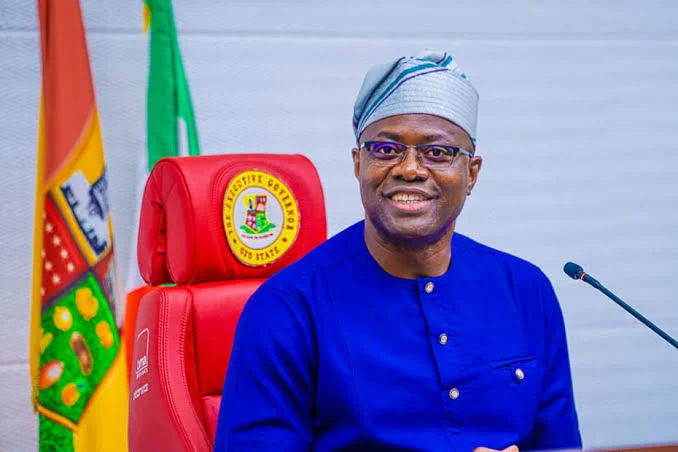
ABUJA: Oyo State Governor and Allied Peoples Movement presidential candidate, Seyi Makinde, has rejected calls to restore fuel subsidy, proposing instead a domestic crude pricing policy that he says could help reduce petrol costs for Nigerians.
Makinde made the proposal on Monday while speaking at the commissioning of the APM presidential campaign office in Abuja, where he presented his Reset Nigeria agenda ahead of the 2027 presidential election.
The governor stressed that his proposal should not be confused with a return to the former petrol subsidy regime.
Instead, he wants crude produced in Nigeria and supplied to domestic refineries to be priced in a way that recognises Nigeria’s status as an oil-producing country.
His position comes amid renewed debate over petrol pricing ahead of the 2027 election.
President Bola Tinubu announced the removal of fuel subsidy during his inauguration on May 29, 2023. The decision led to a sharp increase in petrol prices and contributed to higher transportation and living costs across the country.
Although the Federal Government has defended subsidy removal as a necessary economic reform, the policy remains politically contentious.
Former Vice-President Atiku Abubakar, who campaigned in 2023 on a promise to remove the subsidy, has now proposed restoring it if elected president, arguing that the measure would ease the burden of high fuel prices on Nigerians.
Makinde, however, believes there is another way to make petrol more affordable without returning to the old subsidy system.
The APM candidate questioned why Nigerian crude supplied to refineries within the country should be priced as though the crude had been imported from abroad.
He argued that Nigeria’s status as an oil-producing nation should provide a direct and measurable benefit to its citizens.
We are opening another door for Nigerians to join the conversation about the future of our country. A conversation about what must change. A conversation about how we can make Nigeria work for every Nigerian. That is what Reset Nigeria is about,” Makinde said.
Explaining his position, he compared the pricing of domestic crude with food produced within a community.
If a community grows food, the people of that community should not have to buy that food as though it travelled halfway around the world before reaching them,” he said.
Makinde then questioned why crude oil supplied to Nigerian refineries should be priced as though Nigeria does not produce crude oil.
According to him, the benefit of Nigeria’s oil resources should be incorporated into the petroleum pricing structure from the outset.
That benefit should be built into the system from the beginning, through the price at which crude oil is supplied for domestic refining, not through an opaque intervention at the petrol pump after all the costs, inefficiencies and distortions have been added,” he said.
The governor said Nigerians should have access to clear information about how the final price of petrol is determined.
He called for transparency across the entire petroleum value chain, including crude production, domestic crude allocation, refining, transportation, distribution, taxes and retail margins.
Nigerians must be able to see how the final price is reached,” Makinde said.
He argued that citizens should know what they are paying for, who receives the money and where inefficiencies are contributing to higher prices.
For Makinde, transparency is a central component of the Reset Nigeria agenda.
He said the government should be able to explain how major decisions are made, how public resources are spent and who benefits from them.
It means that we stop accepting systems that nobody can explain. It means that government must show its workings,” he said.
Makinde added that the ultimate objective should be to ensure that growth in Nigeria’s natural-resource wealth translates into improved living standards.
It means that when Nigeria’s wealth grows, the lives of Nigerians must also improve,” he said.
The Oyo governor also addressed those who have dismissed his presidential ambition as unlikely to make a significant impact in the 2027 election.
Makinde recalled that similar doubts surrounded his first attempt to become governor of Oyo State, when established political forces were widely considered difficult to defeat.
According to him, voters ultimately proved the sceptics wrong.
He said those dismissing his presidential campaign were also underestimating millions of Nigerians who want better governance and a more accountable political system.
Makinde identified traders, farmers, workers, young Nigerians and small-business owners among those affected by rising transportation and energy costs.
But we count. Our voices count. Our experiences count. Our ideas count. And, together, our votes will count, he said.
Makinde said his Reset Nigeria campaign should not be limited to politicians and political organisations.
He called on Nigerians to participate in the conversation by asking questions, challenging policies, contributing ideas and organising within their communities.
We want to hear from the trader who struggles whenever transport costs rise,” he said.
He also highlighted the difficulties facing farmers trying to move produce to markets, businesses dealing with rising operating costs and young Nigerians struggling to see a clear path to economic opportunity.
This office belongs to that conversation. Its doors are open to Nigerians who believe that our country can work better than it does today,” Makinde said.
He urged Nigerians to join the Reset Nigeria movement and become “Resetters”.
They may discount one candidate. But they cannot discount millions of Nigerians united behind a better future, he said.
Makinde concluded by calling for a Nigeria where government is transparent, leadership is accountable and the country’s natural resources are used to improve the lives of its citizens.