


Despite spending N57.78 billion on security operations and related projects within the first four months of 2026, Nigeria continues to grapple with worsening insecurity, with a police report revealing that at least 98 criminal incidents, including 51 attacks and abductions, were recorded across the country in just one week.
Figures obtained from the Open Treasury Portal showed that the Federal Government increased security spending by 127.97 per cent compared to the N25.35 billion spent during the same period in 2025. The funds covered defence equipment procurement, security infrastructure, military barracks, police facilities and other security-related projects.
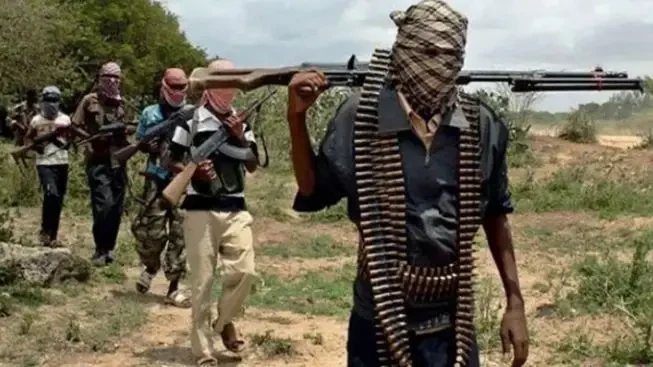
However, the increased expenditure has done little to stem the tide of attacks by terrorists, bandits, kidnappers and other armed groups operating in several parts of the country, prompting fresh concerns from security experts over the effectiveness of current strategies.
An analysis of the Treasury Portal data revealed that only N57.78 billion had been spent as of April out of the total N4.66 trillion allocated to security in the 2026 budget, representing just 1.24 per cent implementation within the first four months of the year.
The largest chunk of the expenditure, amounting to N21.39 billion, went into the procurement of defence equipment, accounting for about 37 per cent of the total security spending. Another N14.16 billion was spent on security equipment, while N5.84 billion was used for the construction and provision of military barracks.
The government also spent N5.17 billion on police stations and barracks, N3.26 billion on the rehabilitation of defence equipment, N2.39 billion on defence facilities and N2.16 billion on repairs of military barracks. Routine security services received N3 billion, while N320.94 million was disbursed as security votes.
Interestingly, no expenditure was recorded under the military operations budget line tagged “Operation Lafiya Dole and Other Operations of the Armed Forces,” despite a provision of N500 million in the 2026 budget. Similarly, no money had been released for the kitting of armed forces personnel even though N2.53 billion was earmarked for the programme.
Compared to 2025, spending on defence equipment rose from N9.48 billion to N21.39 billion, while military barracks construction increased from zero allocation to N5.84 billion. Nevertheless, implementation across several critical projects remained below three per cent.
The spending figures came as a police security report indicated that at least 98 criminal incidents occurred nationwide in the last seven days. These included 37 homicide cases, 27 banditry attacks, 24 kidnappings, eight armed robbery incidents and two terrorism-related attacks.
The incidents were reported across Kaduna, Katsina, Zamfara, Kebbi and other states, with many involving attacks on communities, mass abductions and kidnappings along highways.
One of the most disturbing incidents occurred in Zamfara State, where 39 residents were abducted after reportedly entering the Fadama Forest to negotiate peace with notorious bandit leader Jimo Smally.
In Katsina State, armed bandits blocked the Katsina-Kankara highway and attacked a commercial vehicle carrying 11 passengers. Security operatives later rescued nine of the victims, while the driver and another passenger remained missing.
Reacting to the worsening situation, security analyst Lekan Jackson-Ojo described the current state of insecurity as unprecedented in Nigeria’s history.
According to him, the country has become unsafe, warning that no economy can thrive amid widespread insecurity. He also lamented the loss of senior military officers in recent months and criticised the policy of reintegrating repentant terrorists into society, describing it as a sign that authorities lack the political will needed to tackle the crisis.
Jackson-Ojo further accused political leaders of focusing more on campaigns and electoral calculations than addressing the security challenges confronting citizens.
Another security expert, Chidi Omeje, argued that the military remained overstretched despite increased funding.
He noted that security operations are expensive, adding that the amount spent by the government translates to little when converted to dollars and compared to the cost of military hardware and air operations.
Omeje maintained that military force alone cannot solve Nigeria’s security problems, insisting that corruption, poor governance, poverty and wrong priorities are among the root causes fueling criminality.
He also blamed porous borders and instability across the Sahel region, noting that countries such as Mali and Burkina Faso have become breeding grounds for terrorism, making Nigeria an attractive destination for armed groups.
According to him, the government appears to be struggling to find lasting solutions, stressing that leaders must take decisive action to reverse the worsening situation.
The latest figures underscore the growing concerns over Nigeria’s security crisis, as attacks continue to spread despite increased government spending and the availability of trillions of naira allocated for the sector.