

Tuesday, July 28, 2026
HomeNewsVideo of Muslim Single Women Praying for Future Husbands Sparks Mixed Reactions...

Video of Muslim Single Women Praying for Future Husbands Sparks Mixed Reactions Online

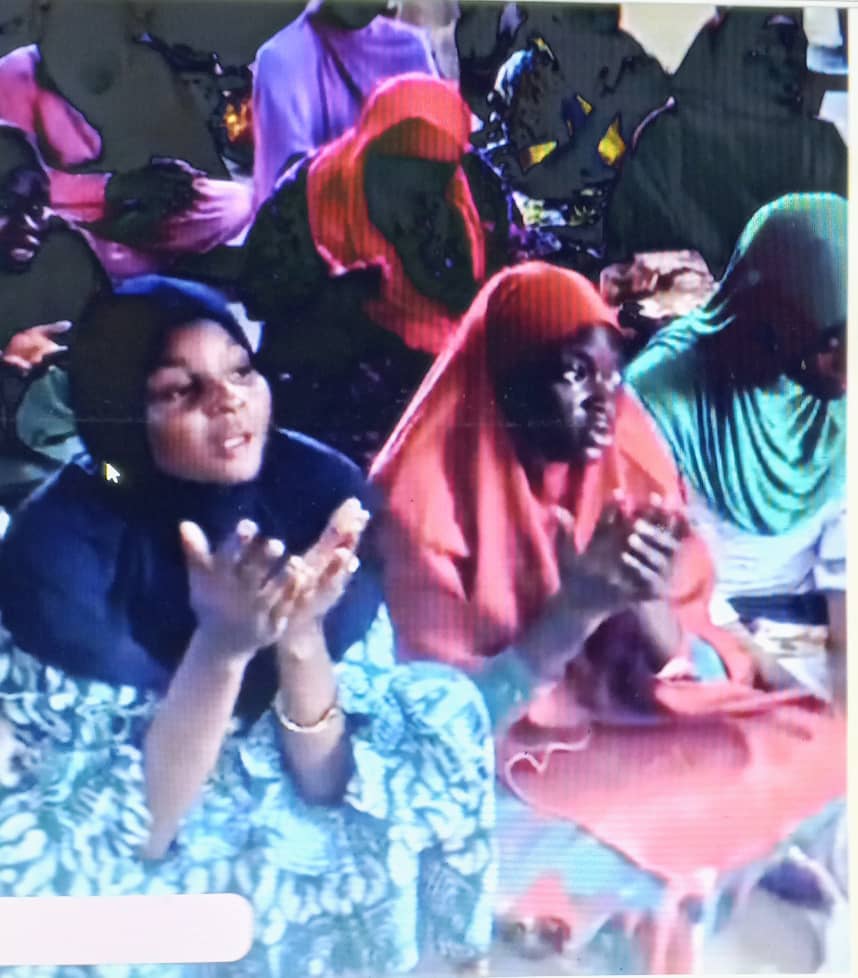
A video showing a group of Muslim single women gathered in prayer for their future husbands has gone viral on social media, generating widespread reactions and debate among internet users.

The clip, which has attracted significant attention across multiple platforms, captures the women passionately praying for God to bless them with righteous husbands and successful marriages.

During the prayer session, the women asked God to guide their future spouses to them, protect their marriages from separation, and grant them peaceful relationships with their in-laws after marriage.

The heartfelt prayers reflected hopes shared by many single women seeking stable and fulfilling marriages, with participants expressing faith that divine intervention would lead them to suitable life partners.

Following the video’s circulation online, social media users offered mixed opinions.

While some viewers praised the women for turning to prayer and seeking God’s guidance in choosing life partners, others responded with humour, sarcasm, and criticism.

Supporters argued that praying for a successful marriage is consistent with religious teachings and reflects the importance many people place on family life and spiritual preparation before marriage.

Others, however, questioned the trend, suggesting that personal development and compatibility should receive equal attention alongside prayer.

Several comments posted beneath the video reflected the differing opinions.

Some users jokingly remarked that the husband matter has reached prayer point,” while others made light-hearted observations about modern dating and marriage.

A few commenters were critical, while others defended the women, saying there is nothing unusual about praying for a happy marriage or asking God for wisdom in choosing a spouse

Across many religious communities, including Islam and Christianity, prayers for a future spouse are common, particularly among unmarried adults seeking lifelong partners.

Religious scholars often encourage believers to combine prayer with good character, patience, and responsible decision-making when preparing for marriage.

The viral video has therefore reignited discussions about the role of faith, family values, and spirituality in modern relationships, as well as the increasing use of social media to share religious gatherings and personal expressions of faith.

Although opinions remain divided, the clip continues to attract thousands of views, comments, and shares, with many users engaging in broader conversations about marriage expectations, religious devotion, and the evolving dynamics of relationships in contemporary society.


Previous article
Next article
FESTAC Residents Give EKEDC 48-Hour Ultimatum Over Eight-Month Blackout, Estimated Billing Protesters Storm EKEDC Headquarters, Demand Immediate Power Restoration and End to Estimated Billing Residents of FESTAC Town in Lagos have issued a 48-hour ultimatum to the Eko Electricity Distribution Company (EKEDC) to restore electricity to the estate or face mass action, following more than eight months of erratic power supply, persistent estimated billing, and what they described as the collapse of businesses and economic activities in the community. The ultimatum was announced on Tuesday during a peaceful protest organized by the residents under the umbrella of Take Back FESTAC, who marched to EKEDC’s headquarters in Marina, Lagos, to express their frustration over the prolonged electricity crisis. The protesters accused the electricity distribution company of repeatedly failing to fulfill promises to restore stable power supply despite several engagements and assurances that electricity would improve after the completion of a transmission project. “Our People Can No Longer Live in Darkness” Addressing journalists during the demonstration, President and Convener of Take Back FESTAC and General Secretary of Take Back Nigeria, Comrade Valentine Uduebor, said the protest reflected the growing frustration among residents. According to him, the electricity crisis has crippled daily life and economic activities across the estate. “This protest is not about me; it is about the frustration of my people. We have suffered enough. We have come all the way from FESTAC because our people can no longer continue to live in darkness,” he said. Uduebor disclosed that he had invested in a solar power system years ago, which powers essential appliances in his home. He explained that he purchased a prepaid electricity token worth ₦40,000 over a year ago and has not needed another because there has been virtually no electricity to consume. Questioning EKEDC’s operations, he asked how the company continues to generate revenue and pay salaries when consumers receive little or no electricity. He also appealed to President Bola Tinubu to intervene, alleging that bureaucratic bottlenecks and poor management within the power sector were undermining the Federal Government’s efforts to improve electricity supply nationwide. Residents Say EKEDC Failed to Keep Its Promise According to Uduebor, residents had previously agreed to wait after EKEDC requested five months to complete projects expected to improve electricity supply. However, he said the deadline expired without any noticeable improvement. “They told us to give them five months. We agreed because we believed them. Those five months have come and gone, yet our people remain in darkness.” He warned that if electricity is not restored within 48 hours, community leaders would no longer be able to restrain residents from taking further action. He added that the prolonged blackout has resulted in widespread hardship, depression, loss of livelihoods, and even the reported death of a young resident, while businesses such as barber shops, salons, and other small enterprises continue to struggle despite receiving electricity bills. Businesses and Households Count Heavy Losses Vice President of the group, Chief James Ibeka, described the power situation in FESTAC as a complete collapse. He said residents sometimes go for three consecutive months without receiving up to two hours of electricity in total. According to him, the blackout has significantly increased the cost of living, affecting healthcare, food preservation, education, and commercial activities. He noted that many residents now spend thousands of naira daily on petrol to power generators. “People now buy fuel at about ₦1,300 per litre to run generators in their homes, hospitals, shops, and markets. Some families spend at least ₦10,000 every day just to keep generators running.” Ibeka lamented that elderly residents and families have endured months of sleepless nights because of the lack of electricity. Calls for Prepaid Meters Intensify The group’s Public Relations Officer, Nathaniel Ussi, criticized the continued use of estimated billing, arguing that consumers are being forced to pay for electricity they do not receive. He urged EKEDC to accelerate the distribution of prepaid meters across the estate. “Most businesses have closed because there is no electricity. People now depend on generators, but fuel is very expensive. Even hospitals are finding it difficult to care for patients because there is no stable power supply,” he said. He stressed that residents simply want reliable electricity and a return to the glory of FESTAC, one of Nigeria’s most prominent housing estates established in 1977. Doctors Raise Alarm Over Healthcare Risks Medical practitioner Dr. Dumebi Owa described the prolonged blackout as a serious threat to healthcare delivery. She said hospitals depend on stable electricity to operate life-saving equipment and perform surgeries safely. According to her, the situation is frustrating economic growth because businesses cannot survive without reliable power. She further accused electricity providers of benefiting from estimated billing at the expense of consumers. “We are paying for electricity we never consumed. It is sad that in the 21st century we are still struggling over electricity.” Residents Decry Estimated Billing Another protester, identified simply as Michael, a resident of 41 Road, alleged that consumers without prepaid meters continue to receive monthly bills despite having little or no electricity. He said he pays approximately ₦15,000 every month under estimated billing, with unpaid balances accumulating regardless of electricity supply. His appeal was straightforward: “Give us prepaid meters. If we have prepaid meters, we will pay for what we consume.” EKEDC Yet to Respond Publicly Following the protest, five representatives of the residents were invited into EKEDC’s office for discussions with management. However, company officials did not address journalists after the meeting, leaving residents waiting to see whether their demands will be met before the expiration of the 48-hour ultimatum. SEO Keyword

Most Popular