


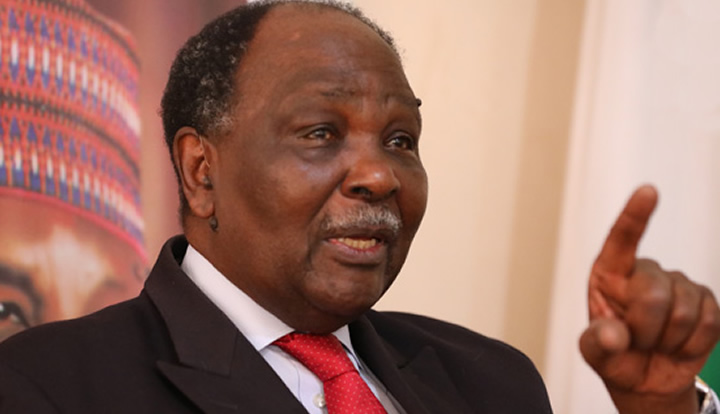
Former Nigerian Head of State, Yakubu Gowon, has disclosed that the refusal of the United States and the United Kingdom to supply arms to Nigeria during the civil war pushed his government to seek military assistance from the Soviet Union and a Lebanese arms dealer operating on the black market.
The revelations are contained in Chapter Fifteen of Gowon’s autobiography, My Life of Duty and Allegiance, unveiled in Abuja on Tuesday, where President Bola Tinubu was represented by Vice President Kashim Shettima.
According to Gowon, Nigeria’s ammunition reserves had fallen dangerously low by late 1968, leaving the military unable to sustain operations during the civil war, which lasted from July 1967 to January 1970.
He explained that international restrictions prevented Western allies from supplying military equipment to Nigeria at a critical stage of the conflict.
The former military leader said the shortage forced him to halt the advance of federal troops after the capture of Enugu, citing insufficient ammunition to continue military operations safely.
Gowon expressed disappointment with both Britain and the United States, particularly at a time when the United States was heavily engaged militarily in Vietnam and Cambodia.
He recounted holding what he described as one of the most important meetings of the war with British and American diplomats, during which he made it clear that he would seek support from any willing source to preserve Nigeria’s unity.
I will go to any devil to get what I need to deal with the problem,” Gowon recalled telling the diplomats after they failed to offer assistance.
Following the unsuccessful meeting, Gowon said he instructed his Principal Secretary, Hamza Ahmadu, to open discussions with Soviet Ambassador Aleksandr Romanov at Dodan Barracks.
A delegation led by former Information Commissioner Anthony Enahoro was subsequently dispatched to Moscow to negotiate military assistance.
According to Gowon, the Soviet Union supplied Nigeria with MiG-15 trainer aircraft and MiG-17 bombers, a move he said significantly improved the war effort and strengthened diplomatic ties between both countries after the conflict.
The former Head of State also revealed that beyond Soviet support, a Lebanese businessman, Ali Jamal, played a crucial role in securing ammunition and military hardware for Nigeria.
Gowon described Jamal as a committed supporter of Nigeria who agreed to finance the purchase of weapons with his own funds, requesting repayment later without interest.
He said the arrangement initially faced resistance at the Federal Executive Council after then Finance Commissioner Obafemi Awolowo objected to the payments on grounds that due process had not been followed and the spending was outside approved budgetary provisions.
Gowon admitted that the disagreement led to a heated exchange, during which he invoked his powers as Head of State to authorise the payments in order to sustain the war effort.
Despite the disagreement, he said he appreciated the insistence of his cabinet members on accountability and due process, adding that Jamal was eventually paid in full.
The 859-page autobiography chronicles Gowon’s early life in Plateau State, his military career, the Nigerian Civil War, his overthrow in 1975, and his years in exile and academic pursuits.


