

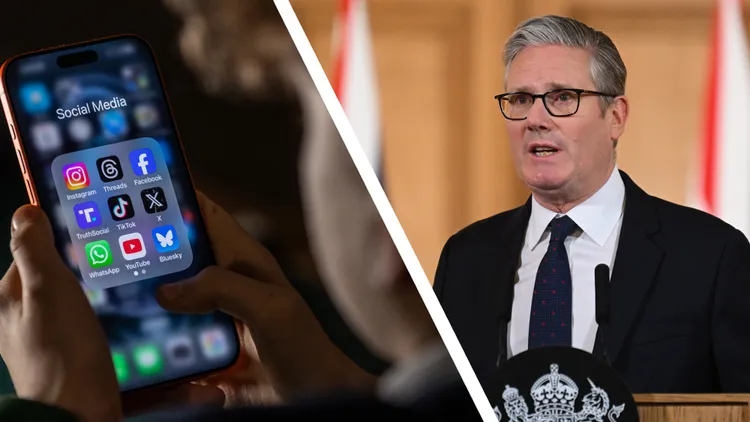
UK social media ban, TikTok restrictions, and online safety for children are at the center of a major policy shift after Prime Minister Keir Starmer announced plans to prevent children under 16 from accessing popular social media platforms.
The proposed legislation, expected to be presented to Parliament before Christmas, could come into force in spring 2027. If approved, the United Kingdom would join Australia in introducing one of the world’s toughest social media restrictions for teenagersAccording to the UK government, the proposed ban would apply to major platforms including:
- TikTok
- Snapchat
- YouTube
- X (formerly Twitter)
Messaging apps such as WhatsApp and Signal are expected to remain exempt from the restrictions.
The government also plans to impose stricter rules on AI chatbot services, particularly those featuring romantic or intimate interactions, with a minimum age requirement of 18.
Keir Starmer said the new measures are aimed at “giving children their childhood back.” The government argues that social media platforms are designed to encourage excessive screen time and expose young users to harmful content and online predators.
Officials claim that nine out of ten parents support stronger online protections for children. More than 116,000 submissions from parents, experts and young people were reportedly considered before the announcement.
The UK is adopting what officials describe as an “Australia Plus” model, which includes additional safeguards such as restrictions on livestreaming and preventing strangers from communicating with children online.
The country’s communications regulator, Ofcom, will determine the methods used to verify users’ ages.
Possible verification systems include:
- Passport checks
- Driver’s licences
- Bank card information
- Facial recognition technology
- Digital identification systems
The government says it will introduce stronger age assurance measures than those used in Australia to make it harder for children to bypass restrictions.
Not everyone supports the proposed ban.
Professor Denis Mareschal, director of the Centre for Brain and Cognitive Development at Birkbeck College, said there is very little scientific evidence proving social media directly harms children’s brains.
Professor Sarah-Jayne Blakemore of the University of Cambridge similarly argued that research linking social media use to changes in adolescent brain development remains limited.
Professor David Ellis of the University of Bath warned that the policy is driven more by public concerns than scientific evidence. He argued that the ban could push teenagers toward less regulated parts of the internet while reducing pressure on tech companies to make their platforms safer.
A recent YouGov survey found that 77 percent of parents with children under 18 support the proposed social media ban. However, only 45 percent believe the restrictions will effectively prevent young people from accessing social media.
Critics, including Reform UK leader Nigel Farage, argue that widespread use of VPN services could make the ban difficult to enforce.
While welcoming efforts to improve online safety, groups such as the NSPCC and the Molly Rose Foundation have warned that a blanket ban could leave some vulnerable young people isolated.
They argue that disabled teenagers and LGBTQIA youths often rely on social media communities for support and connection. Campaigners are calling for increased investment in youth services, creative activities and offline support systems to complement any restrictions.
Children’s Commissioner Dame Rachel de Souza wants protections extended to everyone under 18. Future measures being considered include limits on addictive infinite scrolling, overnight curfews and restrictions on harmful features across gaming platforms and other digital services.
More details are expected in July, but for now, the UK’s proposed social media ban represents one of the most ambitious attempts yet to regulate children’s access to digital platforms.
If passed, the new rules could fundamentally reshape how young people use TikTok, Instagram, YouTube and other social media services across the country.