


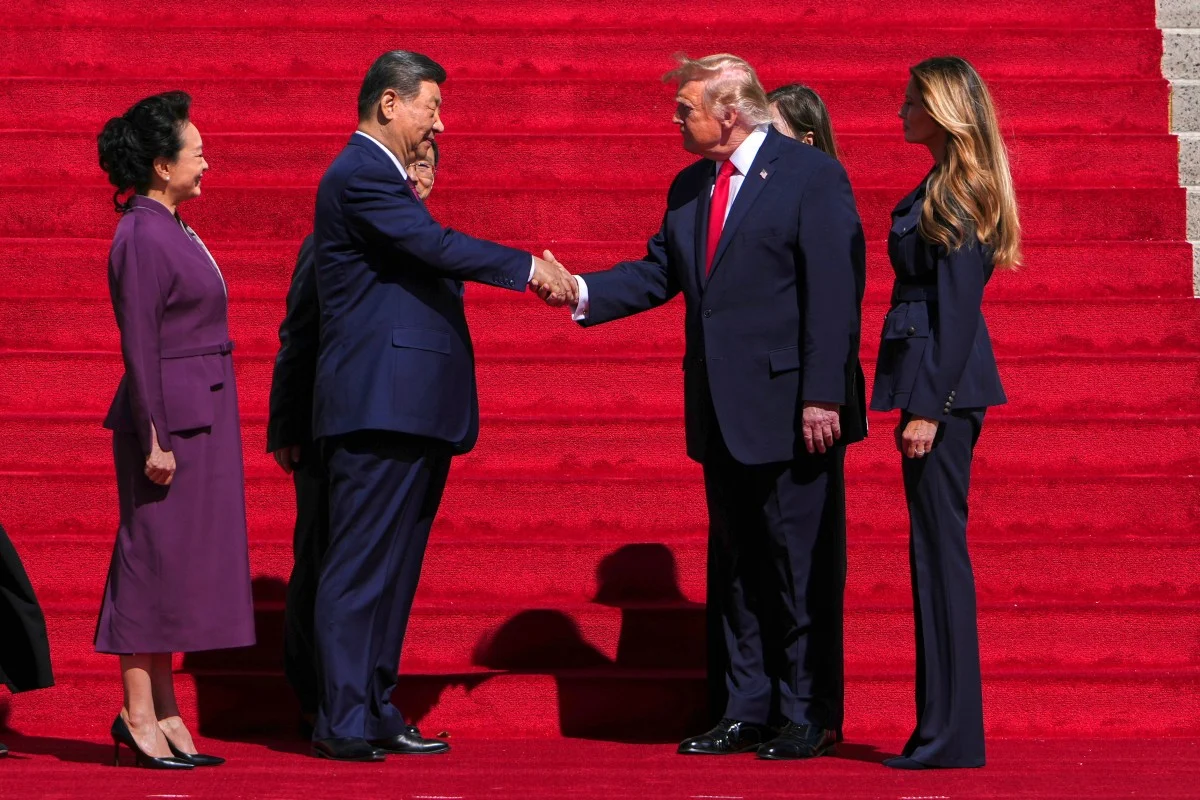
Chinese President Xi Jinping is expected to approach his planned November meeting with U.S. President Donald Trump with greater diplomatic leverage following their latest summit in Washington and an apparent easing of tensions between the world’s two largest economies.
Trump is expected to travel to Shenzhen, China, in November for the Asia-Pacific Economic Cooperation (APEC) Economic Leaders’ Meeting, setting up another face-to-face encounter with Xi.
Experts cited by the South China Morning Post identified three factors they believe could strengthen Beijing’s position at the APEC forum: China’s role as host, the recent improvement in the tone of U.S.-China relations and an upgraded bilateral framework focused on what both sides described as a more stable relationship.
Unlike the recent summit in Washington, where the United States controlled the setting and much of the choreography, the APEC meeting will give Beijing greater influence over the agenda and preparations.
Chen Qi, director of the Centre for US-China Relations at Tsinghua University, said China would have significantly greater autonomy over agenda-setting, topic selection and preparatory arrangements as the host.
He also said the multilateral environment would provide Beijing with an opportunity to demonstrate its diplomatic influence and leadership before other Asia-Pacific economies.
The setting could therefore give Xi a broader platform for engaging not only with Trump but also with U.S. allies and other regional powers.
The latest Washington summit was marked by warmer public exchanges between the two leaders.
During Xi’s three-day state visit, Trump described the relationship as developing into a “great friendship”, while Xi used the imagery of a “river that never stops flowing” as he spoke about the two countries working to steer their relationship forward.
Experts said the unusually frequent meetings between the two presidents could contribute to a period of greater stability in bilateral relations.
The two leaders have already met several times this year, with another meeting expected at the G20 summit in Miami in December, according to statements cited in the report.
The United States and China have also agreed to extend their existing trade truce, which had been scheduled to expire in November.
Under the arrangement, Washington agreed to pause new tariffs while Beijing suspended some restrictions on rare-earth exports.
Following the Washington summit, the White House also announced that both countries had recommended reciprocal tariff relief covering about US$30 billion worth of non-sensitive trade in each direction.
The proposed U.S. list includes agricultural products, seafood, timber, cosmetics and medical equipment, while China’s list includes consumer products such as small household appliances, toys, festive decorations and children’s car seats.
Chinese experts cited in the report pointed to the country’s technological development, growing influence in the Global South and relationships with Belt and Road partner countries as additional factors shaping Beijing’s position ahead of APEC.
Zhang Zhizhou of Beijing Foreign Studies University said the unusually high frequency of Xi-Trump meetings could provide a degree of policy continuity and potentially shield Beijing from abrupt unilateral measures from Washington in the short term.
The APEC platform could also allow China to highlight its economic relationships with countries that maintain close ties with the United States.
Ali Wyne, senior research and advocacy adviser for U.S.-China relations at the International Crisis Group, said the APEC meeting would give Xi an opportunity to highlight China’s growing economic and diplomatic influence, including its relationships with U.S. allies and partners.
Despite the warmer tone between Trump and Xi, significant disagreements remain.
Taiwan continues to be one of the most sensitive issues in U.S.-China relations. Beijing considers Taiwan part of China and has not ruled out the use of force to achieve reunification.
The United States does not recognise Taiwan as an independent state but maintains a longstanding policy of providing defensive weapons to the island and opposing any attempt to change the status quo by force.
The source report noted that Trump had previously described arms sales to Taiwan as a negotiating tool with Beijing, while a planned U.S. weapons package was postponed after his May meeting with Xi.
Ma Bo, an associate professor at Nanjing University, cautioned that improved relations between the two presidents do not necessarily constrain other parts of the U.S. government.
He noted that Congress, technology-export policy and actions by Washington’s regional allies could continue to influence the broader relationship.
The developing relationship between Washington and Beijing is also being closely watched by U.S. allies and middle powers in the Asia-Pacific region.
Experts cited in the report said countries including Japan and the Philippines could face difficult strategic calculations if U.S.-China relations continue to stabilise.
European governments could also face challenges in balancing their own economic policies towards Beijing with Washington’s evolving relationship with China.
However, the experts also cautioned that the current diplomatic momentum may not necessarily guarantee long-term stability.
Domestic political pressures in the United States, the upcoming midterm elections, developments in Iran and potential disputes over Taiwan arms sales could all affect the trajectory of U.S.-China relations before the November APEC summit.
The meeting in Shenzhen is therefore expected to provide another major test of the emerging U.S.-China diplomatic framework, while giving Beijing the added advantage of hosting the leaders’ gathering.


