


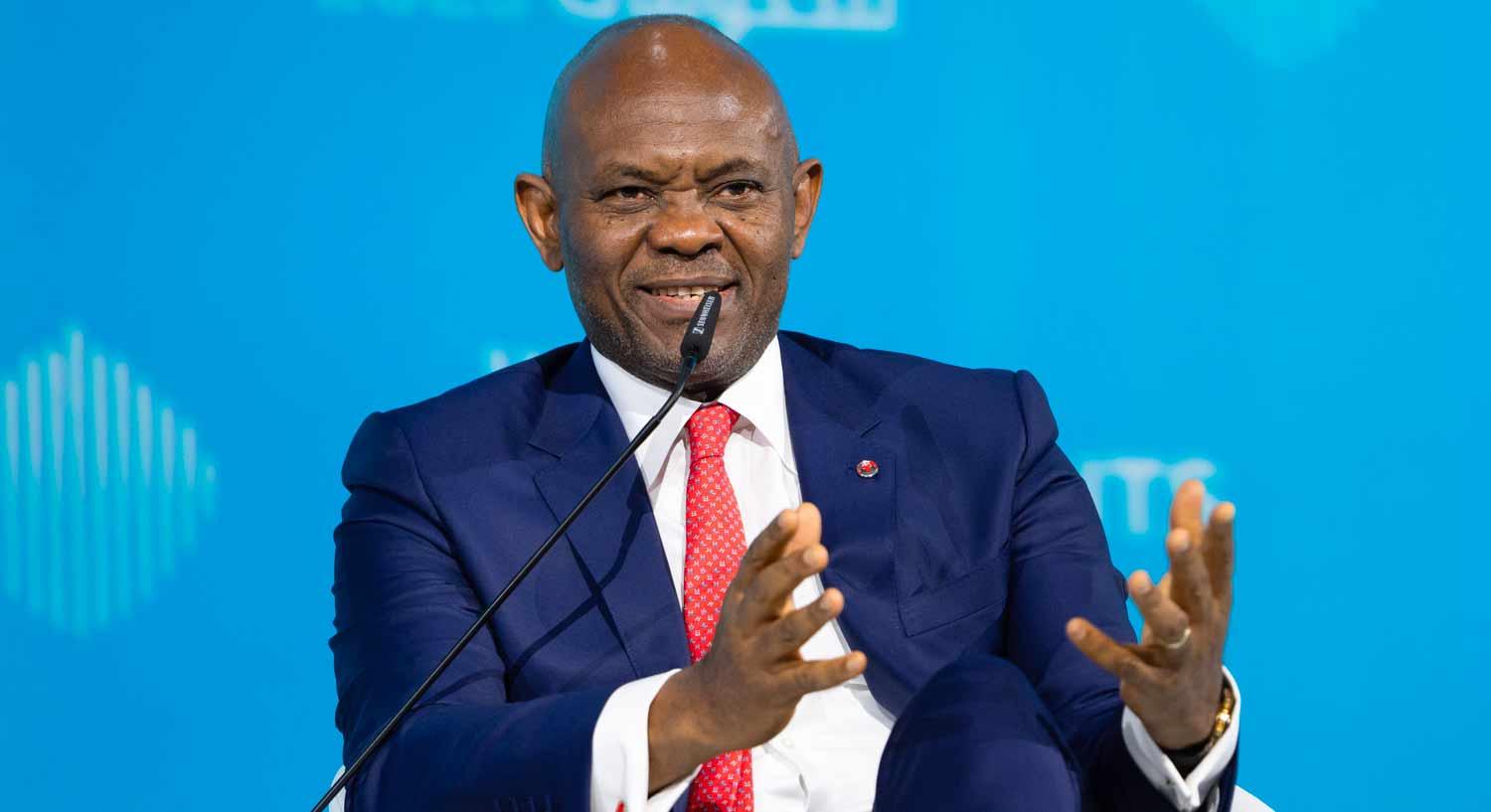
Nigerian billionaire investor and philanthropist Tony Elumelu has called on African countries to set aside colonial-era grievances and welcome foreign investment from all parts of the world, arguing that the continent needs massive capital inflows to unlock its economic potential.
Speaking during the Africa Forward Summit in Nairobi, Elumelu said Africa’s priority should be attracting private global capital to drive infrastructure, entrepreneurship and job creation, rather than dwelling on historical grievances tied to colonialism.
The chairman of Heirs Holdings, Transcorp and United Bank for Africa said any nation willing to support Africa’s development — whether the United States, France, China, Russia or Middle Eastern countries — should be welcomed.
Elumelu argued that Africa stands at a unique moment where global powers are increasingly competing for influence and investment on the continent, describing this as an opportunity African nations should strategically leverage.
He also defended closer engagement with Emmanuel Macron, saying Africa should focus on future partnerships instead of remaining trapped in what he described as a victim mentality” over colonial history.
According to him, the present generation of leaders should be judged by current actions rather than the policies of past centuries.
Elumelu, who was recently appointed by Macron to join the Africa France Impact Coalition, said he believes the French president is sincere in his commitment to strengthening economic ties with African countries.
The businessman stressed that the real challenge facing Africa is not choosing between foreign powers but fixing the infrastructure deficits that hold back young entrepreneurs and businesses. He listed electricity, mass transportation, security and ease of doing business as the continent’s most urgent needs.
According to Elumelu, Africa’s youthful population makes rapid job creation a necessity. He said millions of young Africans need access to jobs, digital opportunities and the expanding artificial intelligence economy, adding that infrastructure investments remain the key to unlocking that future.
As one of Africa’s most influential private sector voices, Elumelu’s remarks are likely to fuel debate over how the continent balances historical memory with present-day economic partnerships, especially as global competition for African markets intensifies.