


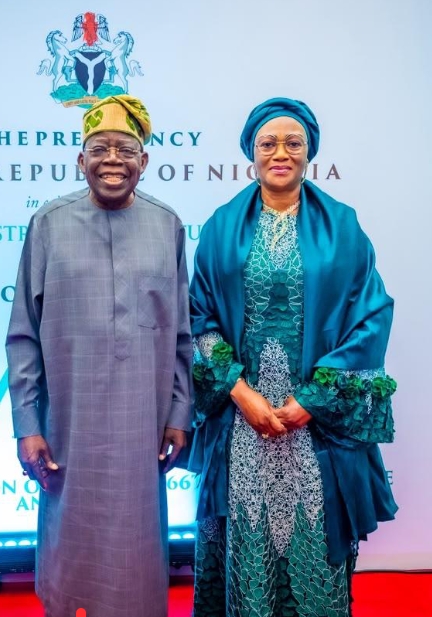
LAG0S: President Bola Ahmed Tinubu and First Lady Oluremi Tinubu attended the national premiere of MKO, a documentary chronicling the life of late Chief Moshood Kashimawo Olawale Abiola and the historic June 12, 1993, pro-democracy struggle.
The event was held at the Wole Soyinka Centre for Culture and Creative Arts as part of activities marking Nigeria’s 66th Independence Anniversary.
The development was disclosed by the Special Adviser to the President on Information and Strategy, Bayo Onanuga, in a post on his official X account.
According to Onanuga, the documentary was produced by US-based filmmaker Ose Oyamendan and examines Abiola’s political journey, the annulment of the June 12, 1993 presidential election and the subsequent struggle by Nigerians and pro-democracy activists for the restoration of democratic rule.
The June 12 election remains a major event in Nigeria’s political history, following its annulment by the military government and the years of political repression and pro-democracy agitation that followed.
Tinubu attended the screening alongside his wife, with several senior government officials, political leaders and other dignitaries also present.
Among those at the premiere were Senate President Godswill Akpabio; Speaker of the House of Representatives Tajudeen Abbas; Chairman of the Nigeria Governors’ Forum and Kwara State Governor AbdulRahman AbdulRazaq; Lagos State Governor Babajide Sanwo-Olu; Ogun State Governor Dapo Abiodun; Plateau State Governor Caleb Mutfwang; and Chief of Staff to the President, Femi Gbajabiamila.
Also present were the Minister of Industry, Trade and Investment, Jumoke Oduwole; Minister of Water Resources and Sanitation, Joseph Utsev; members of the National Assembly; former Ogun State Governor Olusegun Osoba and other distinguished personalities.
The Minister of Art, Culture, Tourism and the Creative Economy, Hannatu Musa Musawa, welcomed the President and guests to the premiere.
Tinubu used the occasion to pay tribute to Nigerians who lost their lives or suffered persecution, imprisonment, exile and other forms of repression during the struggle for the restoration of democracy.
He led guests at the event in observing a minute’s silence in memory of those who died during the pro-democracy struggle.
The presidential aide, Bayo Onanuga said the sacrifices made by activists and ordinary Nigerians who resisted authoritarian rule should remain an important part of the country’s democratic history.
He specifically remembered prominent figures including Anthony Enahoro, Adekunle Ajasin, Abraham Adesanya, Gani Fawehinmi, Beko Ransome-Kuti, Alfred Rewane, Frank Kokori, Ndubuisi Kanu, Dan Suleiman, Chima Ubani, Bola Ige, Cornelius Adebayo, Ayo Adebanjo, Balarabe Musa and Oba Sikiru Kayode Adetona.
Onanuga also honoured members and leaders of pro-democracy organisations, including the National Democratic Coalition, Campaign for Democracy and the labour movement.
We remember journalist James Bagauda Kaltho, other journalists, and media organisations that defied clampdowns, arrests, kidnapping and seizures of publications to keep the June 12 struggle alive, he said.
He also acknowledged the contributions of printers who continued producing banned publications despite security restrictions, lawyers who defended detainees, students who staged protests, workers who withdrew their labour, academics who supported the struggle and Nigerians in the diaspora who mobilised international support.
Onanuga said several Nigerians were imprisoned without trial, driven into exile, lost their livelihoods or had their homes and businesses attacked because they refused to abandon their democratic convictions.
He said the sacrifices made during the struggle contributed to Nigeria’s eventual return to democratic governance.
We remember the countless unnamed Nigerians who filled the streets, endured hardship and stood firm in defence of the mandate freely given on June 12, 1993,” he said.
Many paid the supreme price. Many carried wounds that history may never fully record. Their sacrifice was not in vain.
Onanuga further noted that Abiola, who became the central figure of the June 12 struggle, has since been officially acknowledged by the Nigerian government as the winner of the 1993 presidential election.
He said the documentary would serve as a tribute to Abiola and a reminder of the sacrifices made by Nigerians who demanded respect for their democratic choice.
The democracy we enjoy today was built upon the courage and sacrifices of the people we have identified. We owe them more than remembrance. We owe them a duty to ensure that no authority ever again overturns the freely expressed will of Nigerians,” Onanuga said.
Musawa said MKO chronicles the events surrounding the June 12, 1993 presidential election, its annulment by the military authorities, Abiola’s arrest in 1994 after he declared his mandate and his death in detention in 1998.
The minister described the documentary as a tribute to Nigerians who sacrificed their lives and freedoms during the struggle.
“This documentary is in honour of the heroes of June 12, the men and women who gave their lives for the mandate of June 12, 1993 and for the democracy Nigeria enjoys today,” Musawa said.
She stressed the importance of documenting the events surrounding June 12, particularly for younger Nigerians who did not experience the political crisis and pro-democracy struggle.
Musawa also urged citizens to protect Nigeria’s democratic institutions and ensure that the will of voters is respected.
The documentary’s producer, Oyamendan, praised Tinubu for what he described as his commitment to democratic principles and thanked him for supporting the project.
Oyamendan also acknowledged the individuals and organisations that contributed to the production of the documentary.
Recalling his relationship with the President, the filmmaker said he interviewed Tinubu when he was a senator in 1992.
MKO is expected to preserve an important chapter of Nigeria’s political history and provide younger Nigerians with an opportunity to learn about the personalities, events and sacrifices that shaped the country’s journey from military rule to democratic governance.