


Nigeria’s long-running debate over the establishment of state police has gained fresh momentum, with top government officials, security experts, lawmakers, governors and international stakeholders agreeing that policing reforms are urgently needed. However, they warned that unless carefully designed and implemented, state police could either become the country’s greatest weapon against insecurity or create a dangerous new layer of political abuse.
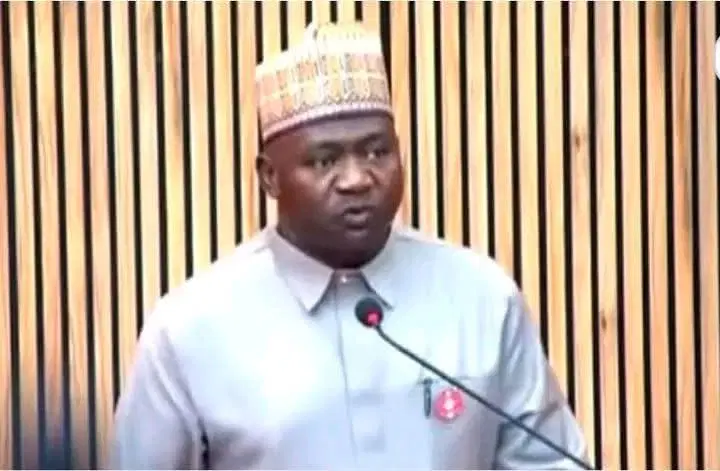
The strong opinions emerged during an ARISE News Town Hall on State Police held in Abuja on Thursday, where participants extensively discussed the future of policing in Nigeria amid worsening security challenges across the country.
Minister of Defence, General Christopher Musa (retd.), described state police as a reform capable of transforming Nigeria’s security architecture if properly managed.
However, he warned that poor planning and weak implementation could produce devastating consequences.
State police, if properly harnessed, well planned and effectively implemented, could become the silver bullet we need to address many of our security challenges. However, if it is poorly planned and badly executed, it could become the Hiroshima that many people fear, Musa said.
The Defence Minister stressed that decentralised policing should never become an instrument of ethnic politics, religious bias or political intimidation.
According to him, Nigeria must avoid rushing into the reform without first addressing existing structural weaknesses within the Nigeria Police Force.
He advocated a phased implementation beginning with state capitals before expanding nationwide, allowing authorities to evaluate operational challenges and improve the system gradually.
Musa also insisted that justice, fairness and equity must remain central to the new policing structure in order to build public trust and improve cooperation between communities and security agencies.
Former Edo State Governor and Senator Adams Oshiomhole argued that Nigeria’s current security arrangement is fundamentally flawed because governors are constitutionally designated as Chief Security Officers without having control over the police operating within their states.
He likened the situation to “calling me a husband without a wife.”
Oshiomhole recalled spending substantial state resources supporting police operations during his tenure as governor while lacking authority to discipline officers or direct security operations.
He also claimed that suspects arrested in Edo State were at times released following directives from Abuja, undermining accountability and weakening public confidence in law enforcement.
According to him, fears that governors would abuse state police are exaggerated because elected officials already operate under constitutional checks, judicial oversight, media scrutiny and periodic elections.
Enugu State Governor Peter Mbah maintained that Nigeria should stop debating whether state police is necessary and instead focus on creating an effective operational framework.
Drawing from Enugu State’s security reforms, he explained that investments in artificial intelligence-powered surveillance systems, command-and-control centres and rapid response teams have significantly reduced violent crime.
Security is measured in minutes, not hours,” Mbah said.
He argued that states already bear huge financial responsibilities for security but lack the constitutional authority needed to coordinate policing effectively.
Historian and former Permanent Secretary Bukar Usman supported decentralised policing but suggested that local police would be even more effective than state police.
According to him, local residents possess deeper knowledge of their communities than any central authority.
He stressed that community intelligence remains one of the most effective tools for combating crime and insecurity across Nigeria.
Senate Majority Leader Opeyemi Bamidele cautioned that constitutional amendments alone would not guarantee successful policing reforms.
He explained that detailed legislation would still be required to regulate recruitment standards, operational procedures, oversight mechanisms, funding arrangements and accountability measures.
“Without financial independence, state police could create new problems,” he warned.
Bamidele clarified that the proposed constitutional amendment merely transfers policing from the Exclusive Legislative List to the Concurrent Legislative List, allowing states to establish their own police services if they choose.
Former Israeli Prime Minister Ehud Barak endorsed Nigeria’s proposed policing reforms, describing decentralised policing as more practical than attempting to manage security entirely from Abuja.
Barak argued that locally recruited officers possess stronger cultural understanding and better human intelligence capabilities than centrally deployed personnel.
He recommended that sophisticated intelligence gathering should remain under federal control, while state police handle community policing and local security operations.
The former Israeli leader also proposed establishing a federally controlled rapid response police unit capable of supporting state police whenever local security situations exceed their operational capacity.
According to him, military deployment should remain a last resort because soldiers are trained for warfare rather than routine civilian policing.
Human rights lawyer and former National Human Rights Commission Chairman Professor Chidi Odinkalu expressed concern that ordinary Nigerians have been largely excluded from discussions surrounding the proposed reforms.
He questioned why such significant constitutional changes are being considered during an election season without widespread public consultation.
Odinkalu also disclosed that different versions of the State Police Bill are already before the National Assembly but remain inaccessible to the general public.
While supporting decentralised policing in principle, he warned that poor implementation could undermine democratic accountability and constitutional rights.
Plateau State Governor Caleb Mutfwang stressed that any new policing system must serve citizens rather than political interests.
He said sustainable funding would determine whether state police succeeds or fails.
“We must build a state police institution that guarantees the basic rights of the people, protects lives and property, and ensures that it is a citizens’ police, not a police for the elites,” Mutfwang stated.
Kogi Central Senator Natasha Akpoti-Uduaghan urged Nigerians not to allow previous abuses by security agencies discourage support for meaningful reforms.
She encouraged citizens to channel their frustrations into advocating for stronger institutions capable of delivering effective policing.
The senator also assured Nigerians that the National Assembly would continue engaging civil society groups and the wider public throughout the legislative process.
Senior Special Assistant to the President on Planning and Research, Dubem Moghalu, disclosed that the Federal Government has begun drafting the proposed National Policing Bill following the inauguration of the presidential committee.
He explained that the constitutional amendment currently before the National Assembly only creates the legal framework for state policing.
According to him, the National Policing Bill will provide detailed guidelines covering recruitment, training, accountability, inter-agency cooperation, operational standards and oversight mechanisms.
Moghalu stressed that Nigeria would not simply copy the policing model used in the United States or other countries.
Instead, he said the Federal Government is developing a uniquely Nigerian framework that reflects the country’s federal structure, constitutional realities and complex security challenges.
Despite differing opinions on funding, implementation timelines and constitutional safeguards, participants at the town hall overwhelmingly agreed that Nigeria’s centralised policing structure has become inadequate in addressing today’s security realities.
The national conversation has now shifted from whether Nigeria should establish state police to how the country can implement the reform responsibly without encouraging political interference, weakening intelligence coordination or compromising democratic accountability.
As insecurity continues to challenge communities across the country, the proposed state police system is increasingly being viewed as one of the most significant constitutional and security reforms under consideration by the Federal Government.