


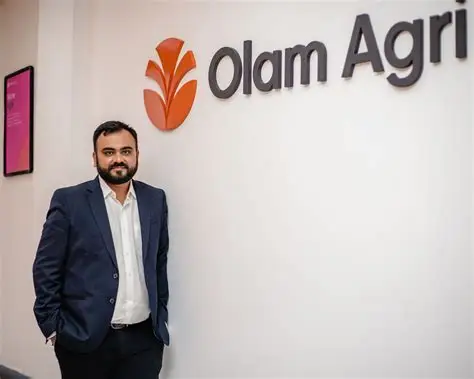
OGWUASI-UKU: Delta State Governor, Sheriff Oborevwori, has officially flagged off the construction of a $70 million integrated animal feed manufacturing facility by Olam Agri in Ogwashi-Uku, Aniocha South Local Government Area, in a major development expected to transform the state’s agricultural and industrial landscape.
The project, which is being developed by Olam Agri, a subsidiary of Africa Grains and Mills Limited, is designed to produce 450,000 metric tonnes of poultry feed and approximately 100,000 metric tonnes of aquafeed annually.
When completed, the facility is expected to serve poultry farmers, fish producers and other agricultural businesses across the South-South and South-East, while reducing the cost of animal feed and improving access to locally manufactured agricultural inputs.
Performing the groundbreaking ceremony, Governor Oborevwori described the investment as a major achievement in his administration’s drive to attract private-sector investment, promote industrialisation and strengthen food production under the M.O.R.E Agenda.
He explained that the project emerged from the Delta State Economic and Investment Summit held in August 2026, demonstrating the importance of translating investment discussions into concrete economic opportunities.
According to the governor, farmers in the South-South and South-East have faced significant difficulties accessing affordable animal feed because of the absence of a major manufacturing facility in the region.
He noted that many poultry and livestock farmers had been forced to depend on supplies transported from the South-West and Middle Belt, increasing their operating expenses.
Oborevwori pointed out that animal feed accounts for between 60 and 80 per cent of poultry and livestock production costs, making its affordability a major factor in determining the prices of chicken, eggs and other animal protein products.
He expressed confidence that the new investment would reduce transportation expenses, improve feed supply and make poultry and fish farming more profitable.
The governor also said the facility would create a reliable market for local farmers producing maize, soybean, cassava and other agricultural raw materials, thereby encouraging commercial farming and strengthening the state’s agricultural value chain.
Oborevwori disclosed that the Delta State Government provided approximately 99.99 acres of land for the project without charging the company for the allocation.
He added that the government also paid the necessary compensation associated with the land acquisition to facilitate the smooth commencement of construction.
The governor assured Olam Agri of the government’s continued cooperation but warned individuals and groups against demanding illegal payments from the company or interfering with the project.
He called on traditional rulers, community leaders and youths to protect the investment and support an environment conducive to business development.
“I have repeatedly told the investors not to give money to anybody in the name of facilitating their project. We do not encourage such practices, and nobody should demand illegal payments from investors,” he stated.
Oborevwori attributed Olam Agri’s decision to establish the facility in Ogwashi-Uku partly to improved security, better road infrastructure and accessibility resulting from his administration’s investments in roads and bridges.
He reiterated that his government would continue to pursue policies capable of attracting industries, generating employment and diversifying Delta’s economy.
The governor also disclosed that the Obi of Ogwashi-Uku had indicated the availability of approximately 8,000 hectares of land for investment, assuring interested businesses that the state government would work with the traditional institution to facilitate access to suitable land.
Speaking at the ceremony, President and Global Head of Integrated Feed and Protein at Olam Agri, Sharad Gupta, commended Governor Oborevwori for his commitment to the project.
Gupta explained that the company’s decision to invest in Delta was informed by the enormous agricultural potential of the South-South and South-East regions.
He disclosed that Olam Agri had operated in Nigeria for approximately 10 years, establishing relationships with farmers through investments in soybean processing, seed multiplication and improved agricultural practices.
He said the company would extend its productivity programmes to Delta State, particularly in maize and soybean cultivation, to strengthen local agricultural production.
Gupta identified poultry and aquaculture as sectors with considerable growth potential, noting that increasing domestic production of chicken, eggs and fish would contribute to addressing Nigeria’s food security challenges and reduce dependence on imported frozen fish.
He further assured host communities that the company would maintain sustained engagement and support initiatives focused on improving livelihoods, developing agricultural skills and creating opportunities for women and young people.
Providing details of the investment, Senior Vice President and Business Head, Integrated Feed and Protein, Nigeria, Amit Agarwal, disclosed that Olam Agri currently operates two major facilities in Kaduna and Kwara states.
The existing facilities have a combined annual production capacity of 660,000 metric tonnes of poultry feed, 150,000 metric tonnes of aquafeed and 450 million day-old chicks for the broiler industry.
He explained that the Ogwashi-Uku project would add another 450,000 metric tonnes of poultry feed and nearly 100,000 metric tonnes of aquafeed to the company’s production capacity.
The development is expected to make the new facility one of the largest integrated animal feed manufacturing plants in Nigeria.
Agarwal also revealed plans to establish an Aquaculture Centre of Excellence in Delta State to develop the Asaba-Warri axis into a major catfish production hub for the South-South and South-East.
He said the company would collaborate with the state government to increase local production of maize, soybean, cassava and other raw materials needed to sustain the factory.
According to him, the initiative would provide farmers with a dependable market for their produce while encouraging increased agricultural activities and investment in rural communities.
Agarwal expressed optimism that the construction would be completed within approximately one year, paving the way for the inauguration of the facility and commencement of production.
The Obi of Ogwashi-Uku Kingdom, HRM Dr Ifeanyichukwu Okonjo, welcomed the investment, describing it as an important development for the kingdom and its people.
The traditional ruler disclosed that Ogwashi-Uku was positioning itself as a major investment destination, revealing that about 15 multinational and indigenous companies had expressed interest in establishing businesses in the area.
He assured the governor that the traditional institution would continue to partner with the state government and genuine investors to convert the kingdom’s economic potential into employment opportunities, economic growth and improved livelihoods.
Also speaking, Chairman of Aniocha South Local Government Council, Hon. Jude Chukwunwike, described the $70 million project as a significant development for the local government area and Delta State.
The Ogwashi-Uku animal feed project is expected to deliver benefits beyond manufacturing by creating stronger connections between industrial production and local agricultural activities.
Through its demand for maize, soybean, cassava and other raw materials, the facility could provide new market opportunities for farmers, stimulate commercial agriculture and encourage investment across the agricultural value chain.
Its proposed Aquaculture Centre of Excellence could also strengthen fish farming along the Asaba-Warri corridor, supporting the growth of catfish production and related businesses.
For Delta State, the $70 million investment represents another significant step towards attracting private capital, expanding industrial capacity, creating employment opportunities and diversifying the economy.
As construction progresses, the successful completion and commencement of production will be crucial to delivering the anticipated benefits to farmers, businesses, host communities and consumers across the region.


