


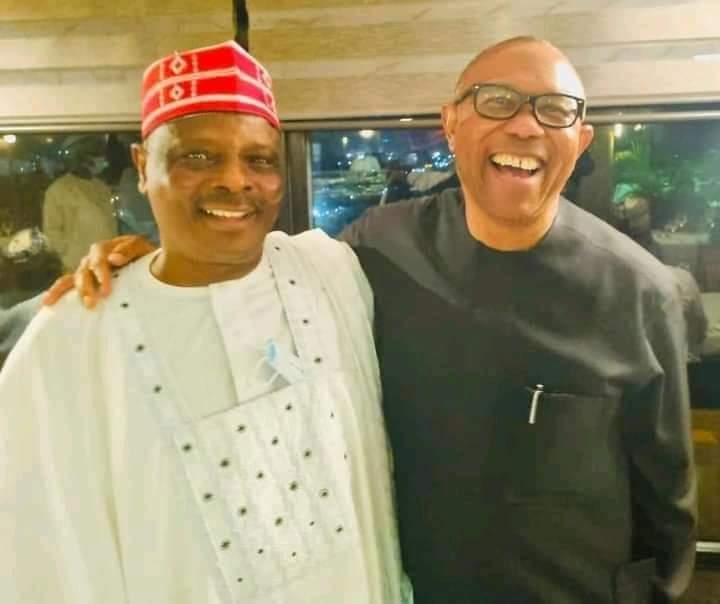
The political aspirations of former Anambra State governor, Peter Obi, and former Kano State governor, Rabiu Kwankwaso, ahead of the 2027 presidential election are facing increasing resistance from sections of Northern Nigeria, with some political stakeholders questioning the strength and acceptance of their emerging platform, the Nigeria Democratic Congress (NDC).
Findings indicate that despite efforts to expand the party’s reach, many northern political actors believe the NDC remains largely unknown across the region, while critics have also raised concerns over Obi’s perceived positions on sensitive national issues.
The National Publicity Secretary of the Arewa Consultative Forum (ACF), Prof. Tukur Muhammad-Baba, said the NDC had yet to establish a strong presence among ordinary voters in the North.
According to him, the party lacks the visibility enjoyed by established political parties such as the All Progressives Congress (APC), Peoples Democratic Party (PDP), and African Democratic Congress (ADC).
He noted that while Obi and Kwankwaso remain prominent political figures, their influence in the region remains uncertain.
Muhammad-Baba also questioned whether Kwankwaso still commands the same level of support he enjoyed during the 2023 presidential election, especially outside Kano State.
He added that many northern voters have become weary of politics driven by ethnic, regional and religious sentiments, stressing that citizens are increasingly demanding practical solutions to economic and security challenges.
President of the Arewa Youth Consultative Council, Zaid Ayuba, argued that Obi’s candidacy faces significant obstacles in the North due to concerns over his alleged sympathy for the Indigenous People of Biafra (IPOB).
According to Ayuba, many northerners remain suspicious of Obi’s past comments concerning the proscription of IPOB, making it difficult for him to secure widespread support in the region.
He insisted that electoral victory cannot be built solely on ethnic or religious considerations and maintained that the Obi-Kwankwaso alliance would struggle to gain broad acceptance among northern voters.
A political science professor based in Sokoto, who requested anonymity, said the NDC lacks structures across many northern states including Kaduna, Jigawa, Benue, Plateau, Katsina, Gombe, Niger, Taraba and Zamfara.
According to the academic, the challenge facing the party is less about acceptability and more about inadequate visibility.
He noted that unlike the APC, PDP and ADC, the NDC is still relatively new and has yet to establish widespread grassroots structures.
Meanwhile, the Northern Youth Assembly accused Kwankwaso of abandoning northern political interests by aligning with Obi.
In a statement signed by its Secretary-General, Hafiz Garba, the group described the alliance as a betrayal of the ideals traditionally associated with the Kwankwasiyya movement.
The group argued that northern leaders should place the region’s interests and development above political calculations.
Supporters Insist NDC Is Expanding
Despite the criticism, officials of the party insist that the Obi-Kwankwaso alliance is steadily gaining ground across the North.
NDC chairman in Borno State, Haruna Amuda, disclosed that the party had witnessed massive defections from rival opposition parties and had already established structures across the state’s 27 local government areas.
Similarly, party chieftain Abdulrazak Birnin-Kudu said coordinators had been appointed in all 27 local governments of Jigawa State, with youths driving grassroots mobilisation.
The party’s governorship candidate in the state, Aminu Dutse, stated that worsening economic hardship and insecurity were encouraging many Nigerians to seek alternative political platforms.
Analysts Predict Competitive Contest
Northern Regional Director of the Civil Liberty Organisation, Steve Aluko-Daniel, dismissed claims that the NDC lacks acceptance in the North.
According to him, the region no longer has a unified political bloc, allowing voters greater freedom to align with parties of their choice.
He argued that the popularity of both Obi and Kwankwaso could make the NDC a formidable force in the 2027 elections if the polls are conducted credibly.
The National Co-Chairman of the NDC Coalition Alliance Network, Zakari Garba, described the partnership between Obi and Kwankwaso as one of the strongest political combinations currently being discussed ahead of 2027.
Garba said Obi’s reputation for accountability and economic management, combined with Kwankwaso’s strong grassroots appeal in the North, provides the alliance with the experience and national reach required to offer Nigerians an alternative political direction.
However, efforts to obtain reactions from the NDC Deputy National Publicity Secretary, Abdulmumin Abdulsalam, and National Coordinator of the Obidient Movement, Dr. Yinusa Tanko, were unsuccessful as of the time of filing the report.
With the 2027 elections still months away, analysts believe the success of the Obi-Kwankwaso alliance will largely depend on how effectively the party builds structures, addresses concerns raised by critics and converts growing interest into electoral support across the country.