


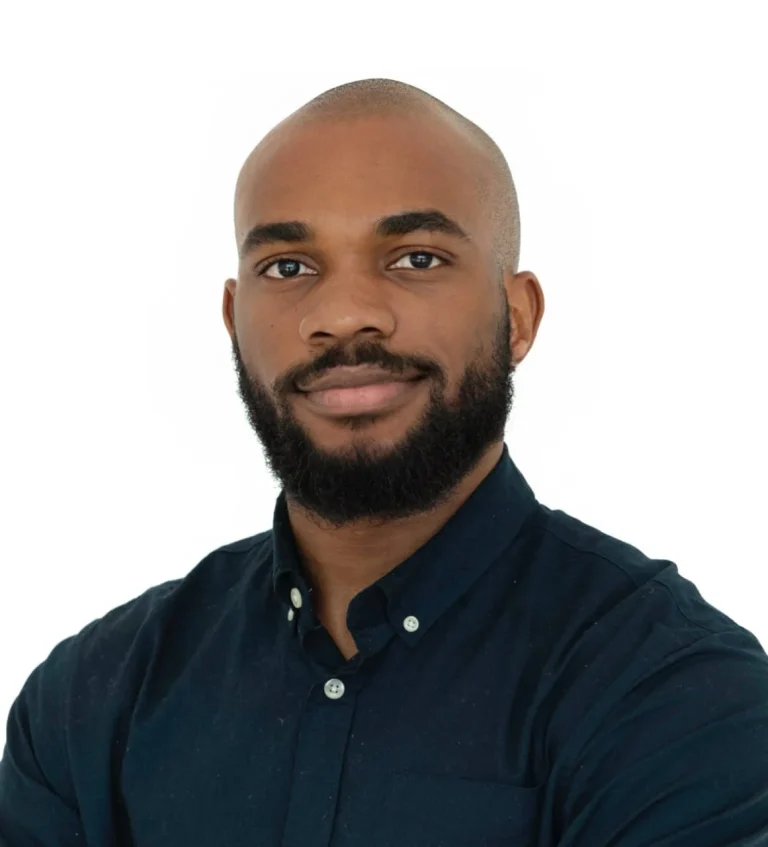
QUEBEC: A Nigerian pharmacist and doctoral researcher at McGill University, Chika Onochie, has received a major research award worth up to CAD $100,000 in Québec, Canada, for his work on developing improved ways to assess male fertility.
Onochie, who is pursuing a PhD in Pharmacology at McGill University, was awarded the funding under the Doctoral Research Scholarships programme of the Fonds de recherche du Québec (FRQ).
The award is supporting his research into molecular biomarkers that could provide additional information about male fertility beyond conventional semen analysis.
According to an official award letter from McGill University, the funding followed a positive recommendation from the peer-review committee that assessed Onochie’s application during the Fall 2025 competition.
The letter stated that the award was subject to the adoption of the necessary budgetary appropriations by Québec’s National Assembly and decisions by the FRQ Board of Directors relating to its strategic planning.
The funding may also be modified in accordance with the conditions outlined by the research funding body.
Onochie’s research is focused on identifying molecular indicators that could help determine whether sperm are functionally capable of fertilising an egg.
His work addresses an area of male reproductive health that he believes is not fully captured by conventional semen analysis.
Routine semen testing generally examines characteristics such as sperm count and morphology, but Onochie’s research is investigating whether additional molecular markers could provide a more comprehensive picture of sperm function.
His doctoral research is being conducted at McGill University under the supervision of reproductive health researcher Professor Cristian O’Flaherty.
O’Flaherty’s laboratory focuses on the molecular mechanisms involved in sperm production, function and activation, as well as the development of diagnostic approaches for male infertility.
Onochie’s research therefore seeks to explore molecular changes in sperm that could eventually provide researchers and clinicians with additional information when conventional fertility testing does not adequately explain infertility.
Onochie’s scientific journey began in Nigeria, where he trained as a pharmacist before developing a deeper interest in biomedical research.
He graduated from the University of Benin in 2021 with First-Class Honours, earning both Bachelor of Pharmacy and Doctor of Pharmacy degrees.
After completing his studies, he worked as a clinical pharmacist before relocating to Canada to pursue doctoral research.
Onochie said his professional experience in Nigeria exposed him to gaps in the way infertility is sometimes assessed, particularly when it comes to evaluating male fertility.
He said he observed situations where women undergoing fertility treatment could face extensive medical investigations while evaluation of the male partner sometimes ended with a conventional semen analysis.
My training and practice as a pharmacist in Nigeria allowed me to see some of the inequalities surrounding reproductive healthcare firsthand,” Onochie said.
When couples experienced infertility, women often underwent extensive investigations, whereas evaluation of the man could end with a basic semen analysis examining parameters such as sperm count and morphology.”
According to him, those experiences contributed to his decision to investigate what conventional male fertility tests may fail to detect.
Onochie said his research is based on the understanding that semen analysis does not provide every piece of information required to assess whether sperm can successfully perform their reproductive function.
“I came to understand that the problem was not simply that men were being overlooked, but that we still lack reliable biomarkers that can tell us whether sperm are functionally capable of fertilization,” he said.
He joined McGill University in 2023 to begin his PhD studies in Pharmacology.
His research examines molecular changes in sperm and seeks to identify functional biomarkers that could eventually help provide a more complete assessment of male fertility.
“One of the problems we face is that routine semen analysis does not tell us everything about whether sperm are functionally capable of fertilization,” Onochie said.
“My research aims to identify functional biomarkers that could provide a more complete assessment of male fertility, particularly in cases where conventional testing does not adequately explain why a couple is experiencing infertility.
Onochie’s work has also contributed to the scientific literature.
In 2025, he co-authored a peer-reviewed review examining redox-induced protein modifications in spermatozoa and how those molecular changes may influence sperm function and male infertility.
His latest research builds on that scientific interest by investigating molecular indicators that could potentially help researchers better understand sperm function.
The ultimate goal is to contribute to the development of improved approaches for assessing male reproductive health.
For Onochie, the Québec research award represents more than financial support for his doctoral programme.
He said the recognition is also significant because it reflects the scientific foundation he developed in Nigeria before continuing his education and research career in Canada.
Receiving this award is particularly meaningful to me because much of the foundation for my career was built in Nigeria,” Onochie said.
To be recognised in a highly competitive process alongside other well-trained researchers is also a reflection of the quality of education and scientific training I received in Nigeria.”
He added that his Nigerian education provided the foundation that enabled him to compete internationally.
My training there gave me the foundation to compete internationally, and I am proud to carry that foundation forward in my research,” he said.
The Nigerian researcher hopes his work will eventually contribute to the development of improved tools for understanding male infertility.
He also wants the research to encourage a more balanced approach to reproductive healthcare by ensuring that male fertility receives appropriate scientific and clinical attention.
Onochie stressed that infertility should not be viewed solely as a woman’s health issue.
Infertility is a couple’s issue, he said.Improving how we evaluate male fertility is important not only scientifically, but also for creating a more balanced approach to reproductive healthcare.
His research at McGill University is focused on identifying molecular biomarkers that could complement conventional fertility testing and potentially offer researchers and clinicians a better understanding of sperm function.
The CAD $100,000 Québec research award places Onochie among researchers receiving support to advance doctoral-level scientific work, while also highlighting the international research journey of a Nigerian-trained pharmacist working in the field of male reproductive health.