


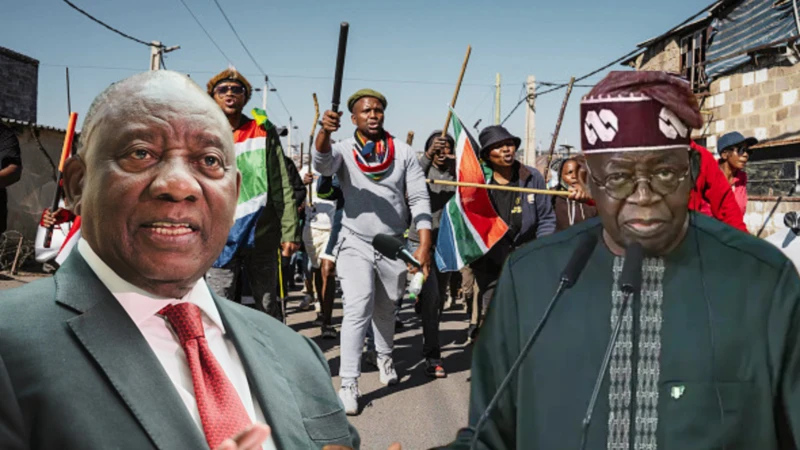
ABUJA: The Nigerian government has expressed strong concern over the recent deaths of two Nigerian nationals in South Africa, demanding urgent and transparent investigations into the circumstances surrounding their killings.
The Federal Ministry of Foreign Affairs said it received with shock the deaths of Bishop Taiwo Michael Fakunle and James Uchechukwu Nwankwo, amid growing concerns over the safety of Nigerians and other African nationals living in South Africa.
In a statement signed by the ministry’s spokesperson, Oluwafemi Adeniyi, on September 11, 2026, Nigeria condemned the deaths in the strongest terms.
According to the ministry, Bishop Fakunle was murdered inside his residence in Kensington, Johannesburg, on September 4, while Nwankwo died in Somerset, Cape Town, on September 5, following what Nigeria described as alleged gruesome interrogation techniques” by officers of the South African Police Service (SAPS).
The Nigerian government said it was particularly concerned that the incidents occurred against the backdrop of continuing xenophobic and Afrophobic tensions affecting foreigners, particularly Africans, in parts of South Africa.
The Ministry of Foreign Affairs described the alleged involvement of law enforcement personnel in circumstances leading to the death of a Nigerian as extremely disturbing.
“It is extremely worrisome that law enforcement agents, who have the responsibility of securing lives and property, are making an already bad situation worse,” the ministry said.
Nigeria called on the relevant South African authorities to immediately investigate the circumstances surrounding the two deaths and ensure that the investigations are transparent.
The government said it expected the South African authorities to treat the matter with the urgency and seriousness it deserves.
Nigeria also reaffirmed its preference for constructive dialogue as a means of resolving disputes with South Africa, particularly issues relating to xenophobia, Afrophobia and the treatment of Nigerian nationals.
The latest diplomatic tension comes after Nigeria’s National Assembly suspended official visits to South Africa and announced a boycott of parliamentary activities hosted by the country until further notice.
Nigerian lawmakers said the decision followed growing concerns over the killings, attacks, intimidation and destruction of property involving Nigerians and other African nationals in South Africa.
South Africa’s Minister of International Relations, Ronald Lamola, described Nigeria’s decision as unfortunate but said Pretoria remained open to dialogue.
Lamola said Nigeria had previously provided South Africa with a list of about 100 Nigerians allegedly killed in previous incidents, adding that South African authorities had also confirmed the cases.
He urged both countries not to allow the disagreements to undermine their broader bilateral relationship while acknowledging challenges affecting Nigerian communities in parts of South Africa, particularly Johannesburg.
Nigeria’s Senate President, Godswill Akpabio, and House of Representatives Speaker, Abbas Tajudeen, described the parliamentary action as a “firm, measured response” to threats against Nigerians abroad.
Nigeria’s Ambassador to South Africa, Femi Fani-Kayode, also expressed concern over the killing of Bishop Michael Taiwo Fakunle.
Fani-Kayode said he was shocked by reports that the bishop was murdered by unidentified attackers at his Johannesburg residence on September 4.
According to the ambassador, Fakunle had allegedly received a series of threats before the attackers went to his residence and shot him dead.
Fani-Kayode claimed that the deaths of Fakunle and Nwankwo brought the number of Nigerians allegedly murdered in South Africa in 2026 to eight.
He further alleged that at least four of the eight deaths involved South African police officers.
The ambassador also claimed that more than 100 Nigerians had been killed in South Africa between 2022 and 2026, with more than 30 allegedly killed by personnel of the South African Police Service and South African Defence Force.
Fani-Kayode warned that Nigeria would not accept a situation where its citizens are targeted and killed simply because they are Nigerians.
We call on the South African Government to do far more to protect our nationals and to bring to justice those who have killed or are planning to kill them, he said.
He said the Nigerian community in South Africa was increasingly disturbed by the killings and concerned about what could happen next.
The ambassador also urged South African authorities to protect Nigerians from what he described as racist organisations and their members, while calling for the full enforcement of the law against those responsible for attacks.
The latest development further strains relations between Nigeria and South Africa, two of Africa’s largest economies, as both countries continue to grapple with concerns surrounding migration, xenophobia, crime and the treatment of foreign nationals.