


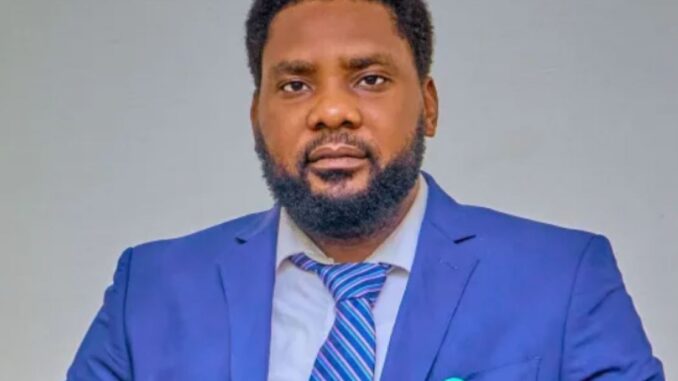
ABUJA: Presidential candidate of the Nigeria Basketball Federation (NBBF), Dr. Abdullahi Mustapha, has unveiled a seven-point development agenda aimed at transforming Nigerian basketball through grassroots development, league reforms, improved infrastructure, stronger national teams and sustainable investment.
Mustapha, popularly known as DAM, presented his vision ahead of the NBBF elective congress scheduled for October 15, 2026, describing his proposed administration as a “New Dawn” for the sport.
Speaking to journalists and basketball stakeholders in Abuja, he said the election presents an opportunity to build a stronger basketball ecosystem capable of translating Nigeria’s abundant talent into sustained success at continental and international levels.
He argued that Nigerian basketball requires more than individual talent, stressing the need for strong institutions, professional administration, sustainable funding and a coordinated development pathway for players.
That potential must now be matched with a stronger institution, sustainable investment, professional administration and a clear development pathway and unification of all basketball stakeholders in the country,” Mustapha said.
He added that division within the basketball community had hindered progress, pledging to prioritise reconciliation and cooperation if elected.
A house divided against itself cannot stand. Too much toxic in the system. I’m here to bring unity and reconciliation,” he stated.
Mustapha said his experience as a basketball player, youth mentor and investor had given him an understanding of the challenges confronting the sport, particularly at the grassroots level.
He cited the activities of the DAM Foundation, which he said had supported grassroots competitions, player welfare and sports facilities in Kano and Kogi states.
Under his proposed agenda, the candidate plans to establish a coordinated national schools basketball programme, regional talent centres and a national talent-identification and player-tracking system.
The initiative, he explained, would create a structured pathway through which young players could progress from school competitions to clubs and eventually national teams.
Mustapha maintained that opportunities for talented young Nigerians should not be determined by their geographical location, financial circumstances or personal connections.
“No talented Nigerian child should be denied an opportunity because of geography, economic circumstances or lack of connections,” he said.
He expressed confidence that a properly organised grassroots system would help Nigeria discover more promising players and strengthen the long-term competitiveness of its national teams.
The NBBF presidential hopeful also pledged to reform domestic competitions by introducing a predictable league calendar, improving club licensing and strengthening player contracts and welfare.
He said the federation must embrace digital statistics, improve playing venues and expand broadcasting opportunities to make Nigerian basketball leagues more attractive to sponsors, fans and commercial partners.
According to him, a professionally managed domestic league would provide players with better development opportunities while creating a more sustainable foundation for the sport.
Mustapha also identified the development of coaches, referees, statisticians and other technical officials as a key component of his proposed reforms.
He promised continuous training, professional certification and international exposure to improve technical standards across the basketball ecosystem.
On the national teams, Mustapha said Nigeria must abandon the practice of preparing for major competitions at the last minute.
He called for early preparation, merit-based player selection, improved medical support and better long-term planning for the men’s national team, D’Tigers, the women’s national team, D’Tigress, and age-grade teams.
The candidate described D’Tigress’ achievements as evidence of what Nigerian basketball could accomplish when players received adequate support and preparation.
He also pledged to make women’s basketball a major pillar of his proposed administration, with greater attention to talent development, competition and player welfare.
Mustapha said sustained investment in both male and female players would be essential to maintaining Nigeria’s international standing and producing future generations of elite athletes.
Mustapha proposed a nationwide audit of basketball facilities to identify abandoned courts, assess existing infrastructure and determine where investments and renovations are most urgently required.
He also promised to establish regional high-performance centres to support athlete development, training and preparation for major competitions.
Beyond infrastructure, the candidate said the NBBF must develop a commercially sustainable operating model rather than depend excessively on limited sources of funding.
His plans include attracting corporate sponsorships, expanding broadcasting and digital rights, developing merchandise opportunities, strengthening business partnerships and engaging Nigerians in the diaspora.
He argued that a more commercially viable federation would be better positioned to fund competitions, improve player welfare and invest consistently in grassroots programmes.
Mustapha identified unity among basketball stakeholders as one of the most important requirements for rebuilding confidence in the federation.
He pledged to ensure that players, coaches, referees, clubs, state associations, academies and former international players have meaningful opportunities to contribute to decisions affecting the sport.
According to him, transparent governance and stakeholder participation would help reduce divisions and establish a shared direction for Nigerian basketball.
He said the NBBF presidency should be viewed as a position of service rather than personal entitlement, promising to measure his administration by its achievements and measurable results.
Mustapha’s seven-point agenda covers grassroots development, domestic league reforms, technical capacity building, national team development, infrastructure, commercial sustainability, and unity and transparent governance.
As part of his proposed first 100 days in office, he outlined several immediate measures intended to establish the foundation for his four-year development programme.
These include an audit of the federation’s finances and programmes, a national stakeholders’ summit, the introduction of a unified competition calendar and the establishment of advisory structures for players, coaches, referees and clubs.
He also proposed a digital registration and statistics platform, engagement with prospective sponsors, a nationwide facilities audit and a reconciliation programme for divided sections of the basketball community.
The action plan would culminate in the development of a four-year strategic roadmap for Nigerian basketball.
Mustapha further commended the outgoing NBBF board and the National Sports Commission for progress made, particularly in the area of player welfare, which he described as an important concern from grassroots competitions to the national teams.
Beyond sporting achievements, Mustapha said he intends to use basketball as a platform for youth engagement, social integration and national development.
He argued that structured sporting opportunities could help young people develop discipline, teamwork and a sense of belonging, while contributing to efforts to address violence and banditry.
I am not promising perfection. I am promising leadership that will listen, build partnerships, establish systems and measure itself by results. The NBBF presidency should not be about personal entitlement. It should be about service,” he said.
With the October 15 elective congress approaching, Mustapha’s proposals place grassroots development, professional administration, commercial investment and reconciliation at the centre of his campaign.
His ability to implement the ambitious programme, however, would depend on stakeholder support, available funding and the practical execution of the proposed reforms if he secures the federation’s presidency.
The election is expected to shape the direction of Nigerian basketball as stakeholders seek stronger domestic competitions, improved player welfare and sustained success on the international stage.
Visit www.rapidospace.com for more sports news and updates.