


Michigan Democrats have intensified efforts to mobilise voters ahead of Tuesday’s midterm elections following a surprise political development in which former Democratic primary candidate and Congresswoman Haley Stevens endorsed Republican Senate candidate Mike Rogers against the party’s nominee, Abdul El-Sayed.
Stevens’ endorsement, announced on Sunday, November 1, 2026, has triggered widespread reactions within the Democratic Party, with several party leaders and former supporters criticising her decision and warning that it could deepen divisions within the party.
The controversy emerged just a day before Election Day, placing additional attention on one of the most closely watched Senate contests in the United States.
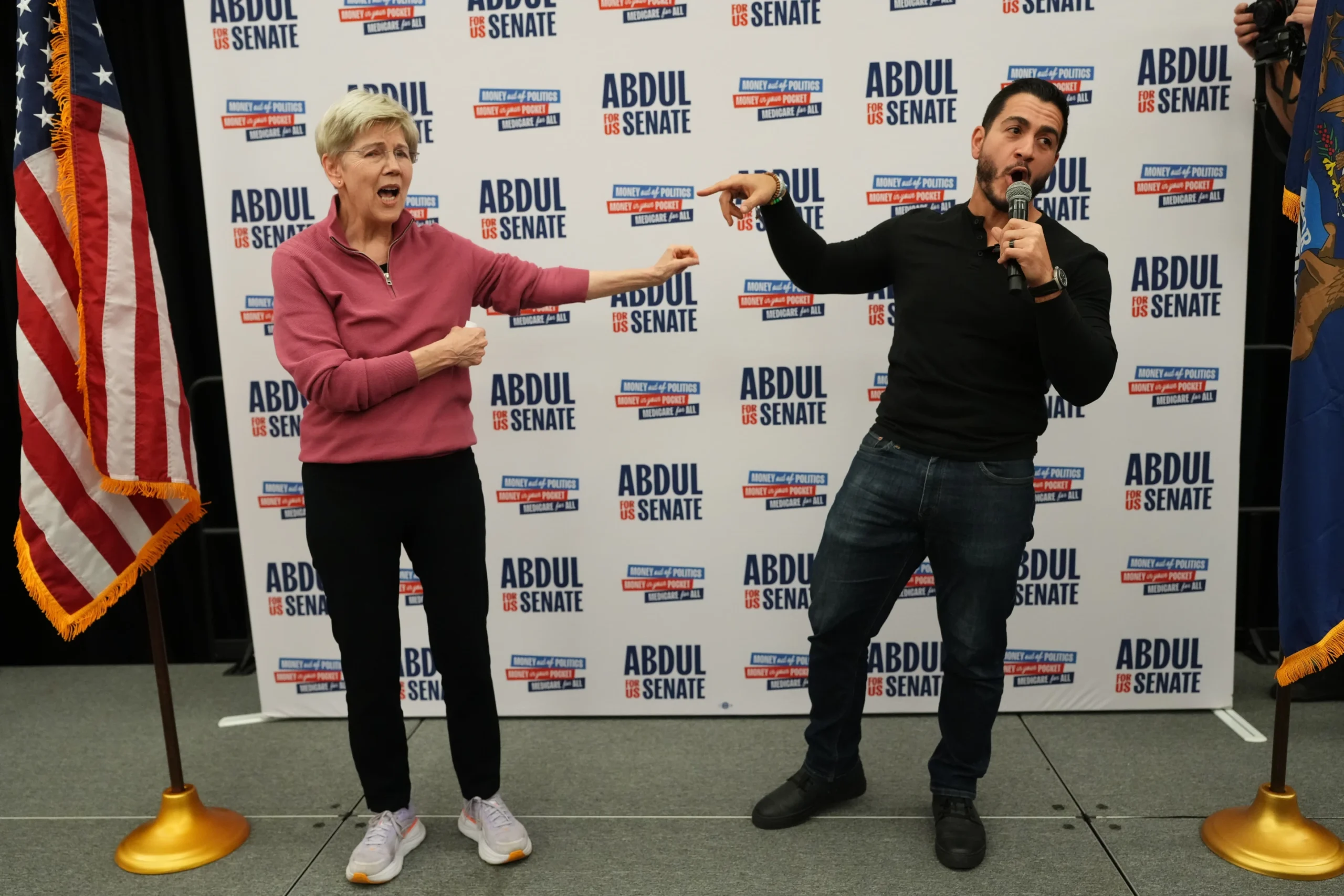
Speaking at Eastern Michigan University on Monday, El-Sayed avoided directly addressing Stevens’ defection, instead urging supporters to concentrate on voter turnout.
Asked what message he had for supporters concerned about the possible impact of the endorsement, El-Sayed simply said: “Go vote.”
He added that voting was the only way supporters could directly influence the election outcome.
The Democratic candidate was joined at the campaign rally by Senator Elizabeth Warren and his grandparents as he appealed to voters to participate in Tuesday’s election.
According to election figures cited by The Associated Press, more than 2.3 million Michigan residents had already cast their ballots by Monday. Nearly 4.5 million people participated in the state’s 2022 midterm elections.
Republican Senate candidate Mike Rogers and members of his party have welcomed Stevens’ endorsement, describing it as a significant development in the closely contested campaign.
Rogers reportedly contacted Stevens over the weekend before their joint appearance at Perfecting Church in Detroit on Sunday, where she publicly announced her support for the Republican candidate.
According to a person familiar with the discussions, even Rogers’ campaign staff were unaware of the planned appearance until Sunday morning and learnt about the endorsement when it was published online.
The Republican campaign subsequently began promoting Stevens’ endorsement as part of its final appeal to voters.
For Democrats, however, the development has exposed divisions that remained unresolved following the party’s expensive and closely fought August primary.
El-Sayed defeated Stevens by approximately 14,000 votes to secure the Democratic nomination. Their disagreements included differences over Israel and the war in Gaza.
Michigan Democratic Party leaders had spent the weeks following the primary attempting to consolidate support behind El-Sayed, particularly among Jewish and Black voters who had strongly supported Stevens during the nomination contest.
Several Democratic leaders and former Steven’s supporters have expressed anger and disappointment over her decision to endorse Rogers.
Michigan Democratic Party Chairman Curtis Hertel dismissed suggestions that the endorsement would necessarily weaken the party’s position, arguing that it could instead encourage Democratic supporters to become more active.
I don’t think this changes the election results other than it galvanizes Democrats,” Hertel said.
El-Sayed’s campaign also reported raising $2.4 million on Sunday, describing it as the largest single-day fundraising performance of his campaign.
The state Democratic Party further reported an increase in volunteer participation, with more supporters volunteering to participate in door-to-door campaign activities.
Adrian Hemond, a Democratic strategist who supported Stevens during the primary but has remained critical of El-Sayed, said he was surprised by the congresswoman’s decision.
Hemond said the endorsement appeared to have more to do with personal disagreements than substantive policy differences.
Meanwhile, Lori Goldman, a Democratic organiser in Oakland County who had supported Stevens during her first congressional campaign, described the development as deeply disappointing.
Debbie Rosenman, who leads two Democratic organisations in southeastern Michigan, also said the endorsement had left local party members feeling betrayed.
She noted that the controversy had generated increased volunteer activity, with some campaign offices receiving more people seeking canvassing assignments than organisers had initially anticipated.
The disagreement between Stevens and El-Sayed developed over several months following the Democratic primary.
Although Stevens initially endorsed El-Sayed after losing the nomination, she remained largely absent from his campaign activities, raising questions about the extent of her support.
El-Sayed had faced criticism over his public comments on Israel, particularly his response following an attack on a synagogue, as well as his appearance alongside controversial online streamer Hasan Piker during the campaign.
The Democratic nominee subsequently apologised for his remarks following the synagogue attack and did not appear with Piker again.
However, Stevens and some Jewish community leaders maintained that he had not adequately addressed their concerns.
The disagreement escalated ahead of a planned Sunday unity event involving both politicians. The gathering was eventually disrupted by public disagreements over Israel and an external campaign advertisement.
Representative Debbie Dingell, a senior Michigan Democrat close to Stevens, said she withdrew the congresswoman’s invitation because the dispute had become a distraction.
Dingell and other party members reportedly believed Stevens would maintain her support for the Democratic nominee despite the disagreements.
However, Stevens surprised party members on Sunday when she appeared alongside Rogers at a Detroit church and subsequently announced her endorsement of the Republican candidate.
Speaking later in a CNN interview, Stevens said her decision followed growing tensions with El-Sayed and described it as a personal turning point.
Dingell subsequently criticised Stevens’ explanation, describing the interview as one of the most painful she had watched.
With voting scheduled to take place across Michigan on Tuesday, November 3, the Democratic Party has shifted its attention towards mobilising remaining voters as the controversy surrounding Stevens’ endorsement continues to dominate the final hours of the Senate campaign.


