


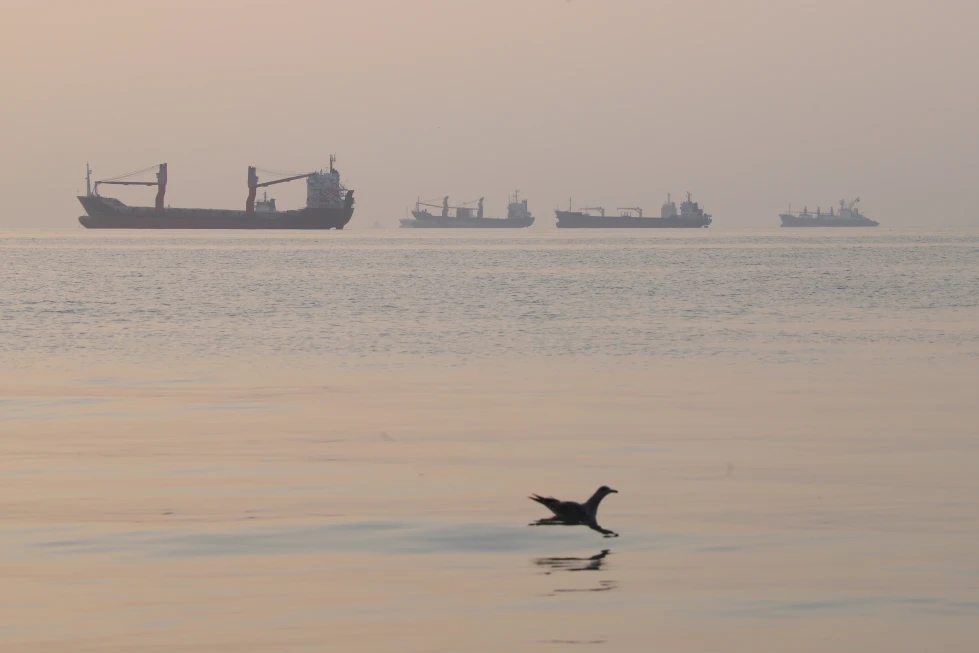
Iran has unveiled a revised two-day plan to reopen the strategically important Strait of Hormuz and resume nuclear negotiations with the United States, provided Washington agrees to meet a series of demands put forward by Tehran.
The announcement, made on Monday, November 2, 2026, represents a significant reduction in the proposed implementation timeline, which Iran had previously indicated could take up to seven days.
According to the Iranian government, the proposal would allow shipping activities to resume through the vital maritime corridor while creating an opportunity for renewed diplomatic engagement with Washington.
However, Iran insists that vessels using the reopened strait must follow a designated shipping route agreed upon by Iran and Oman and operate under Iranian supervision.
Tehran has also demanded that the United States lift its blockade of Iranian ports, ease sanctions affecting Iranian oil exports and agree to a ceasefire that would extend to Lebanon.
Iranian Foreign Ministry spokesperson Esmail Baghaei said the proposal remained the foundation for negotiations with Washington through mediators, describing the revised timeline as evidence of Tehran’s commitment to diplomacy.
He offered no indication that Iran had abandoned any of its conditions or that the United States had accepted the proposal.
Meanwhile, US President Donald Trump has continued to send mixed signals about Washington’s position, alternating between diplomatic overtures and threats of intensified military action against Iran.
The latest development comes amid growing concerns about a possible resumption of hostilities in the Middle East, with the Strait of Hormuz remaining a critical flashpoint.
Meanwhile, the humanitarian situation in Yemen continues to deteriorate as renewed fighting between Iran-backed Houthi rebels and Saudi-backed government forces forces thousands of families to abandon their homes.
The International Organization for Migration (IOM) said more than 300,000 people had fled their communities because of the escalating violence, with many struggling to secure shelter, food and other essential supplies.
The renewed clashes have effectively shattered a four-year truce, worsening an already devastating humanitarian crisis.
In southwestern Yemen, an explosion reportedly struck a busy market in Taiz province on Monday, killing three people, including two children, and injuring eight others, according to the Houthi-run health ministry.
The ministry blamed Saudi Arabia for the incident, although The Associated Press said it could not independently verify the allegation.
IOM’s head of mission in Yemen, Abdusattor Esoev, said families who had already endured years of conflict were once again being forced to flee with very few belongings.
Taiz has become a major destination for displaced families, although many others are moving south towards Aden in search of safety.
In another significant diplomatic development, China has announced plans to dispatch a special envoy to Iran, Oman and Saudi Arabia in early to mid-November.
Chinese Foreign Ministry spokesperson Mao Ning said the envoy would focus on reducing regional tensions and promoting stability through diplomatic engagement.
The announcement followed discussions between Chinese President Xi Jinping and Oman’s Sultan Haitham bin Tariq Al Said.
Xi reportedly warned that the Gulf region should not become an arena for rivalry among major global powers or geopolitical confrontation.
China’s diplomatic intervention comes as Beijing seeks to strengthen its influence in the Middle East, a region that supplies a substantial proportion of its oil imports.
Meanwhile, Israel’s military has announced the conclusion of a major security operation in Hebron, in the occupied West Bank, following an attack last month in which two Palestinian gunmen killed two Israeli soldiers.
The operation involved extensive military raids, the demolition of the suspected attackers’ homes and the confiscation of weapons and vehicles described by the Israeli military as illegal.
Hundreds of Palestinians were displaced during the operation, particularly residents of areas where the military concentrated its activities.
Some Israeli forces began withdrawing from parts of Hebron on Monday, allowing displaced residents to return to their homes.
However, returning families reportedly encountered damaged buildings, broken doors and shattered windows, while explosives experts continued checking some areas for unexploded devices.
Residents also expressed concerns about their children’s safety and the psychological impact of the military operation.
Separately, two men were killed in Israeli airstrikes in southern Gaza early Monday, according to Nasser Hospital, where their bodies were taken.
One of the strikes reportedly hit a residential home, while another struck a tent.
The Israeli military had not responded to a request for comment at the time of the report.
Although major fighting between Israel and Hamas largely subsided following the October 2025 ceasefire, Israeli forces have continued conducting near-daily strikes in Gaza, which Israel says target militants.
According to Gaza’s Health Ministry, at least 1,580 Palestinians have been killed since the ceasefire began, bringing the overall reported death toll from the war to more than 74,500.
The ministry, which operates under the Hamas-run government, does not distinguish between civilian and militant casualties.
The latest developments highlight the fragile security situation across the Middle East, as diplomatic efforts continue alongside renewed fighting, civilian displacement and mounting humanitarian concerns.


