


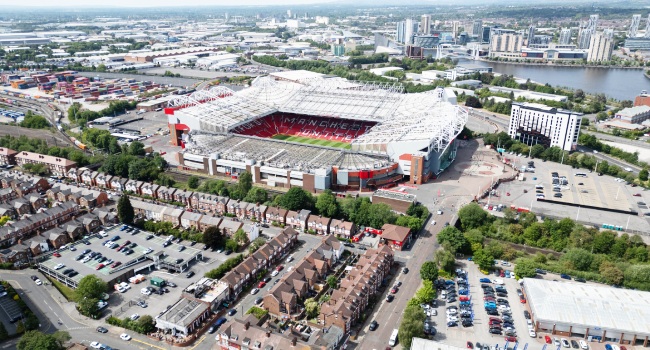
MANCHESTER-CITY: Manchester United have moved closer to building their proposed £2 billion, 100,000-capacity stadium after securing most of the land required for the ambitious development project.
The Premier League giants announced on Monday that they had acquired a 25-acre (10-hectare) site close to Old Trafford, marking a significant milestone in plans to construct what is expected to become Britain’s largest sporting arena.
The newly acquired triangular plot, located around 350 metres northwest of Old Trafford, means that adjacent land owned by Freightliner will no longer be needed for the project. The location of the freight terminal had previously complicated plans for the new stadium development.
Collette Roche, chief executive overseeing the new stadium project, described the latest development as a major breakthrough in Manchester United’s vision for a world-class home.
Today’s news highlights the progress we’re making towards a world-class new home for Manchester United and represents a significant milestone as we move into the next phase of development, Roche said.
She explained that building the new stadium close to Old Trafford would enable the club to maintain the traditions and heritage that supporters have cherished for generations.
“Being able to build so close to Old Trafford allows us to preserve the heritage, traditions and rituals that are so important to our fans.
Securing the right land for our new home has been absolutely critical, and the land we’ve acquired gives us the stage to deliver a truly world-class stadium that honours our past and is ready for our future, she added.
Manchester United first unveiled plans for the futuristic £2 billion stadium in 2025. The proposed 100,000-seat arena is expected to become the centrepiece of a wider 370-acre regeneration programme around the Old Trafford area.
The development is projected to deliver around 15,000 new homes and generate approximately 48,000 jobs within the local community, while creating as many as 90,000 jobs nationwide.
A comprehensive master plan for the Old Trafford regeneration initiative is expected to be unveiled on July 9.
Manchester United co-owner Sir Jim Ratcliffe had earlier described the decision to rebuild Old Trafford as a “no-brainer” following his investment in the club in 2024.
United have played at Old Trafford for 115 years, but the iconic 74,000-capacity stadium has increasingly shown signs of deterioration in recent years, prompting calls for a modern replacement capable of matching the club’s global status.
The proposed new stadium is expected to transform Manchester United’s infrastructure and position the club among the owners of the world’s most advanced sporting venues.


