
Libya’s oil industry has recorded a major technological breakthrough after the National Oil Corporation (NOC) announced the successful execution of an artificial intelligence-driven drilling operation at the Al-Khair Oil Field.
The operation, carried out by Sirte Oil and Gas Production and Manufacturing Company, represents a historic development in the energy sector, marking the first time such a technology has been deployed in Libya and only the second instance globally where an AI-driven drilling system has been fully implemented in a real oilfield operation.
The corporation disclosed that the advanced drilling exercise relied on sophisticated digital technology developed by the American oilfield services company Schlumberger, one of the world’s leading providers of energy technology and engineering solutions.
According to the NOC, the use of artificial intelligence in the drilling process introduces a new era of automation and data-driven decision-making in Libya’s oil and gas sector, significantly improving operational efficiency and production potential.
In a statement released by the corporation, officials explained that the newly deployed AI-based system has already demonstrated substantial improvements in drilling performance.
The technology allowed engineers to achieve a dramatic increase in the rate of penetration, effectively doubling the drilling speed compared with previous drilling operations carried out in the same oilfield using conventional methods.
Experts say such improvements could reduce drilling time, lower operational costs and allow oil companies to develop reservoirs more efficiently.
Beyond speed improvements, the AI application also ensured a higher degree of accuracy in placing the well within the most productive sections of the reservoir.
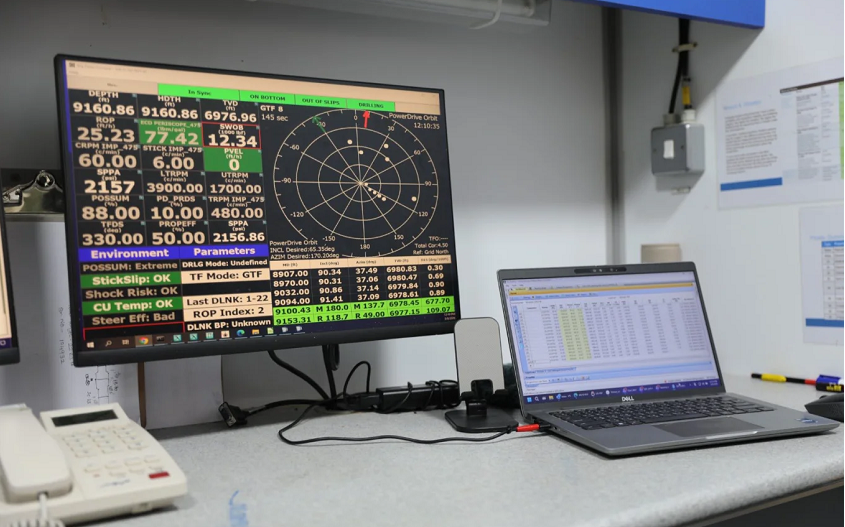
One of the most remarkable aspects of the operation was the ability of the AI system to autonomously guide the well trajectory during drilling.
The horizontal section of the well was automatically steered within the geological boundaries of the reservoir, with the system continuously analysing real-time data and making instant adjustments to maintain the optimal drilling path.
This process was conducted without direct manual intervention, marking a significant step toward fully automated drilling operations in the oil and gas industry.
During the drilling operation, the system continuously monitored geological formations and drilling parameters, enabling it to adjust the well path whenever necessary to remain within the target production zone.
The NOC further explained that the operation relied on advanced digital tools capable of analysing petrophysical logs and reservoir data automatically.
Through a specialised reservoir advisor engine, the system processed geological information in real time, providing immediate interpretation of the characteristics of the rock formations encountered during drilling.
This automated analysis enabled engineers to gain a comprehensive understanding of reservoir conditions while drilling was still in progress, allowing the system to respond instantly to any changes in the geological environment.
Such capabilities significantly enhance the accuracy of well placement and improve the likelihood of achieving high production rates.
The successful operation was made possible through the integration of two advanced technological components a reservoir advisor and a directional drilling advisor.
These systems worked together to provide a fully automated solution for both directional drilling and geological steering.
According to the NOC, the integration ensured that the well remained precisely aligned with the targeted reservoir layer throughout the drilling process, particularly along the horizontal section where precision is critical for maximizing production.
The horizontal section drilled during the operation measured approximately 1,800 feet, and the AI-driven system maintained the well within the most productive reservoir zone during the entire drilling process.
This precision not only improved drilling efficiency but also contributed to the significant increase in penetration rates recorded during the operation.
Following the successful completion of the drilling operation, production tests were carried out to assess the performance of the well.
Initial results indicated that the well is capable of producing approximately 1,060 barrels of oil per day.
The production rate was achieved using an electric submersible pump, operating through a 64/28-inch choke, which regulates the flow of oil from the well.
Industry analysts note that while the production figure may vary over time depending on reservoir conditions, the early results demonstrate the potential effectiveness of AI-assisted drilling in improving well productivity.
The NOC described the achievement as a landmark moment for Libya’s energy industry, highlighting the country’s increasing adoption of advanced technologies aimed at modernizing oil exploration and production activities.
Officials also emphasized that the project demonstrates the high level of expertise and technical capability among Libya’s national workforce, particularly the engineers and technicians working at Sirte Oil and Gas Production and Manufacturing Company.
According to the corporation, the successful implementation of AI-driven drilling solutions could pave the way for wider adoption of automation technologies across Libya’s oilfields.
Such innovations are expected to improve efficiency, reduce operational risks and enhance the overall competitiveness of Libya’s energy sector in the global market.
Energy experts say the successful deployment of artificial intelligence in drilling operations could significantly strengthen Libya’s position within the global oil industry.
By embracing advanced digital technologies, Libya may be able to increase production capacity, improve reservoir management and optimize drilling strategies across its vast oil reserves.
The NOC believes that continued investment in technology-driven solutions will play a crucial role in sustaining production levels and ensuring long-term growth in the country’s oil and gas sector.
As global energy companies increasingly adopt artificial intelligence and automation in exploration and production, Libya’s latest achievement signals its readiness to participate in the next phase of technological transformation in the global energy industry.