


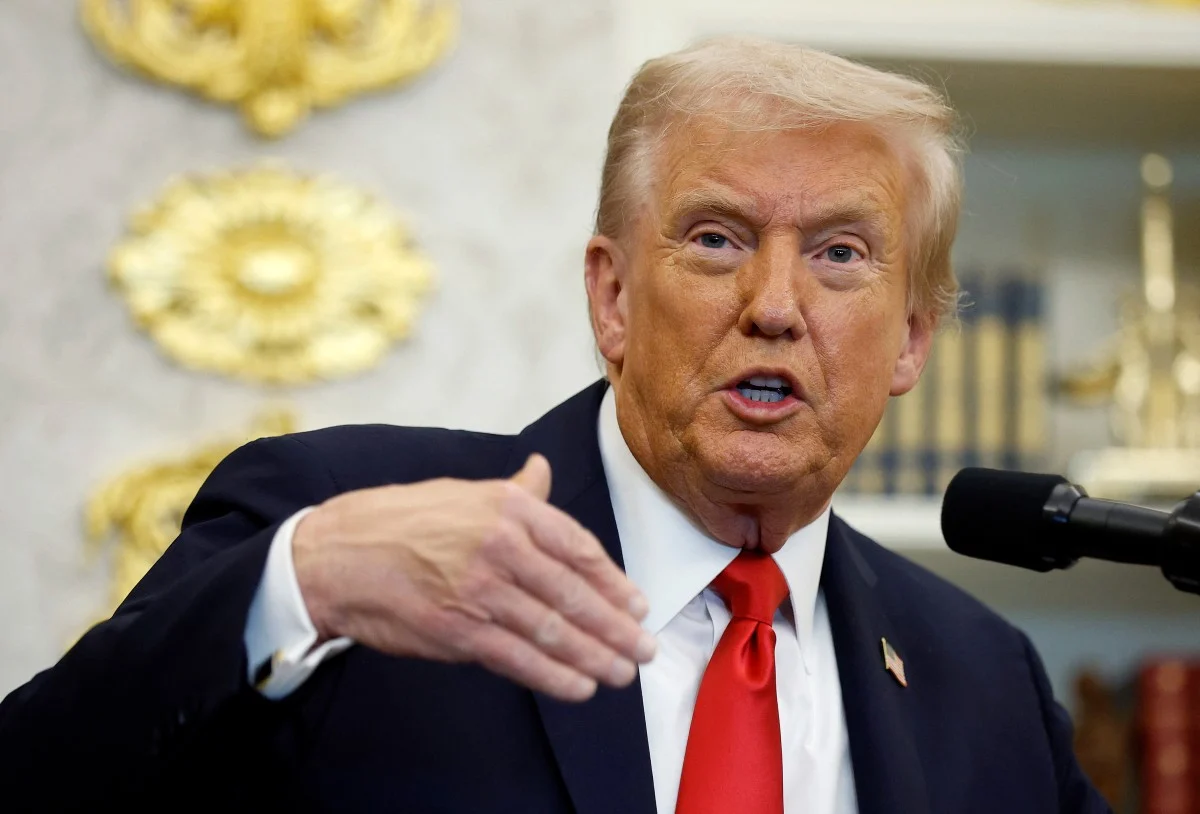
United States President Donald Trump has said Iran still retains about 21 to 22 per cent of its missile stockpile, indicating that the Islamic Republic continues to possess offensive capabilities despite weeks of military exchanges and efforts to weaken its defence infrastructure.
Trump made the remarks during an interview with NBC News on Friday, saying that although Iran’s arsenal had been significantly reduced, the country still had enough missiles and drones to pose a threat.
“They still have capacity. They have some missiles, they have some drones. I would say, percentage wise, maybe 21, 22 percent of their missiles,” Trump said.
The latest assessment comes amid heightened tensions between Iran, the United States and several Gulf countries following a series of missile attacks and retaliatory actions that have rattled the region.
Trump’s latest estimate marks an increase from the 18 per cent figure he gave in May.
Since the escalation of hostilities, the US president has repeatedly maintained that American strikes and military operations had severely crippled Iran’s ability to wage war.
He had previously claimed that Iran’s military infrastructure had been effectively neutralised and that its offensive capabilities had suffered devastating losses.
However, his latest remarks suggest that Tehran still possesses a sizeable number of missiles and drones, despite sustained military pressure and a fragile ceasefire.
Military analysts say Iran’s missile programme remains one of the most important pillars of its defence strategy and a key component of its influence across the Middle East.
Trump’s comments come at a time when the Middle East remains on edge following renewed hostilities involving Iran and several neighbouring countries.
Despite efforts aimed at maintaining a ceasefire, Tehran has continued to launch missiles across the region, raising fears of a broader conflict.
In recent days, Iran reportedly fired dozens of missiles toward neighbouring states, escalating concerns among Gulf countries and prompting increased military readiness across the region.
The continued exchanges have complicated diplomatic efforts to prevent the conflict from spiralling into a wider war involving global powers.
On Friday, Iran’s military announced that it had launched what it described as “warning missiles” at two United States destroyers operating in the Gulf of Oman.
According to Iranian authorities, the missiles were intended as a signal to the US Navy amid growing military activity in the strategic waterway.
However, the United States military swiftly denied the claim, insisting that no such attack occurred and that American naval assets remained unharmed.
The Gulf of Oman is a key maritime route connecting the Arabian Sea to the Strait of Hormuz, through which a significant portion of the world’s oil supply passes.
Any disruption to the area is capable of affecting global energy markets and international trade.
Earlier in the week, Kuwait disclosed that its air defence systems intercepted 30 ballistic missiles launched by Iran.
Kuwaiti authorities condemned the attack, describing it as “heinous Iranian aggression” and warning that such actions threatened regional peace and stability.
The interceptions prevented casualties and damage, but the incident underscored the growing security challenges facing Gulf states.
Several countries in the region have since stepped up surveillance and defence measures amid fears that the conflict could spread further.
Despite years of sanctions and international pressure, Iran has continued to invest heavily in its missile and drone programmes.
Military experts consider Tehran’s arsenal one of the largest in the Middle East, comprising ballistic missiles, cruise missiles and long-range drones capable of striking targets across the region.
Iran has frequently argued that its missile programme is designed for defensive purposes, while Western countries and regional rivals have expressed concerns over its growing capabilities and support for armed groups across the Middle East.
The programme has remained a major source of friction between Tehran and Washington for years.
The latest developments have renewed fears of further instability in the Middle East, particularly as diplomatic efforts to sustain the ceasefire continue.
Analysts warn that any miscalculation by either side could trigger another round of hostilities with potentially severe consequences for regional security, global oil supplies and international markets.
As tensions persist, world powers are expected to intensify diplomatic engagements aimed at preventing a wider confrontation and preserving stability in one of the world’s most strategically important regions.
Donald Trump, Iran missile arsenal, Iran missiles, Iran drone programme, US-Iran conflict, Middle East tensions, Gulf of Oman, Iran warning missiles, Kuwait ballistic missiles, Donald Trump NBC interview, Iran military capabilities, US Navy destroyers, regional security, Iran ceasefire, global oil markets, Tehran missile programme