


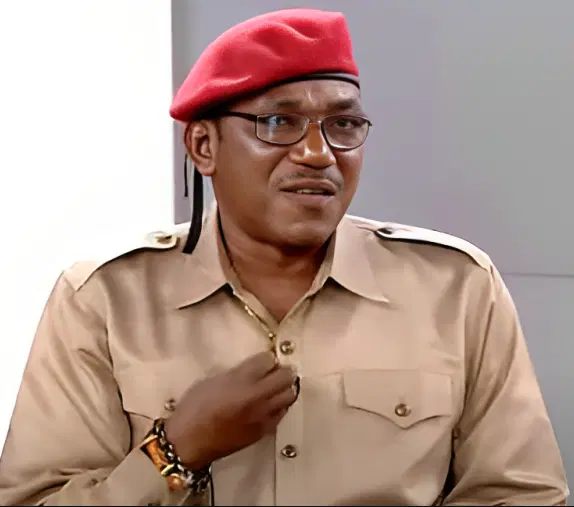
Former Minister of Youth and Sports Development, Solomon Dalung, has accused the administration of President Bola Tinubu of lacking the political will needed to tackle the worsening insecurity across Nigeria, alleging that the government is more concerned about the 2027 general elections than protecting citizens from terrorists and kidnappers.
Dalung made the remarks on Friday during an appearance on Arise Television’s Morning Show, where he criticized the Tinubu administration’s performance on security, the economy and governance after three years in office.
The former minister, who served under late President Muhammadu Buhari, said the government possesses sophisticated surveillance capabilities but has failed to deploy them effectively against terrorists.
According to him, authorities can quickly trace and arrest critics of the government but appear helpless when it comes to locating terrorists who openly release videos from forests after carrying out attacks.
Government seems not to have the political will to deal with it. They have all the gadgets to track anybody who criticises the government and can arrest such a person within minutes, but they cannot track terrorists who abduct schoolchildren, kill innocent people and circulate videos from the forests, he said.
Dalung described the recent appeal by the Minister of Information for Nigerians to unite against terrorism as embarrassing and a clear admission that the Federal Government had failed in its responsibility.
He argued that the statement revealed that the authorities lacked a clear solution to the insecurity ravaging different parts of the country.
According to him, two major problems are responsible for the worsening situation: the absence of political will and poor coordination among security agencies.
Dalung lamented that intelligence agencies, the military and other security institutions were not working together effectively, alleging that each agency was more concerned about gaining access to the President than sharing intelligence and combating terrorists collectively.
He warned that terrorist groups had created what amounts to a parallel economy in the forests and questioned the impact of American military support in Nigeria.
We were told the Americans are here with us. If they are truly here, what have they been doing? Nigerians have not felt their impact,” he stated.
The former minister also urged the government to empower local communities to take responsibility for their security instead of relying solely on promises from Abuja.
Speaking on the 2027 elections, Dalung expressed concern over what he described as a return to regional politics similar to the First Republic.
He noted that nearly every geopolitical zone now has presidential hopefuls, warning that the situation could lead to political confusion ahead of the next general election.
According to him, the North-Central region is likely to remain a major battleground in determining the outcome of the elections.
Assessing President Tinubu’s three years in office, Dalung said the administration had failed to deliver the expected dividends of reforms.
He argued that ordinary Nigerians were becoming poorer daily, while insecurity and economic hardship persisted.
Three years into his administration, Nigerians are hearing only rhetoric and blame games. The benefits of the reforms have not reached the people. Instead, poverty is increasing and the economy remains in distress, he said.
Political scientist Obafemi George, who appeared alongside Dalung on the programme, defended the Tinubu administration, insisting that the government deserved more time to implement its reforms.
George cited Nigeria’s sovereign credit rating upgrade by Standard and Poor’s from B- to B as evidence that the economy was improving.
He also attributed the surge in insecurity partly to the withdrawal of French military forces from the Sahel region, which he said created opportunities for terrorist groups to expand.
According to him, the current administration has spent more on security and recorded several successful rescue operations in recent months.
George argued that economic transformation does not happen overnight, citing examples from China, Rwanda and Dubai.
He said President Tinubu had laid a solid foundation for long-term development and that painful reforms such as fuel subsidy removal should have been implemented years ago.
What President Tinubu is doing today is to ensure that Nigeria will not face the same problems in the next decade. Nation building takes time, and sacrifices are necessary for future prosperity, he said.


