

Opposition political parties in Nigeria are intensifying efforts to form a broad political alliance ahead of the 2027 general elections, with the African Democratic Congress (ADC), Allied People’s Movement (APM), Nigeria Democratic Congress (NDC), Social Democratic Party (SDP) and Action Democratic Party (ADP) indicating their readiness to present a common front against the ruling All Progressives Congress (APC).
The proposed coalition is aimed at consolidating opposition forces, strengthening democratic institutions and improving their chances of defeating the APC in the 2027 presidential election.
According to Vanguard, discussions among the opposition parties are ongoing, with party leaders exploring different arrangements, including the possibility of adopting a single presidential candidate to challenge President Bola Tinubu.
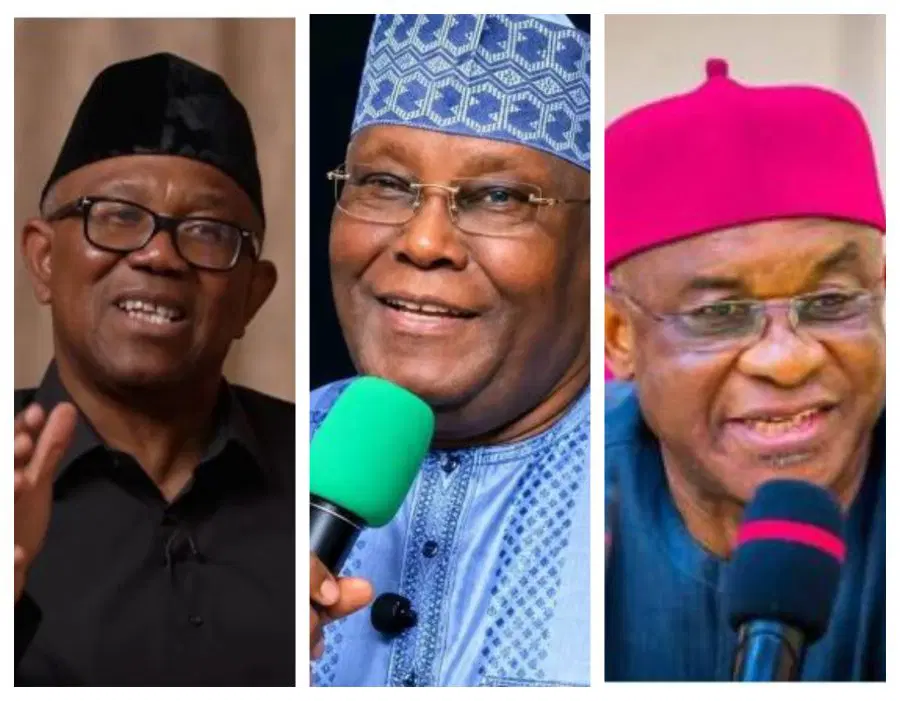
The development comes as opposition presidential hopefuls, including former Vice President Atiku Abubakar of the ADC, former Labour Party presidential candidate Peter Obi of the NDC and Oyo State Governor Seyi Makinde of the APM, were expected to meet on Monday, November 23, to sign a Covenant for Democratic Renewal.
However, the proposed second opposition summit has been rescheduled for Monday, November 30, 2026. The participating parties also agreed to suspend nationwide campaign activities on that day to allow their leaders and presidential candidates to attend the meeting.
Sources close to Atiku Abubakar and the ADC disclosed that the former vice president and his party were exploring possible power-sharing arrangements with other opposition parties as part of efforts to build a formidable coalition.
According to one of the sources, the discussions extend beyond electoral cooperation to include violence-free campaigns, credible elections and measures to prevent the ruling party from exerting pressure on state institutions to influence election outcomes.
The source said the coalition was also considering how opposition parties could consolidate their political strength through a power-sharing agreement.
The Nigeria Democratic Congress has expressed support for opposition parties working together behind a single presidential ticket.
The party’s National Publicity Secretary, Osa Director, said the NDC was willing to collaborate with progressive-minded political parties to challenge the APC administration.
Director said the party was presenting Nigerians with what it described as its preferred presidential ticket, featuring Peter Obi and Rabiu Kwankwaso.
He called on other opposition parties to support the Obi-Kwankwaso ticket as part of efforts to build a stronger alternative ahead of the 2027 elections.
The Social Democratic Party also declared its support for the opposition coalition, describing the initiative as an important step towards protecting Nigeria’s democracy.
Its National Publicity Secretary, Araba Rufus Aiyenigba, said the Coalition for Democracy, also known as G100, emerged from concerns over alleged threats, intimidation and harassment of opposition political parties, as well as what he described as the shrinking democratic space.
According to him, the coalition is working towards building a national consensus on electoral integrity and ensuring that the 2027 general elections are free, fair and credible.
Aiyenigba disclosed that beyond selecting a consensus presidential candidate, the opposition parties were preparing a broader framework for joint political action.
He said the framework would be unveiled on November 30, alongside commitments by participating parties to work towards democratic consolidation, peace and national stability.
The Action Democratic Party has also confirmed ongoing discussions among opposition parties towards forming an alliance against the APC.
The party’s National Publicity Secretary, Dr Sani Dawop, said opposition parties had recognised the importance of cooperation and were working towards presenting a common political front.
Dawop alleged that the ruling APC was also building alliances with political figures and parties ahead of the elections, mentioning Anambra State Governor Charles Soludo, FCT Minister Nyesom Wike and Osun State Governor Ademola Adeleke.
He, however, declined to disclose the details of the opposition’s strategy, insisting that discussions were ongoing and that Nigerians would be informed of the final decision at the appropriate time.
He argued that the coalition was not merely about winning political power but about rescuing the country from the challenges facing Nigerians under the current administration.
Dawop also pointed to the rising cost of living and economic difficulties confronting citizens, arguing that the opposition could take advantage of public dissatisfaction with the performance of the APC-led government.
Meanwhile, the Allied People’s Movement has indicated that Oyo State Governor Seyi Makinde could emerge as the opposition coalition’s preferred presidential candidate.
The party’s National Publicity Secretary, Abubakar Yusuf, said discussions were ongoing and expressed optimism that the November 30 coalition meeting would have significant implications for the 2027 elections.
Yusuf said opposition parties were considering the possibility of fielding one presidential candidate, adding that Makinde was a likely option.
He cited the governor’s age, public acceptance, performance, regional background and other considerations as factors that could favour his emergence.
The November 30 meeting is expected to be a significant moment in the opposition’s efforts to build a united political platform ahead of the 2027 general elections.
However, with different parties already expressing preferences for possible presidential candidates, including Peter Obi, Rabiu Kwankwaso and Seyi Makinde, the question of who eventually emerges as the coalition’s consensus candidate could become a major issue in the negotiations.
Whether the opposition parties can overcome individual political ambitions, party interests and competing presidential aspirations to establish a united front against the APC remains to be seen.
For now, the planned coalition represents one of the major political developments shaping Nigeria’s preparations for the 2027 general elections.