


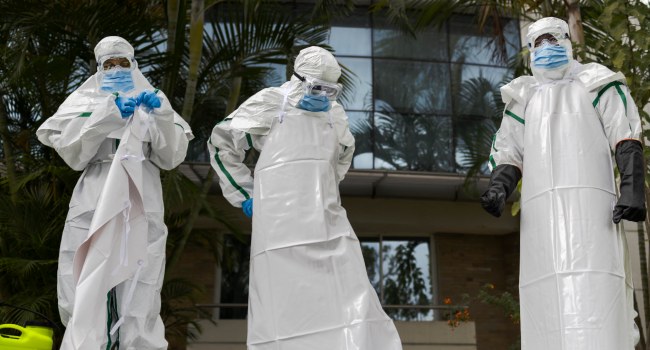
Nigeria’s confirmed Ebola patient is a Swiss woman married to a staff member of Switzerland’s embassy in Abuja, the Swiss foreign ministry has disclosed, adding that neither she nor her husband had travelled to the Democratic Republic of Congo (DR Congo), where the current outbreak originated.
The disclosure comes amid heightened public health surveillance in Nigeria following the confirmation of the country’s first recorded case of the Bundibugyo strain of Ebola virus disease.
According to a statement released by Switzerland’s foreign ministry on Friday, October 23, 2026, the woman had recently travelled to Uganda with her husband. Swiss authorities said the infection may have occurred during the trip, approximately two weeks before the announcement.
The Swiss foreign ministry said the woman had been experiencing symptoms and had been hospitalised for about a week at a private clinic in Abuja.
Her husband, who works at the Swiss embassy in the Nigerian capital, has been placed in isolation but has not shown symptoms, according to the statement.
“The Swiss woman, who is symptomatic, has been hospitalised for about a week at a private clinic in Abuja,” the ministry said.
It added that neither the woman nor her husband had visited DR Congo, the epicentre of the ongoing outbreak.
The ministry also confirmed that the other 25 embassy staff members—eight Swiss nationals and 17 local employees—were doing well. Following consultations with Nigeria’s health ministry and the World Health Organization (WHO), they were not required to undergo isolation.
Switzerland said it was considering the possible repatriation of the patient.
Nigeria announced its first recorded Ebola case on Tuesday, reporting that the patient was a woman who arrived in Abuja on a flight from Uganda.
Authorities subsequently identified 44 contacts linked to the case as part of efforts to monitor possible exposure and limit further transmission.
On Wednesday, Nigerian authorities confirmed that the patient had contracted the Bundibugyo strain of Ebola, the same species driving the outbreak in DR Congo.
The development has raised concerns because there are currently no specific vaccines or treatments available for the Bundibugyo strain, according to the report.
Health authorities are therefore relying on surveillance, contact tracing, isolation where necessary and coordinated public health measures to manage the situation.
Nigeria has become the fourth African country affected by the Bundibugyo outbreak, following DR Congo, Uganda and Kenya, according to the report.
The outbreak emerged in northeastern DR Congo in May before spreading into neighbouring Uganda.
Uganda recorded 20 confirmed cases, including two deaths, before its outbreak was officially declared over in August.
According to WHO figures cited in the report, the epidemic had exceeded 9,700 confirmed cases, including 4,690 deaths, as of October 20, 2026.
The Swiss government said it was working with Nigerian health authorities and relevant international health organisations in response to the case.
The possible repatriation of the patient remains under consideration, while her husband continues to be isolated despite showing no symptoms.
The situation highlights the importance of international coordination, prompt identification of contacts and effective surveillance as health authorities work to prevent further transmission.
Nigerians are encouraged to follow official guidance from relevant health authorities and rely on verified public health information as the response continues.


