


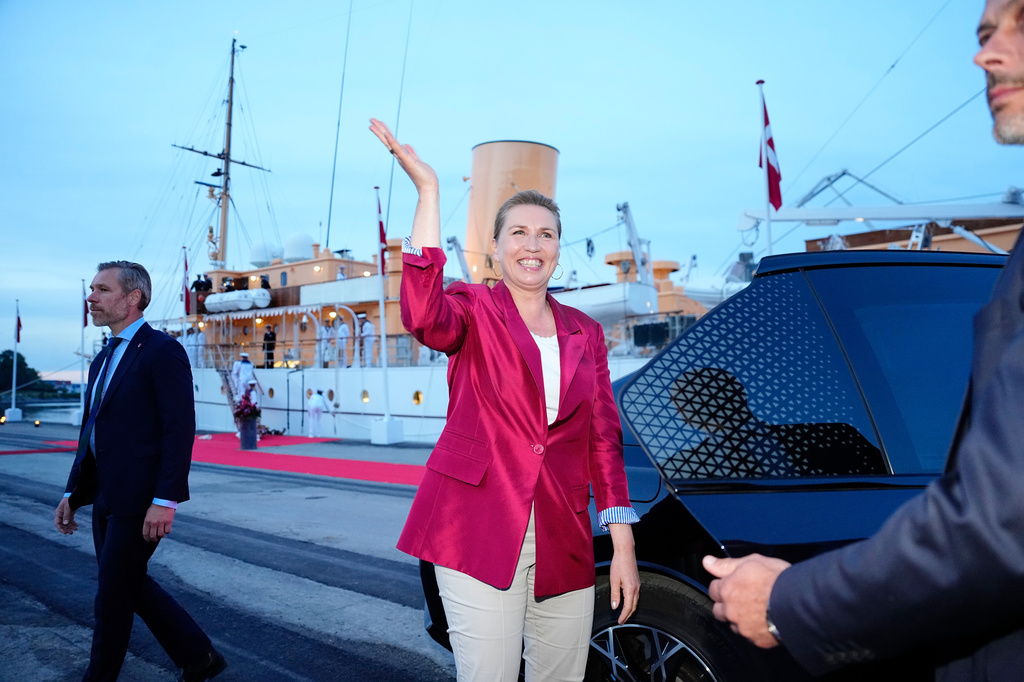
Danish Prime Minister Mette Frederiksen has secured a historic third consecutive term in office after successfully reaching an agreement to form a new centre-left coalition government following months of political negotiations.
The announcement brings an end to a prolonged period of uncertainty in Denmark after the country’s March 24 general election produced a fragmented parliament, with 12 political parties winning representation.
Frederiksen, leader of the Social Democratic Party, confirmed on Monday that she had formally informed King Frederik X that a new government was ready to be formed after weeks of intensive discussions among political parties.
I have been to see His Majesty the King and announced that a government can be formed after long negotiations, Frederiksen told reporters.
The formation of the new government follows more than two months of negotiations after Denmark’s parliamentary elections resulted in no single party securing a majority.
Although Frederiksen’s Social Democratic Party remained the largest political force in parliament, it suffered losses during the election, securing 38 seats in the 179-member Folketing, down from the 50 seats it previously held.
The election outcome reflected growing voter concerns over rising living costs and broader economic challenges facing households across Denmark.
Despite losing ground, Frederiksen successfully negotiated support from several parties, allowing her to remain in office and continue leading the Scandinavian nation.
The new coalition government will consist of:
- The Social Democratic Party
- The Social Liberals
- The Left Greens
- The Moderates
The alliance is expected to operate as a minority government and will rely heavily on support from the far-left Red-Green Alliance to secure parliamentary majorities for key legislation.
Political analysts say the arrangement will require significant cooperation among coalition partners and opposition groups to advance major policy initiatives
One of the most pressing issues facing Frederiksen’s new administration is managing diplomatic tensions surrounding Greenland.
The autonomous Arctic territory has become a major geopolitical flashpoint following threats by former U.S. President Donald Trump regarding potential American control of Greenland.
Denmark has consistently rejected any suggestion that Greenland could be annexed or transferred to another country, maintaining that the territory’s future should be determined by its people.
The new government is expected to intensify diplomatic engagement on the issue while strengthening relations with allies across Europe and North America.
Another major priority for Frederiksen’s third administration will be national security and military expansion.
Growing concerns over Russia’s ongoing war in Ukraine have prompted several European countries to increase defence spending and strengthen military readiness.
Denmark is expected to accelerate plans to modernize its armed forces and enhance its security capabilities in response to evolving threats across the continent.
Government officials believe increased investment in defence infrastructure will be necessary to safeguard national interests and contribute to broader European security efforts.
Frederiksen also emphasized that animal welfare would remain an important priority under the new government.
The issue featured prominently during the election campaign and attracted considerable public attention.
“It is a government platform for the people who are in Denmark and for the generations to come and also for the animals,” the Prime Minister said.
Her remarks signal that environmental protection and animal welfare policies will continue to play a significant role in the administration’s agenda.
Frederiksen disclosed that the government’s policy programme would be formally unveiled on Tuesday, while the names of cabinet ministers are expected to be announced on Wednesday.
The appointments will provide a clearer picture of how the new coalition intends to govern and address the challenges facing Denmark over the coming years.
Frederiksen’s latest victory further cements her position as one of Denmark’s most influential political leaders in recent history.
With a third consecutive term now secured, she faces the challenge of navigating economic pressures, geopolitical tensions, defence concerns and domestic policy priorities while maintaining unity within a diverse coalition government.
Political observers say the success of her administration will largely depend on its ability to balance economic stability, security concerns and social welfare policies in an increasingly uncertain global environment.