


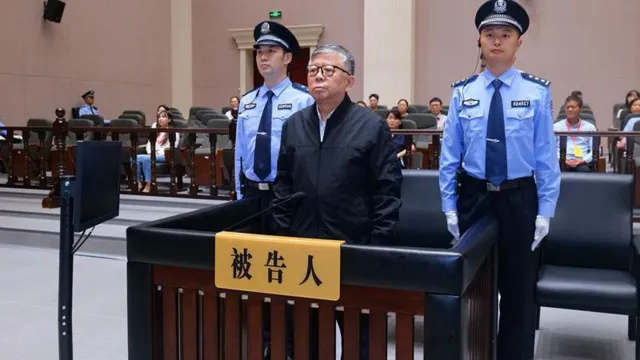
A court in eastern China has sentenced a former senior government official to death after finding him guilty of accepting more than 2.2 billion yuan (about $325 million) in bribes over a period of three decades.
The convicted official, Yang Youlin, 69, served in several key positions in Nanjing between 1993 and 2023. He was also found guilty of embezzlement, abuse of power and money laundering, making it one of China’s biggest corruption cases in recent years.
According to Chinese state media, Yang exploited his official positions to help individuals and companies secure engineering contracts, land transfers and financing approvals in exchange for huge sums of money and valuable gifts.
The ruling was delivered by a court in Changzhou, which described Yang’s crimes as “extremely serious” and said they caused enormous financial losses to the state and undermined public interest.
Yang’s conviction is part of President Xi Jinping’s sweeping anti-corruption campaign, which has targeted thousands of officials across different sectors, including government institutions, the military and the financial industry.
Since assuming office, Xi has made the fight against corruption a key pillar of his administration. While supporters say the crackdown has strengthened accountability and restored public confidence, critics argue it has also been used to sideline political rivals.
Although China imposes severe penalties for corruption, death sentences for financial crimes remain relatively uncommon and are generally reserved for cases involving exceptionally large sums or particularly grave offences.
In recent years, several high-profile officials have received similar punishments. Former financial executive Lai Xiaomin was executed in 2021 after being convicted of accepting 1.8 billion yuan in bribes over a decade.
Similarly, Li Jianping, a former official in Inner Mongolia, was executed in 2024 after being found guilty of embezzlement and accepting more than 3 billion yuan in illicit payments.
Chinese courts often hand down suspended death sentences or life imprisonment in corruption cases, especially where defendants cooperate with investigators or assist authorities in exposing other crimes.
Although Yang reportedly admitted his offences, pleaded guilty and expressed remorse during the trial, the court ruled that the scale and gravity of his crimes outweighed any mitigating factors.
The court stated that while he provided assistance to investigators, it was insufficient to justify a lighter sentence.
The latest judgment underscores China’s continued hardline approach to corruption, with authorities insisting that severe punishments remain necessary to deter public officials from abusing their positions for personal gain.


