


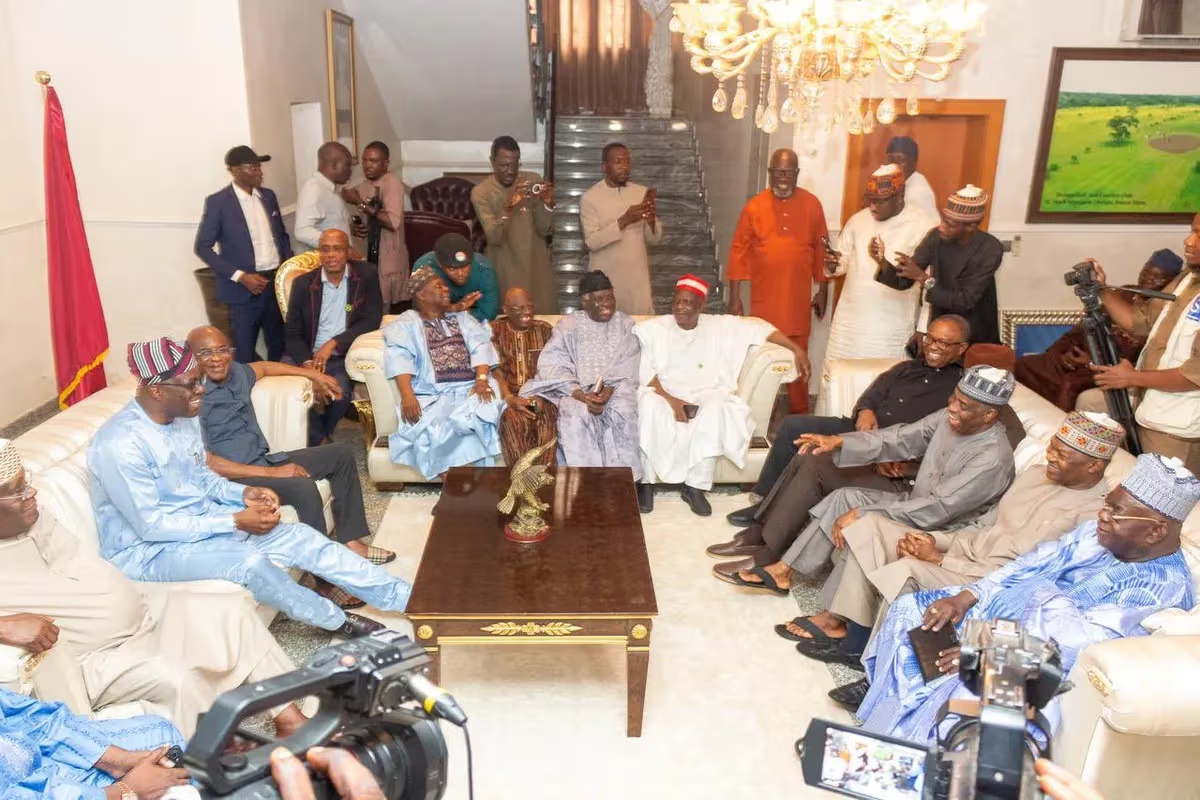
In a significant development that has sent ripples through Nigeria’s political landscape, leaders of the African Democratic Congress (ADC) and key figures of the People’s Democratic Party (PDP) under the Turaki faction convened for a strategic meeting at the residence of former Senate President David Mark in Apo, Abuja, on Wednesday, April 8, 2026.
The gathering brought together some of the nation’s most prominent political heavyweights, signaling what insiders describe as coordinated opposition efforts ahead of the 2027 general elections.
Those present included former Vice President Atiku Abubakar, Oyo State Governor Seyi Makinde, former Attorney General Abubakar Malami, and former governors Rotimi Amaechi, Rabiu Musa Kwankwaso, Aminu Tambuwal, Peter Obi, and Babangida Aliyu.
From the PDP side, the meeting saw the attendance of key stakeholders such as factional National Chairman Tanimu Turaki, Professor Jerry Gana, former Senate President Adolphus Wabara, former Niger State Governor Babangida Aliyu, and other members of the PDP’s National Working Committee.
Notably absent was Bauchi State Governor Bala Mohammed, whose absence has prompted speculation among political observers about internal alignments within the party.
The closed-door talks follow a day of heightened political activity in the Federal Capital Territory.
Earlier on Wednesday, the ADC staged a protest at the Independent National Electoral Commission (INEC) headquarters in Abuja. The protest, which was reportedly peaceful, highlighted growing public concern over electoral transparency and the independence of Nigeria’s election management body.
Political analysts note that the meeting at Mark’s residence reflects growing coordination among opposition parties, particularly as disputes continue within the ADC over leadership and direction.
The ADC has been plagued by internal strife, with multiple factions challenging the authority of the party’s leadership. The recent coalition-building with Turaki-led PDP stakeholders could represent a deliberate attempt to unify opposition forces and present a credible challenge to the ruling All Progressives Congress (APC).
The presence of prominent leaders such as Atiku, Obi, and Kwankwaso underscores the gravity of the meeting. These figures wield significant influence across various regions and demographic groups, making them crucial players in shaping an opposition strategy capable of counterbalancing the APC’s dominance in national politics.
Both the ADC and PDP have faced their share of internal divisions. Within the ADC, tensions between David Mark’s camp and Nafiu Bala’s faction have created uncertainty over the party’s leadership and political direction.
Kwankwaso, a former governor of Kano State and widely respected strategist, has publicly cautioned Bala to reconsider his actions, warning that internal fragmentation could weaken the party’s influence ahead of the elections.
Similarly, the PDP has experienced divisions, particularly regarding the Turaki-led faction, which has sought to assert more control over the party’s national strategy.
Analysts suggest that aligning the ADC and PDP factions at this juncture could enhance their collective bargaining power and political leverage. By creating a united front, opposition parties may strengthen their ability to influence electoral outcomes and assert greater pressure on the APC.
While the details of the discussions remain largely confidential, insiders suggest that topics likely included strategies for coalition-building, mobilizing grassroots support across states, and preparing for the upcoming elections.
Discussions may also have touched on safeguarding electoral integrity, addressing concerns about voter suppression, and ensuring that opposition voices are adequately represented in key decision-making processes.Observers note that the timing of the meeting
coming just hours after the ADC protest at INEC underscores the opposition’s focus on both political strategy and civic engagement.
Analysts argue that the coordinated approach reflects a deeper understanding among opposition leaders that success in 2027 will require unity, strategy, and public visibility.
The meeting has sparked conversations across social media and political circles, with many Nigerians expressing hope that a unified opposition could restore accountability and democratic norms.
Others, however, remain cautious, pointing to the historical difficulties of sustaining coalitions among fragmented political parties in Nigeria.
As the country approaches the 2027 elections, all eyes will remain on Abuja to see whether these high-level talks translate into concrete action.
The opposition’s ability to present a united front, reconcile internal divisions, and engage citizens could determine the balance of power in the next electoral cycle.
With opposition leaders signaling unity and determination, the stakes have never been higher.
Analysts suggest that the outcomes of these strategic discussions could redefine Nigeria’s political trajectory, offering either a strengthened opposition capable of challenging the status quo or a cautionary tale of political fragmentation.
In a political environment marked by uncertainty and high stakes, the meeting of ADC and Turaki-led PDP leaders is more than just a gathering of political elites—it represents a pivotal moment in Nigeria’s democratic journey, one that could shape the nation’s governance for years to come.


