


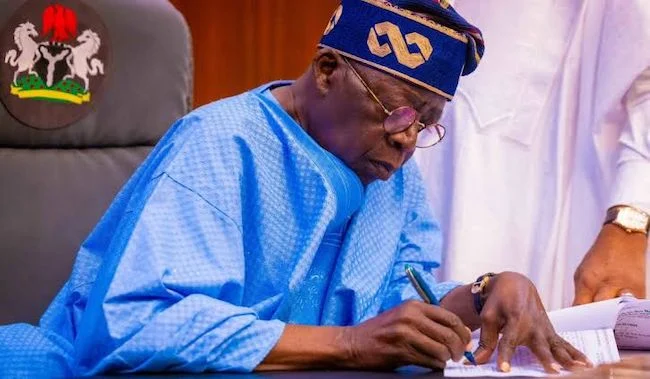
President Bola Ahmed Tinubu has signed into law the 2026 Appropriation Bill, approving a total expenditure of N68.32 trillion, in what analysts describe as one of Nigeria’s most ambitious fiscal plans in recent years.
The President also assented to a separate bill extending the implementation of the capital component of the 2025 budget from March 31, 2026, to June 30, 2026, to allow completion of ongoing projects.
According to a statement issued by presidential spokesperson Bayo Onanuga, the 2026 budget allocates:
- N4.799 trillion for statutory transfers
- N15.8 trillion for debt servicing
- N15.4 trillion for recurrent expenditure
- N32.2 trillion for capital expenditure
With nearly 50 per cent of the budget dedicated to capital projects, the administration is signalling a shift towards infrastructure development and long-term economic growth.
The budget, which took effect from April 1, aligns with the government’s Renewed Hope Agenda, focusing on economic stability, national security, and inclusive development.
President Tinubu directed all Ministries, Departments, and Agencies (MDAs) to ensure strict adherence to transparency, discipline, and efficiency in the use of public funds.
He emphasised the need for value for money and timely execution of projects, noting that effective implementation would be critical to achieving the budget’s objectives.
The President also commended the National Assembly of Nigeria for its cooperation and swift passage of the budget, reaffirming the importance of collaboration between the executive and legislative arms of government.
Economic experts have welcomed the signing but stressed that execution remains the key challenge.
Uche Uwaleke, President of the Capital Market Academics of Nigeria, described the budget as a significant fiscal milestone that aligns spending with long-term development goals.
He noted that allocations to critical sectors reflect a deliberate strategy:
- N5.41 trillion for defence and security
- N3.56 trillion for infrastructure
- N3.52 trillion for education
- N2.48 trillion for health
According to him, the increased focus on capital expenditure marks a departure from previous budgets dominated by recurrent spending.
“A capital-heavy budget, if effectively implemented, can stimulate economic activity, attract private investment, and support sustainable development,” he said.
Uwaleke described the extension of the 2025 capital budget as a pragmatic decision, noting that many projects are already at advanced stages.
He warned that abruptly ending funding could have resulted in abandoned projects, waste of resources, and erosion of public confidence.
Also commenting, Idakolo Gbolade, Managing Director of SD&D Capital Management Limited, said the budget is expected to address security concerns, boost infrastructure, and stimulate economic growth—particularly as the country approaches another election cycle.
He added that Nigerians expect tangible improvements, especially in light of rising living costs and declining purchasing power.
“With increased oil revenues and ongoing tax reforms, the government is expected to deliver meaningful economic relief and visible development outcomes,” he said.
Analysts remain cautiously optimistic about revenue projections, citing relatively strong global oil prices influenced by geopolitical tensions and the strategic importance of the Strait of Hormuz.
However, they stress that sustained fiscal discipline and improved revenue collection will be crucial to funding the budget and achieving its goals.