
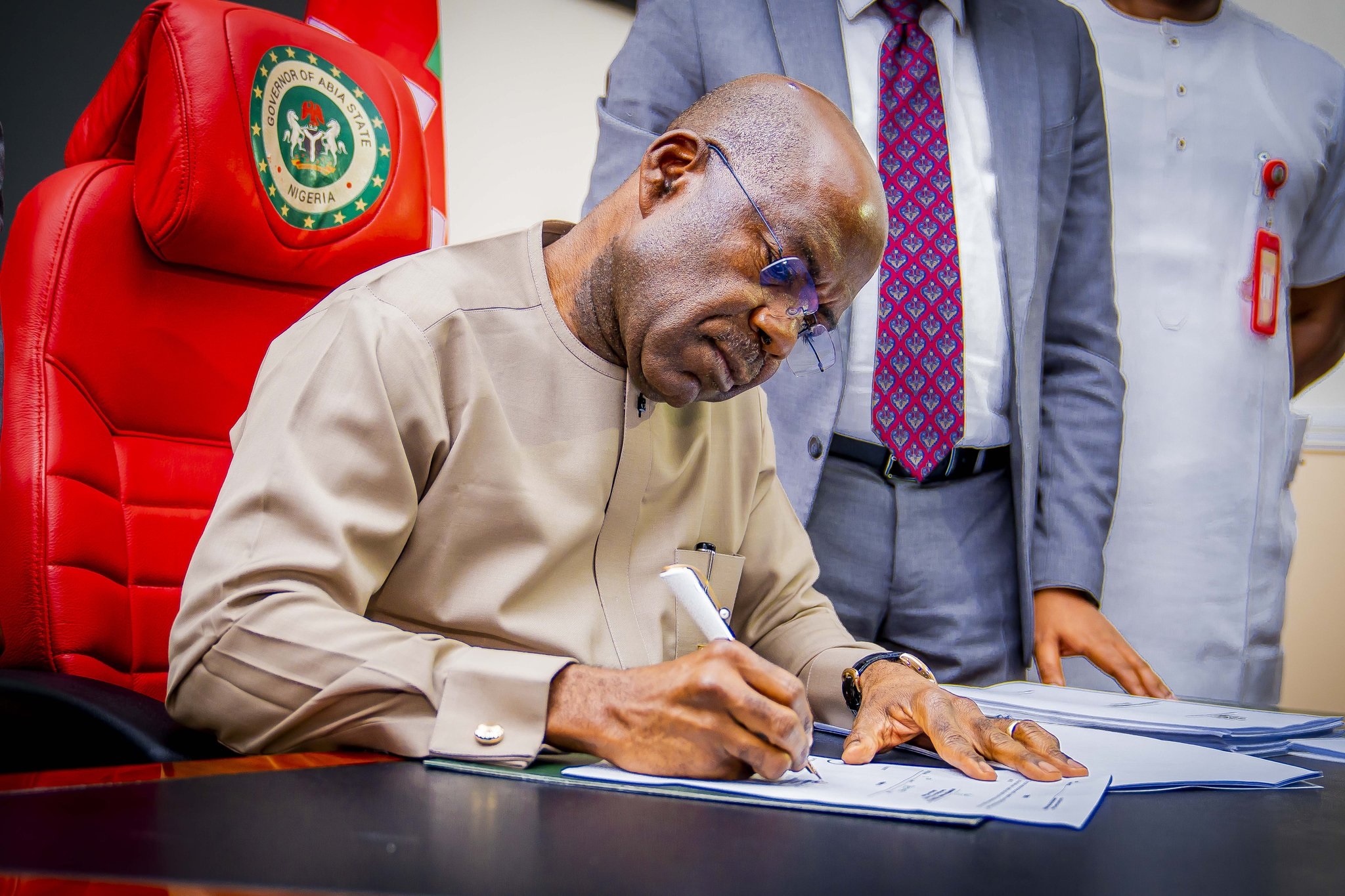
UMUAHIA: Abia State Governor, Alex Otti, has signed a major education reform bill into law, introducing a series of measures aimed at reducing the financial pressure on parents and making education more affordable and accessible across the state.
The reforms apply to both public and private schools in Abia State and seek to address some of the additional costs and practices that have increased the financial burden on families.
One of the key provisions is the reduction of the School Leaving Certificate fee to ₦2,000.
Under the new law, students will also no longer be permitted to change schools while in Senior Secondary School 2 (SS2).
Students are expected to sit for the West African Examinations Council (WAEC) or National Examinations Council (NECO) examinations in the same school where they completed SS2.
Another major provision requires students to pass a government-set examination known as the Government Centralized Examination (GCE) before they can be registered for WAEC or NECO.
The reform also introduces changes to the use of textbooks in schools.
Textbooks are required to be reusable, while schools are prohibited from requiring students to write their homework directly inside textbooks. The measure is intended to allow families with more than one child to pass textbooks from older children to their younger siblings.
The law also prohibits extravagant graduation ceremonies for pupils in nursery and primary schools.
According to the reforms, the measures are designed to promote affordability, reduce unnecessary expenses and improve efficiency within Abia’s education system.
The new provisions have also generated wider discussions about the possibility of introducing similar measures in other parts of Nigeria, particularly as families continue to face increasing education-related expenses.
The reforms represent an attempt to place greater emphasis on affordability and efficiency while limiting school-related expenses that may put additional pressure on parents.
Whether other state governments will adopt comparable measures remains to be seen, but the Abia reforms have renewed attention on the broader question of how governments can make quality education more affordable for Nigerian families.