


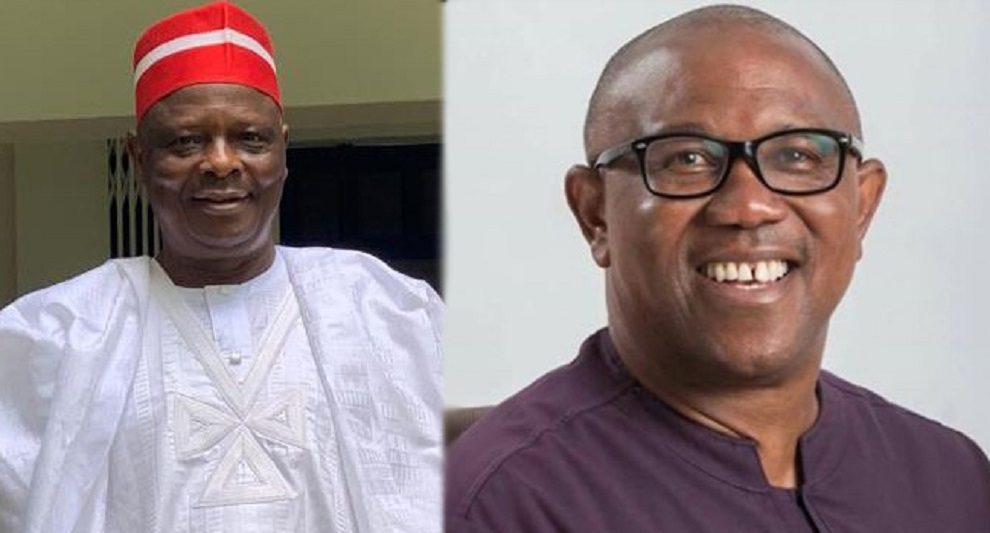
KADUNA: Presidential candidate of the Nigerian Democratic Congress (NDC), Peter Obi, and his running mate, Senator Rabiu Kwankwaso, have pledged to prioritise the fight against insecurity and address other major challenges facing Nigerians if elected in 2027.
The duo made the commitment during an NDC town hall meeting with residents of Kaduna State, where citizens engaged the party’s presidential team on issues affecting their communities and the wider country.
Obi disclosed details of the engagement in a post on his X account on Sunday, September 20, 2026, explaining that the Kaduna meeting formed part of a series of direct interactions between the NDC leadership and Nigerians.
According to Obi, the Kaduna engagement followed his visit to the Sheikh Muhammad Sambo Memorial Islamic Institute in Rigachikun.
He later joined Kwankwaso and other NDC candidates at the town hall meeting organised by the party.
The meeting provided an opportunity for residents to raise concerns while the party’s leadership presented its position on some of the country’s pressing challenges.
Obi said the engagement was designed to ensure that political leaders listen directly to citizens and incorporate their views into discussions about national development.
He said the NDC leadership used the occasion to reassure participants of its commitment to issues including national unity, poverty reduction, healthcare, education and insecurity.
Insecurity featured prominently among the issues discussed during the Kaduna meeting.
Obi said he and Kwankwaso assured residents of their determination to tackle insecurity and create conditions that would enable Nigerians to safely return to their homes, communities and farmlands.
The pledge comes amid continued public concern over insecurity in parts of the country, particularly its impact on communities, farming activities and livelihoods.
The NDC presidential candidate also linked security to broader economic development, arguing that Nigerians need an environment where they can work, farm and conduct businesses without fear.
The town hall also addressed the cost of living and the impact of fuel prices on households and businesses.
Obi said discussions covered corruption, inefficiencies associated with the fuel subsidy regime and the need to reduce the burden of fuel costs on Nigerians.
According to him, the party’s broader objective is to build an economy that allows citizens to live what he described as decent and dignified lives within Nigeria.
The former Anambra State governor said economic policies should ultimately translate into improved living conditions for ordinary citizens.
Obi also used the Kaduna meeting to call on other political parties and presidential candidates to engage directly with Nigerians rather than relying solely on political structures and campaign activities.
He urged political leaders and those seeking elective office to leave their comfort zones and interact with the people whose support they seek.
Let me use this opportunity once again to call on our opponents to also speak directly with the people and listen to their feedback. The very essence of democracy is people-centred governance, Obi said.
He argued that direct interaction with citizens would enable political leaders to better understand the challenges confronting communities across the country.
Obi said the Kaduna meeting was part of a broader programme of town hall engagements being organised by the NDC.
He recalled that the party had previously held a similar engagement in Port Harcourt, Rivers State, as part of its efforts to interact with Nigerians across different regions.
The former Anambra governor thanked the NDC leadership and organisers of the Kaduna meeting, while also commending residents who participated in the engagement.
The meeting comes as political parties and presidential contenders intensify grassroots engagement ahead of the 2027 Nigerian presidential election, with security, economic hardship, education, healthcare and the cost of living expected to remain major issues in the political discourse.