


The Central Bank of Nigeria (CBN) has reduced the Monetary Policy Rate (MPR) from 26.5 per cent to 23 per cent, cutting the benchmark interest rate by 350 basis points as inflation continues to moderate and other economic indicators improve.
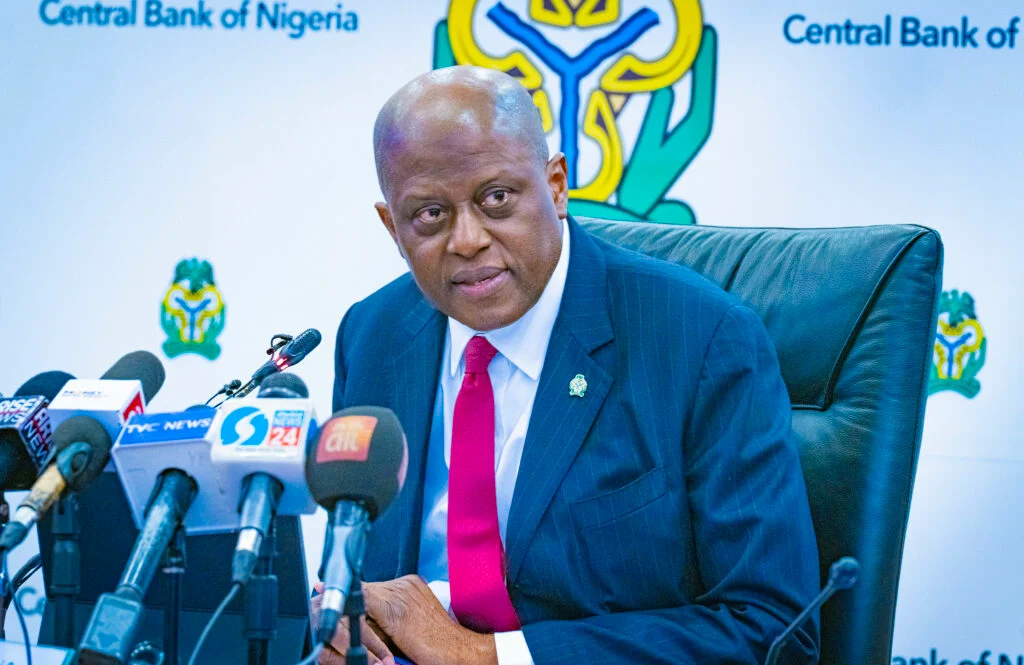
CBN Governor, Olayemi Cardoso, announced the decision on Tuesday, September 22, 2026, after the conclusion of the 307th meeting of the Monetary Policy Committee (MPC) in Abuja.
The 3.5 percentage-point reduction represents the largest cut in the current monetary policy cycle. The MPC had previously maintained the MPR at 26.5 per cent at its May and July meetings, after a 50-basis-point reduction in February.
According to Cardoso, the committee decided to “reset” the MPR at 23 per cent and recalibrate the Standing Facilities Corridor to +50/-300 basis points around the new policy rate.
The MPC retained the Cash Reserve Requirement (CRR) at 45 per cent for deposit money banks, 16 per cent for merchant banks and 75 per cent for non-Treasury Single Account public-sector deposits.
Cardoso said the adjustment was intended to improve the transmission of monetary policy and restore the MPR as the principal signal of the CBN’s policy direction.
Importantly, the governor stressed that the adjustment should not automatically be interpreted as a broad shift towards monetary easing.
He explained that the gap between the MPR and prevailing market rates had weakened the effectiveness of monetary policy transmission, making a recalibration necessary.
The MPC said the recalibration followed improvements in the CBN’s monetary policy implementation framework, including the adoption of the Nigerian Overnight Financial Average (NOFR) as a transaction-based operational benchmark.
The committee said the framework has improved transparency in money-market operations and that aligning the MPR more closely with market conditions would strengthen the transmission of monetary policy.
Cardoso similarly described the decision as a reset of the operating framework rather than a fundamental abandonment of the CBN’s restrictive policy approach.
The rate reduction comes as Nigeria records another period of moderating inflation.
Headline inflation fell marginally from 15.43 per cent in July to 15.39 per cent in August 2026, according to figures cited during the MPC’s deliberations.
Food inflation also declined from 20.31 per cent to 19.57 per cent, while core inflation dropped from 14.97 per cent to 13.29 per cent.
Month-on-month headline inflation slowed more significantly, falling from 1.57 per cent to 0.71 per cent.
The MPC attributed the improvement partly to the effects of previous monetary tightening, greater exchange-rate stability and improving inflation expectations.
The CBN also pointed to improvements in Nigeria’s external sector.
The country’s balance-of-payments surplus increased to $3.51 billion in the second quarter of 2026, compared with $2.38 billion in the first quarter.
According to Cardoso, stronger external buffers, improved foreign-exchange conditions and increased investor confidence were among the factors considered by the MPC in its latest decision.
Nigeria’s gross external reserves were reported at $55.25 billion as of September 18, providing a stronger buffer for the economy.
The governor also said monthly diaspora remittances had risen substantially, approaching $1 billion by July, compared with about $200 million when the CBN intensified some of its reforms.
The MPC’s decision also came against the backdrop of stronger economic output.
Nigeria’s real Gross Domestic Product (GDP) grew by 4.43 per cent in the second quarter of 2026, up from 3.89 per cent in the first quarter.
Non-oil GDP growth accelerated to 4.31 per cent from 3.94 per cent, while the oil sector expanded by 7.31 per cent compared with 2.57 per cent previously.
The Composite Purchasing Managers’ Index also increased to 52.7 points in August from 51.1 points in July, indicating continued expansion in private-sector activity.
The reduction in the MPR could eventually influence lending and deposit rates across the banking sector, although the effect on individual loans and savings products will depend on how commercial banks adjust their own pricing.
Businesses and other borrowers could see lower financing costs if the reduction in market interest rates is sustained.
For investors, however, a lower policy-rate environment could put downward pressure on yields on short-term fixed-income instruments such as Treasury bills and Open Market Operations bills.
Market analysts have said existing holders of longer-duration bonds could benefit from price appreciation if market yields decline, while investors putting new money into fixed-income securities could face lower returns.
Despite the rate reduction, the CBN said it would continue monitoring liquidity in the financial system, particularly as Nigeria approaches another election cycle.
Cardoso said the apex bank had developed scenarios based on previous election periods and would monitor currency in circulation, monetary aggregates, banking-system liquidity and foreign-exchange demand.
He said the CBN was prepared to deploy appropriate instruments to mop up excess liquidity if necessary.
The governor also encouraged Nigerians to make greater use of electronic payments, noting that digital transactions provide greater transparency and create an audit trail.
The MPC said it expects inflation to continue moderating in the short to medium term, supported by exchange-rate stability, the delayed effects of previous monetary tightening and improved food supply during the harvest season.
However, the committee also identified risks that could affect the inflation outlook, including geopolitical tensions and increased spending associated with the election cycle.
The CBN said future monetary policy decisions would remain dependent on incoming economic data.
The next MPC meeting is scheduled for November 23 and 24, 2026.


