


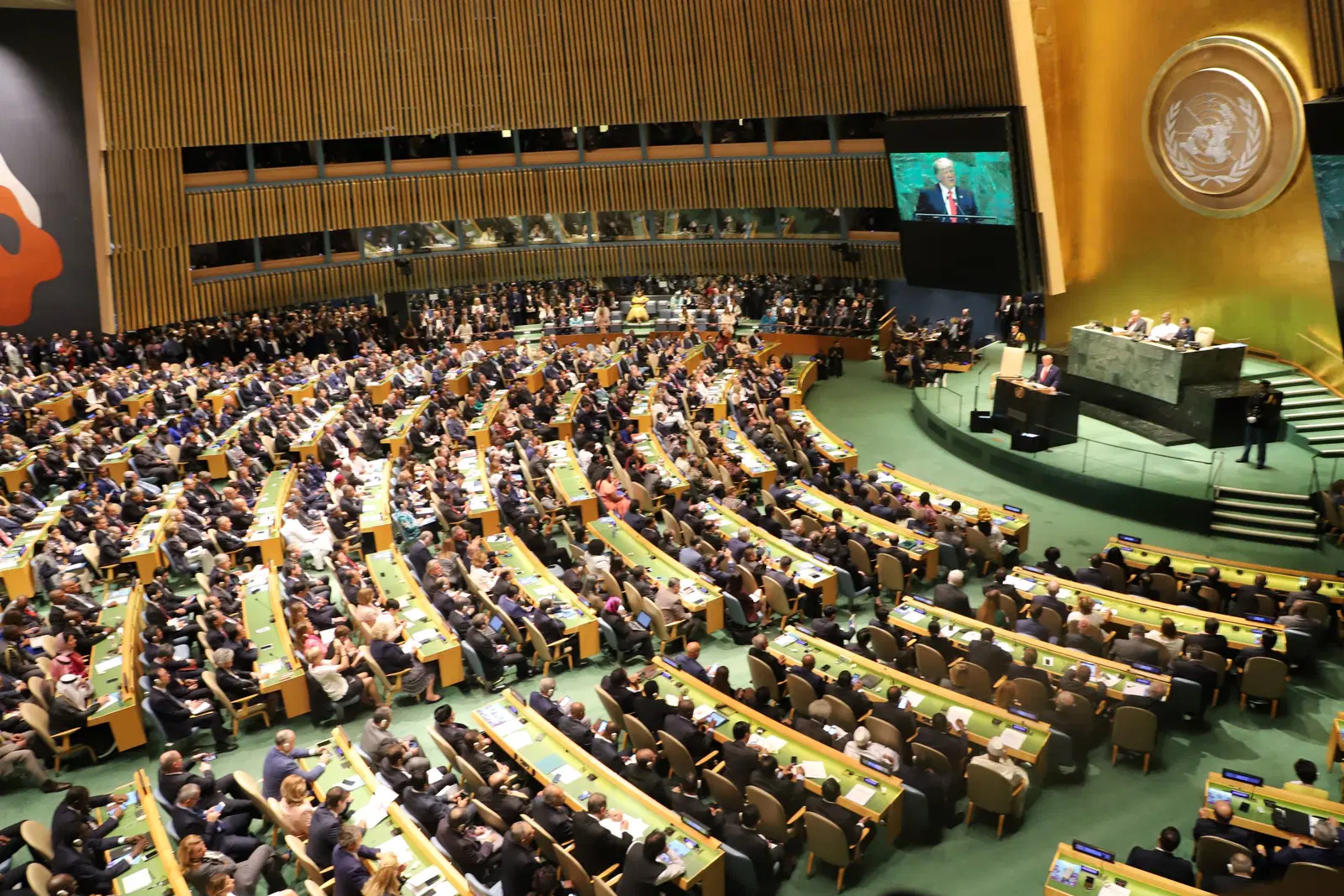
NEW YORK: Every September, presidents, prime ministers and other senior government officials from around the world converge on New York for the United Nations General Assembly.
It is one of the biggest diplomatic gatherings on the global calendar, with countries using the occasion to speak about conflicts, the economy, development, climate change, security and other issues affecting their citizens and the wider world.
But there is one interesting detail that often catches attention: Brazil traditionally gets the first word.
At the 2026 General Debate, which began on Tuesday, September 22, Brazil again occupied the opening speaking position before the United States and other member states.
So, why Brazil?
Here are five things to know about the long-standing tradition.
Brazil has traditionally opened the UN General Debate since 1947.
The United Nations explains that the practice developed during the organisation’s early years, when countries were reluctant to volunteer to deliver the opening speech.
Brazil repeatedly stepped forward to take the first slot, and what began as a practical arrangement eventually became a long-standing diplomatic tradition.
The United States normally follows Brazil because it is the host country of the UN headquarters in New York.
Contrary to what some people may assume, there is no formal United Nations rule stating that Brazil must always speak first.
The arrangement has survived because it became an accepted tradition over the years.
In other words, Brazil’s opening position is based on diplomatic practice rather than a provision in the UN Charter or another rule requiring it.
Once Brazil and the United States have delivered their opening addresses, the speaking order becomes more complicated.
Heads of state generally take priority, followed by heads of government and other senior representatives, including foreign ministers.
The UN also takes several other factors into account when arranging the programme. These can include geographical considerations, the order in which requests to speak were received and other diplomatic considerations.
With 193 UN member states, organising the General Debate requires a carefully managed schedule.
UN speakers are generally asked to keep their statements to 15 minutes.
However, that is essentially a guideline rather than a strict limit that automatically ends a speech.
Over the years, some leaders and government representatives have spoken considerably longer than the recommended time.
The 15-minute guideline is intended to help ensure that as many participating countries as possible get an opportunity to address the General Assembly.
Opening the General Debate gives Brazil an early opportunity to put its priorities before the international community.
The General Debate allows member states to explain their positions on major international and domestic issues, raise concerns and call for cooperation on matters they consider important.
Because representatives of all 193 UN member states participate, the event is closely watched by governments, diplomats, international organisations and the global media.
Brazil’s opening position therefore gives its address a prominent place at the beginning of one of the world’s largest annual diplomatic gatherings.
Brazil’s role as the first speaker at the UN General Debate is a reminder that international diplomacy is shaped not only by formal rules but also by traditions that develop over time.
What began in the early years of the United Nations has continued for nearly eight decades, with Brazil retaining the customary opening slot and the United States following as host country.
For millions watching the General Assembly each year, the familiar sequence has become part of the diplomatic ritual surrounding the UN’s annual high-level debate.