


WASHINGTON: The United States military has lost or sustained damage to at least 81 aircraft since the war with Iran began, with the affected military platforms estimated to be worth between $1.9 billion and $3.3 billion, according to a new Congressional Research Service report.
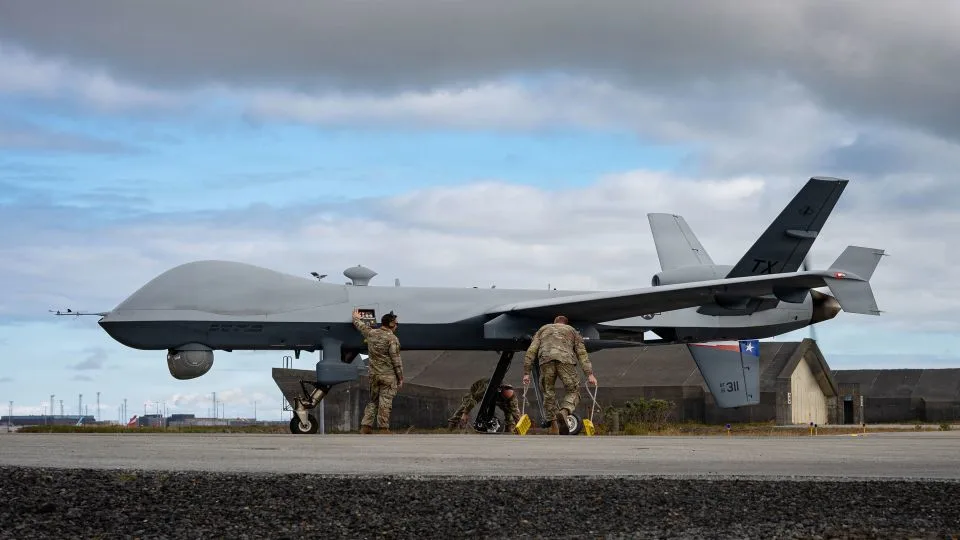
The losses include fixed-wing aircraft, helicopters and unmanned drones, with the MQ-9 Reaper accounting for more than half of the aircraft affected.
The report, released this week, was based on information from the US Department of Defense, the Pentagon’s inspector general, US Central Command and media reports reviewed by congressional researchers.
Among the high-value aircraft listed in the report are an F-35A fighter jet and an E-3 Sentry, a four-engine airborne early-warning and control aircraft equipped with a large radar dome used for tracking targets and managing airspace.
The Congressional Research Service said the estimated replacement cost of the aircraft ranges from $1.9 billion to $3.3 billion, depending on how the Department of Defense chooses to replace the damaged or destroyed platforms.
The figure represents only aircraft losses and does not reflect the broader cost of the conflict.
The wider cost of the war is estimated to have reached at least $45 billion, according to figures previously reported by CNN sources.
That estimate does not include damage to US military infrastructure and facilities across the Middle East, some of which came under Iranian attack during the conflict.
A separate Pentagon inspector general report released in September estimated that US equipment losses in the war could be worth as much as $3.7 billion, including nearly 60 aircraft.
The latest congressional assessment puts the number of aircraft lost or damaged at 81 when drone assets are included.
The MQ-9 Reaper has suffered particularly heavy losses during the conflict.
The remotely piloted aircraft is used for intelligence, surveillance and reconnaissance missions, close air support and combat search and rescue operations.
According to the report, 45 MQ-9s have been lost in the Middle East this year, a rate described by analysts as alarming.
The heavy losses have raised questions about the vulnerability of large, unmanned aircraft when operating in contested airspace.
US Air Force Chief of Staff Gen. Kenneth Wilsbach previously described the MQ-9 as the military’s “most valuable player in the war with Iran, highlighting its extensive operational role despite the losses.
Not all of the 81 aircraft counted by the Congressional Research Service were necessarily destroyed.
Some suffered damage that could be repaired and returned to operational service.
The report cited eight F-15 Strike Eagle fighter jets that sustained light damage during an Iranian attack on Muwaffaq Salti Air Base in Jordan in September.
The distinction between damaged and destroyed aircraft is significant because it affects the actual replacement burden facing the US military.
The aircraft losses occurred against a wider backdrop of Iranian attacks on American military installations across the region.
The Pentagon inspector general’s report documented Iranian strikes against US bases in Kuwait, Bahrain, Qatar, the United Arab Emirates, Saudi Arabia, Iraq, Oman and Jordan.
Newly released footage obtained by CBS News also showed the impact of Iranian attacks on Camp Buehring, a major US military staging facility in Kuwait.
The footage showed damage to buildings and military equipment following attacks involving ballistic missiles and drones.
US troops stationed at the base were reportedly forced to take shelter in bunkers, while most American personnel had already been moved away from the installation as part of the Pentagon’s strategy to reduce exposure to Iranian attacks.
Before the war began, the US military had moved most of the approximately 7,000 troops previously stationed at Camp Buehring and other locations in Kuwait.
More than 100 soldiers remained at the facility after the conflict began.
According to CBS News, repeated Iranian attacks eventually forced the remaining personnel to leave the base and relocate deeper into the Kuwaiti desert.
The troops later moved to Camp Arifjan before being transferred to other positions.
No US service member was killed by enemy fire at Camp Buehring or the temporary forward operating bases, although two soldiers were reportedly injured by lightning during operations in the desert.
The wider conflict has nevertheless caused significant American military casualties, including six US service members killed in an attack on the Port of Shuaiba in Kuwait.
The Congressional Research Service report has raised questions about whether Congress is receiving sufficient information from the Pentagon about American military losses in the conflict.
The report said lawmakers may need to determine whether additional funding will be required to repair or replace damaged equipment and whether the US defence industry has sufficient production capacity to meet those demands.
Congressional researchers also warned that losses of certain high-demand aircraft could create capability gaps in other parts of the world. Congress may assess whether losses in certain high-demand platforms that are aging and limited in number, such as the E-3 Sentry, create capability gaps or increase risk in other theaters,” the report said.
The assessment could therefore have implications beyond the Middle East, particularly if aircraft losses reduce the number of platforms available for US operations elsewhere.
The scale of the losses comes as the Trump administration faces growing pressure over the cost and consequences of the Iran war.
The conflict has already generated significant military expenditure, while damage to American bases and equipment has added to the financial burden.
The latest figures also underscore the changing nature of the conflict, with drones, missiles and air-defence systems playing an increasingly important role alongside conventional fighter aircraft.
For Washington, the challenge now extends beyond replacing damaged equipment. US officials and lawmakers must also assess whether sustained losses are reducing America’s ability to maintain military operations in other regions while meeting its commitments to allies and partners.