


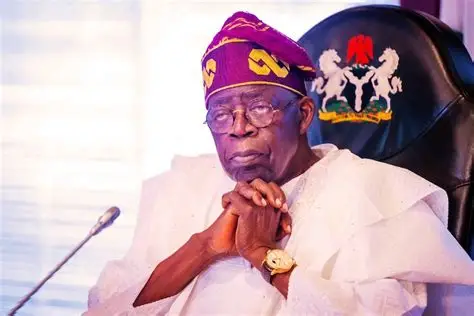
A political critic has alleged that President Bola Ahmed Tinubu’s political support is largely sustained by state governors who depend on his influence and political backing to secure their electoral ambitions, while warning that concerns over the independence of the Independent National Electoral Commission (INEC) could undermine public confidence in Nigeria’s democracy.
The critic made the allegations during a political discussion on News central, arguing that some governors supporting the President may be motivated less by genuine public approval of his administration and more by their perceived dependence on his financial resources, political influence and control of the country’s political machinery.
According to the speaker, some governors believe their political survival and chances of securing another electoral victory could depend on maintaining a close relationship with Tinubu and receiving his support during future elections.
The critic further alleged that such political relationships could create pressure on electoral institutions, particularly INEC, which is constitutionally expected to operate independently and conduct credible elections without interference from political officeholders.
The speaker, however, did not provide evidence in the remarks to substantiate the allegations that governors had been bought or that the President could direct INEC to manipulate election outcomes.
A major focus of the criticism was the perceived independence and credibility of INEC.
The speaker argued that the commission’s constitutional status as an independent electoral body would mean little if its actions failed to demonstrate impartiality, transparency and fairness during elections.
Actions speak louder than words, the critic said, questioning whether Nigerians could confidently trust the electoral umpire based on its conduct in previous elections.
The speaker also expressed concern that the commission’s leadership had allegedly demonstrated political bias even before the next general election, suggesting that Nigerians should pay close attention to its decisions and activities ahead of the polls.
However, the remarks did not identify specific decisions or provide documentary evidence establishing that INEC or its leadership had acted on the President’s instructions.
The allegations nevertheless touch on a major issue in Nigeria’s democratic development: public confidence in the neutrality of institutions responsible for managing elections.
The critic also compared concerns about the current electoral leadership with the controversy surrounding former INEC Chairman, Professor Mahmood Yakubu.
The speaker suggested that Nigerians had previously questioned the commission’s conduct under Yakubu, particularly in connection with the 2023 general election, and warned against allowing similar concerns to develop under the present leadership.
The comments reflected a broader demand for electoral transparency and an electoral commission that can demonstrate independence from the interests of the governing party and political officeholders.
Nevertheless, allegations of political interference must be supported by credible evidence, and criticism of an electoral body should be distinguished from established findings of misconduct.
In one of the strongest parts of the remarks, the critic warned that alleged misconduct involving Nigeria’s political institutions could eventually attract international attention and potentially lead to proceedings before the International Criminal Court (ICC).
The speaker made a particularly severe statement suggesting that those considered responsible for serious wrongdoing could one day face prosecution and imprisonment.
When challenged over the strength of the statement, the critic maintained that strong language was necessary to confront what was described as serious misconduct within public institutions.
The warning raises questions about accountability, the rule of law and the consequences of alleged abuses of democratic institutions.
However, the ICC does not automatically prosecute political controversies, allegations of electoral manipulation or every form of corruption. Its jurisdiction is limited to specific crimes under the Rome Statute, including genocide, crimes against humanity, war crimes and the crime of aggression, subject to applicable legal requirements.
Consequently, any suggestion that Nigerian political leaders could face ICC prosecution would require evidence of conduct falling within the court’s jurisdiction.
The comments come amid continuing political debate over the credibility of Nigeria’s electoral system, the relationship between the Federal Government and state governors, and the ability of independent institutions to resist political pressure.
As preparations and political alignments ahead of future elections continue, the independence of INEC is likely to remain a major subject of public discussion.
For Nigeria’s democracy to command confidence, the electoral commission must not only maintain its constitutional independence but also demonstrate impartiality through transparent procedures, credible decisions and equal treatment of political parties and candidates.
Similarly, political support for the President or any governing party should be judged through democratic processes rather than assumptions about financial influence, political patronage or electoral advantage.
The critic’s remarks represent a forceful expression of distrust in the country’s political and electoral institutions. The allegations, however, remain claims made by the speaker and should be subjected to scrutiny and verification.


