


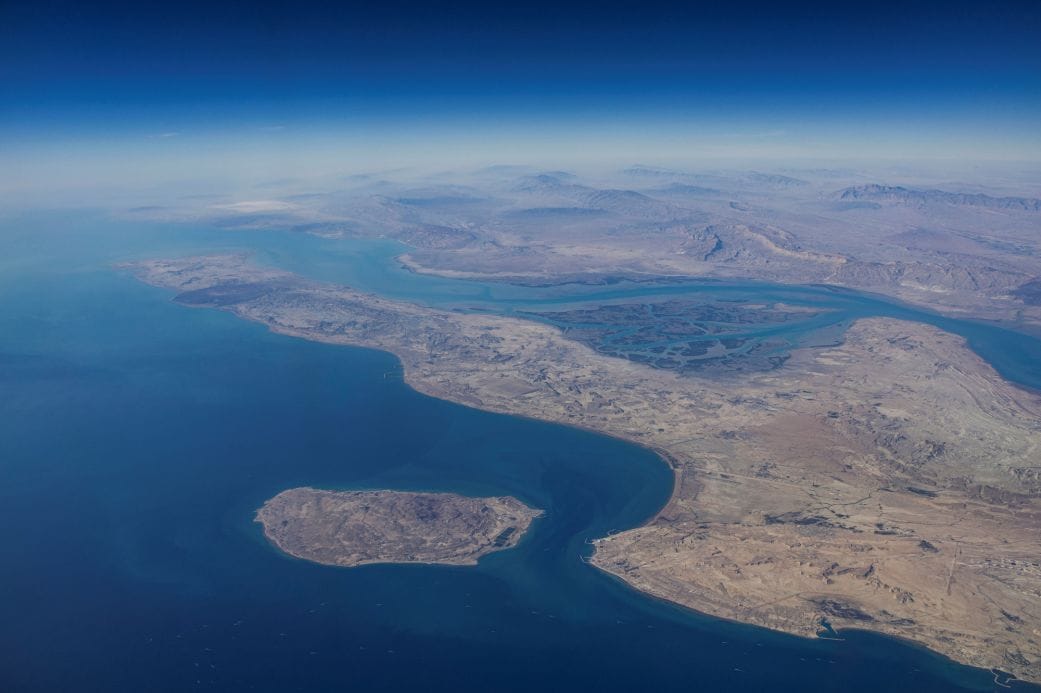
In the vast architecture of the global economy, there are only a handful of geographic locations capable of shaking financial markets, energy systems and geopolitical stability at once. One of them is the narrow waterway known as the Strait of Hormuz a strategic corridor linking the Persian Gulf to the Arabian Sea.
This slender maritime passage, just a few dozen kilometres wide at its narrowest point, has become the central arena in the unfolding geopolitical rivalry between the United States and Iran.
Though ships rather than soldiers move through its waters, the stakes are unmistakably strategic: energy supply, economic dominance and global financial stability.
Today, the Strait of Hormuz is more than a shipping lane. It has become a global economic battlefield, where American military power and Iranian geographic leverage collide—shaping the fate of oil markets, national economies and energy security around the world.
Few waterways in modern history have held as much economic significance as the Strait of Hormuz.
Each day, roughly 20 million barrels of oil pass through the strait, representing about one-fifth of global petroleum consumption.
In addition to crude oil, large volumes of liquefied natural gas (LNG) transit the corridor, especially exports from Gulf producers such as Qatar, Saudi Arabia, Kuwait, United Arab Emirates, Iraq, and Iran itself.
The scale of energy trade flowing through the strait exceeds $500 billion annually, underscoring its central role in sustaining global economic activity.
Because so much of the world’s energy flows through this narrow passage, any disruption—whether from war, blockade, or political tension—immediately reverberates through international markets.
For the global economy, the Strait of Hormuz is not merely important; it is structurally indispensable.
While the United States possesses one of the most powerful militaries in history, geography has granted Iran an extraordinary strategic advantage.
Iran controls the northern coastline of the Strait of Hormuz, positioning it directly along the shipping lane through which much of the world’s oil supply passes.
This geographic reality means Tehran does not need to defeat the United States militarily to exert pressure on global energy systems.
Instead, it can threaten disruption to shipping traffic creating economic consequences far beyond the Middle East.
Iranian military doctrine has long incorporated this leverage.
Naval forces such as the Islamic Revolutionary Guard Corps Navy have developed tactics designed to disrupt maritime trade using:
- fast attack boats
- naval mines
- anti-ship missiles
- drone surveillance
- asymmetric naval warfare
Even the possibility of disruption can cause insurance premiums on oil tankers to surge and shipping companies to reroute vessels.
In global energy markets, perception often matters as much as reality. The mere risk of instability in the Strait of Hormuz can push oil prices upward as traders factor in geopolitical risk.
For Washington, ensuring the uninterrupted flow of energy through the Strait of Hormuz has long been a core strategic priority.
The United States maintains a major naval presence in the Gulf through its Fifth Fleet, stationed in Bahrain. American aircraft carriers, destroyers and surveillance systems patrol the region to deter threats to commercial shipping.
The rationale is simple: stability in the strait supports both global energy markets and the international economic order.
Yet even as the United States has dramatically increased domestic oil production in recent years, it remains vulnerable to disruptions in global energy supply chains.
Oil prices are determined in international markets. When supply risks rise anywhere—especially at major chokepoints—fuel prices increase globally, including in the United States.
In this sense, energy independence does not eliminate vulnerability. It merely reshapes the nature of that vulnerability.
For Iran, the Strait of Hormuz represents both a defensive shield and a potential economic instrument.
Under decades of Western sanctions, Tehran has sought ways to leverage its geographic position to counterbalance economic pressure.
If tensions escalate, Iran has the theoretical ability to:
- restrict tanker movement
- impose inspection regimes
- raise shipping costs
- threaten temporary closure of the strait
Even limited disruption could generate dramatic consequences.
Oil prices tend to rise sharply when supply uncertainty emerges, potentially increasing revenues for energy exporters—including Iran itself.
Some analysts argue that Tehran views the strait as a strategic deterrent: a reminder that economic warfare against Iran could trigger global economic consequences.
The message is implicit but powerful: pressure on Iran could destabilise the entire energy system.
Modern civilization runs on energy. Oil and gas fuel transportation, manufacturing, agriculture and electricity generation.
Because of this dependence, global markets react instantly to disruptions in energy supply.
The Strait of Hormuz functions as a critical artery within this system. When its flow slows or becomes uncertain, ripple effects cascade through industries worldwide.
The consequences include:
- rising fuel prices
- higher shipping costs
- inflation in food and manufacturing
- supply chain disruptions
- volatility in financial markets
Energy analysts often warn that a prolonged closure of the strait could trigger one of the largest energy shocks since the oil crises of the 1970s.
And unlike previous shocks, the modern global economy is even more interconnected.
While the economic contest around the Strait of Hormuz centres on the United States and Iran, the region most vulnerable to disruption lies thousands of kilometres away.
Asian economies depend heavily on energy shipments that pass through the corridor.
For example:
- Japan imports roughly three-quarters of its oil through the strait.
- South Korea sources around 60 percent of its crude there.
- India receives nearly half of its oil imports via the route.
China, the world’s largest energy importer, is also deeply exposed.
For these economies, any disruption to the Strait of Hormuz could quickly translate into higher energy costs, slower economic growth and inflation.
Thus a regional conflict in the Gulf has the potential to reshape economic conditions across the entire Asian continent.
One of the most immediate consequences of tension around the strait is volatility in oil markets.
Oil prices do not respond solely to physical supply and demand. They also incorporate a “geopolitical risk premium.”
When traders believe a supply disruption might occur, they bid up prices in anticipation.
Recent tensions between the United States and Iran pushed oil prices upward as investors feared shipping disruptions and military escalation.
Conversely, when news emerged that the two sides had agreed to a temporary ceasefire and shipping through the Strait of Hormuz would resume, oil prices fell sharply and global markets rallied.
This rapid response illustrates the strait’s enormous influence over energy markets.
Few locations in the world can move trillions of dollars in financial assets simply by reopening or closing
In April 2026, tensions briefly eased when the United States and Iran agreed to a temporary ceasefire that included the reopening of the Strait of Hormuz.
The agreement followed weeks of military escalation that had threatened to halt oil shipments through the corridor.
The deal allowed shipping traffic to resume and eased fears of an immediate energy crisis.
But the episode also exposed how fragile the global energy system remains.
Hundreds of oil tankers had already accumulated near the Gulf, waiting for safe passage through the strait.
Markets realised just how quickly the global energy supply chain could seize up.
The strategic vulnerability of the Strait of Hormuz has long prompted governments to explore alternative energy routes and supply systems.
Some Gulf countries have built pipelines that bypass the strait, transporting oil directly to ports on the Arabian Sea.
Yet these alternatives remain limited.
Most Gulf energy exports still rely on the corridor because:
- pipelines lack sufficient capacity
- building new infrastructure is costly
- shipping routes through the strait remain the most efficient option
As a result, the global energy system continues to depend heavily on this narrow maritime passage.
Until new supply networks or energy transitions reduce reliance on oil, the Strait of Hormuz will remain a central vulnerability.
The Strategic Chessboard of Energy
The rivalry between the United States and Iran around the Strait of Hormuz is not simply a regional dispute.
It reflects a broader contest over the future of global energy governance.
For the United States, maintaining open sea lanes reinforces the principles of free trade and global economic integration.
For Iran, control over the strait provides strategic leverage against sanctions and military pressure.
In essence, the two powers are engaged in a form of geoeconomic competition, where military capabilities, geography and energy markets intersect.
Neither side can easily abandon the confrontation.
The United States cannot allow a single regional actor to threaten the world’s most critical energy corridor.
Iran, meanwhile, sees the strait as one of its most powerful bargaining chips in international negotiations.
In the end, the Strait of Hormuz illustrates a central truth of the modern world: globalization depends on fragile infrastructure.
A waterway barely visible on most maps carries a fifth of the world’s oil supply.
A regional rivalry between two nations can threaten the economic stability of continents.
And a single geopolitical crisis can send shockwaves through markets from New York to Tokyo.
As long as the world depends on oil, the Strait of Hormuz will remain one of the most strategic—and volatile—locations on Earth.
In this narrow corridor, geography has become power, economics has become strategy, and the global energy system has found its most critical fault line.


