


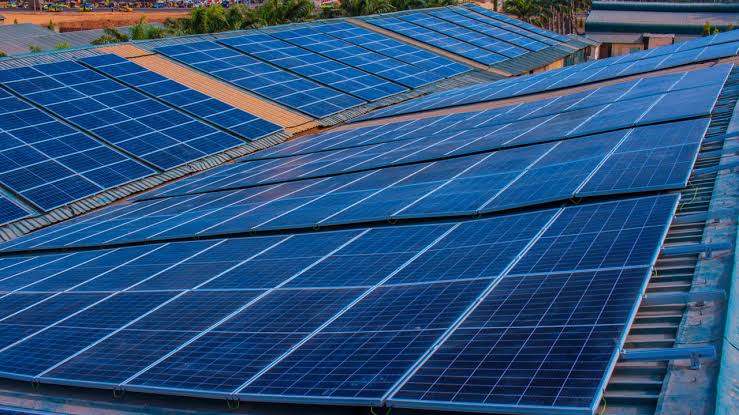
Solar-powered refrigeration is opening new business opportunities for Nigerian women and young entrepreneurs, with a clean-energy initiative supported by the Mastercard Foundation and the Global Energy Alliance for People and Planet (GEAPP) seeking to expand access to affordable cold-storage technology and create sustainable livelihoods across the country’s agrifood sector.
The initiative, implemented in partnership with refrigeration technology company Koolboks, is designed to help women-owned businesses overcome unreliable electricity, rising fuel costs and inadequate storage facilities through access to solar-powered freezers, chillers and other refrigeration equipment.
The development comes as climate-smart and clean-energy industries are projected to create between 455,000 and 1.2 million new low-income employment opportunities for women across Nigeria and other sub-Saharan African countries by 2030.
The emerging opportunities span food processing, off-grid solar energy, cold-chain logistics and other productive activities that can improve women’s participation in economic development.
Under the three-year Energising Women and Youth in Agri-Food Systems Programme (EWAS), the partnership is deploying solar-powered refrigeration and other productive-use-of-energy (PUE) technologies to improve business productivity, reduce post-harvest food losses and support income generation.
Running from April 2024 to March 2027, the programme aims to create 17,000 jobs, particularly for young women, while improving the livelihoods of approximately 136,000 people across Nigeria and Ethiopia.
The intervention is particularly significant for Nigeria, where inadequate cold-storage infrastructure and post-harvest inefficiencies continue to affect agricultural production, food distribution and the earnings of small-scale businesses.
According to the Organisation for Technology Advancement of Cold Chain in West Africa (OTACCWA), Nigeria lost between 30 million and 40 million metric tonnes of food to post-harvest inefficiencies in 2025.
The economic value of these losses was estimated at between ₦3.5 trillion and ₦5 trillion.
The figures highlight the scale of the country’s food preservation challenge, particularly for farmers, traders, food processors and small businesses that lack access to reliable refrigeration facilities.
By expanding access to solar-powered cold storage, the EWAS programme seeks to address some of these challenges while helping entrepreneurs preserve perishable products for longer periods, reduce spoilage and improve their ability to meet market demand
Under the partnership, Koolboks is providing solar-powered refrigeration systems to micro, small and medium-sized enterprises (MSMEs), with particular attention to women-led businesses and young entrepreneurs between the ages of 18 and 35.
Project Management Associate at Koolboks, Blessing Uwuma, disclosed that the company’s EWAS intervention had reached more than 120 beneficiaries across several Nigerian states since its launch in January 2026.
She explained that the initiative was designed to reduce the dependence of small businesses on petrol-powered generators and conventional electricity, which often impose substantial operating expenses on entrepreneurs.
According to Uwuma, solar-powered refrigeration allows business owners to preserve their products without the recurring financial burden associated with purchasing fuel and managing unreliable electricity supply.
She noted that beneficiaries could also reduce the frequency of trips to markets because they now have better facilities for storing their goods.
The programme is targeting seven states, with beneficiaries already recorded in Lagos, Ogun, Oyo, Kano and Delta, alongside Benin, while the company has also recorded limited sales in Abia State.
One of the major components of the initiative is its financing structure, which seeks to address the high upfront cost of purchasing solar-powered refrigeration equipment.
Supported by the Productive Use Financing Facility (PUFF), the intervention combines targeted financing assistance with company discounts to make the equipment more affordable for small businesses.
According to Uwuma, beneficiaries can access selected refrigeration packages and repay the cost through daily, weekly or monthly instalments, depending on their financial circumstances.
Some of the repayment arrangements extend to 23 months, allowing entrepreneurs to spread the cost of acquiring the equipment rather than paying the full amount upfront.
Koolboks offers different refrigeration options, including 200-litre, 530-litre and 750-litre freezers, chillers, ice makers and solar-powered cold rooms.
The financing model is expected to help more women entrepreneurs invest in productive assets, preserve their inventory and expand their businesses without placing excessive pressure on their immediate cash flow.
The impact of the intervention is illustrated by Mrs Rachel Adegbola, owner of Five Peace Integrated Ventures in Badagry, Lagos State.
Before acquiring a Koolboks solar-powered freezer, Adegbola depended on public electricity and petrol-powered generators to preserve her food products.
However, frequent electricity interruptions and increasing fuel prices exposed her business to operational difficulties, product spoilage and financial losses.
She explained that unreliable electricity often left her worried about the safety of products stored in her conventional freezers, particularly during periods of low sales.
According to her, there were occasions when unsold products had to be consumed to prevent them from spoiling because she could no longer afford the additional cost of running generators.
Adegbola said acquiring the solar-powered freezer significantly reduced these concerns by providing a more dependable means of preserving her products.
She obtained the equipment through an instalment payment arrangement spread over 17 months.
Although she described the repayment structure as manageable, she acknowledged that the equipment remained relatively expensive for entrepreneurs without additional sources of income.
Her experience highlights how access to reliable refrigeration can help small businesses reduce avoidable losses, protect their investments and operate with greater confidence.
Another beneficiary, Beatrice Onyebuchi, said acquiring a Koolboks solar-powered freezer had enabled her to expand her drinks and bottled-water business by improving product preservation and attracting more customers.
Before accessing the equipment, she relied on public electricity, which was frequently unreliable and made it difficult to maintain adequate stocks of chilled products.
She explained that the improved refrigeration capacity had allowed her to increase her inventory as customer demand grew.
According to Onyebuchi, her stock of drinks increased from approximately 10 packs before acquiring the freezer to between 20 and 50 packs.
The expansion has enabled her to serve more customers and improve the availability of chilled products in her business.
She is repaying for the equipment over 23 months through daily savings, which she consolidates at the end of each month.
Onyebuchi explained that the arrangement allows her to make small contributions regularly rather than withdrawing a substantial amount from her business at once.
Her experience demonstrates how flexible financing and access to clean-energy equipment can support business expansion, particularly for entrepreneurs operating with limited capital.
For the Mastercard Foundation and GEAPP, the intervention represents part of a broader effort to connect clean-energy investment with employment creation, women’s economic empowerment and agricultural transformation.
By introducing productive-use-of-energy technologies into the agrifood value chain, the programme seeks to address multiple challenges simultaneously, including unreliable electricity, food spoilage, unemployment and limited access to business equipment.
The focus on young women and entrepreneurs is also expected to strengthen their participation in economic activities while creating opportunities for new businesses in food preservation, processing, distribution and cold-chain services.
The programme’s 17,000-job target and projected improvement in the livelihoods of 136,000 people across Nigeria and Ethiopia reflect its broader ambition to make clean-energy investments deliver measurable economic and social benefits.
The growing adoption of solar-powered refrigeration presents an opportunity to improve the operating environment for small businesses in Nigeria, particularly those involved in food processing, fish trading, poultry, agriculture, beverages and other businesses dealing with perishable products.
For women entrepreneurs, access to reliable cold storage could mean reduced fuel expenses, fewer product losses, increased inventory capacity and improved business profitability.
Beyond individual businesses, expanding cold-chain infrastructure could also strengthen Nigeria’s agricultural value chain by helping farmers and traders preserve produce for longer periods and reduce losses between production and final consumption.
However, the affordability of equipment, access to financing, maintenance services and the availability of technical support will remain important factors in determining how widely the technology can be adopted.
With the EWAS programme scheduled to run until March 2027, its implementation could provide further evidence of how clean-energy technology and flexible financing can support women-owned enterprises and employment opportunities.
As Nigeria continues to confront electricity supply challenges and significant post-harvest food losses, solar-powered refrigeration is emerging as both an alternative energy solution and a potential pathway for expanding women’s participation in business and the country’s agrifood economy.
RapidoSpace News


