


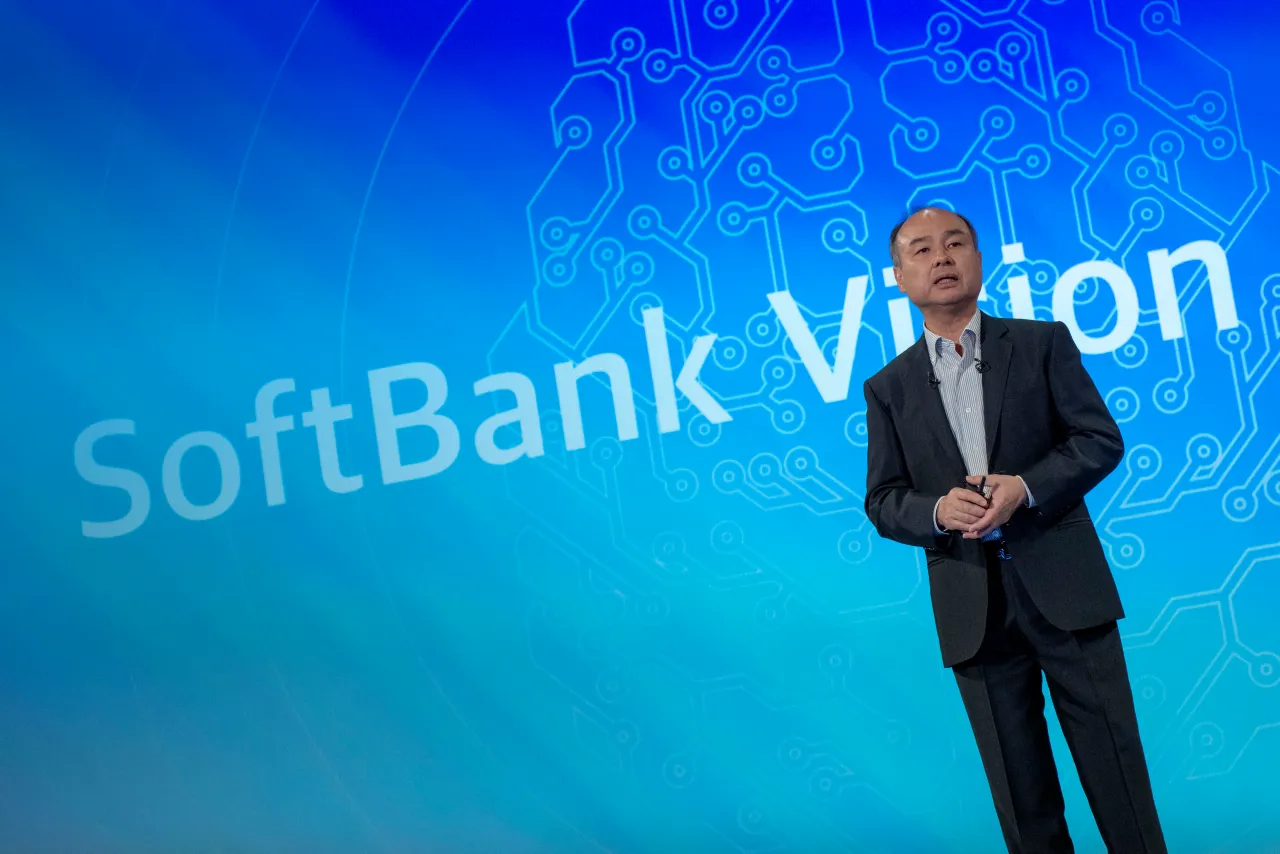
SoftBank founder and Chief Executive Officer Masayoshi Son has cast doubt on Elon Musk’s proposal to build orbital data centres in space, arguing that the ambitious concept is unlikely to provide meaningful cost advantages and may arrive too late to influence the rapidly evolving artificial intelligence industry.
Son made the remarks during a recent shareholders’ meeting, where he suggested that the AI race will be determined over the next few years rather than in the distant future. Son Says Time Is Critical in AI Competition
According to the Japanese technology billionaire, constructing data centres in orbit would require years of development and deployment, making the concept impractical at a time when AI companies are racing to expand computing capacity.
He argued that the industry’s immediate challenge is meeting surging demand for AI infrastructure rather than pursuing long-term projects whose commercial benefits remain uncertain.
“The next few years will be far more important than what might happen a decade from now,” Son reportedly told shareholders.
Debate Highlights Future of AI Infrastructure
Son’s comments sparked discussion on TechCrunch’s Equity podcast, where journalists examined the growing competition among technology companies to secure the computing power needed to develop increasingly advanced AI systems.
The conversation also touched on several major developments in the AI industry, including OpenAI’s reported efforts to design custom artificial intelligence chips and semiconductor company Groq’s recent $650 million funding round.
Irony in SoftBank’s Skepticism
TechCrunch transportation editor Kirsten Korosec noted that it was somewhat surprising to hear Son express caution over an ambitious technology proposal.
She pointed out that SoftBank has built its reputation on making bold, high-risk investments in emerging technologies through its Vision Fund and other ventures.
Given that history, she described Son’s scepticism toward Musk’s proposal as particularly noteworthy.
Space-Based Data Centres Could Benefit SpaceX
Meanwhile, TechCrunch senior reporter Sean O’Kane suggested that Musk’s proposal could generate significant business for SpaceX regardless of whether orbital data centres become commercially successful.
He observed that maintaining a network of computing satellites would require continuous launches because spacecraft in low-Earth orbit eventually need replacement.
According to O’Kane, such a model would naturally increase demand for SpaceX’s launch services, creating additional commercial opportunities for Musk’s aerospace company.
AI Infrastructure Race Intensifies
The discussion reflects a broader debate within the technology sector over how best to meet the explosive demand for AI computing power.
As companies invest billions of dollars in data centres, specialised chips and cloud infrastructure, industry leaders continue to explore unconventional solutions to overcome power, cooling and capacity constraints.
While Elon Musk has promoted the idea of orbital data centres as part of a futuristic AI infrastructure strategy, critics argue that terrestrial facilities remain faster, cheaper and more practical for meeting today’s rapidly growing computing needs.
For now, the focus of most technology firms remains on expanding existing data centre networks on Earth as competition in the global AI race continues to accelerate.


