


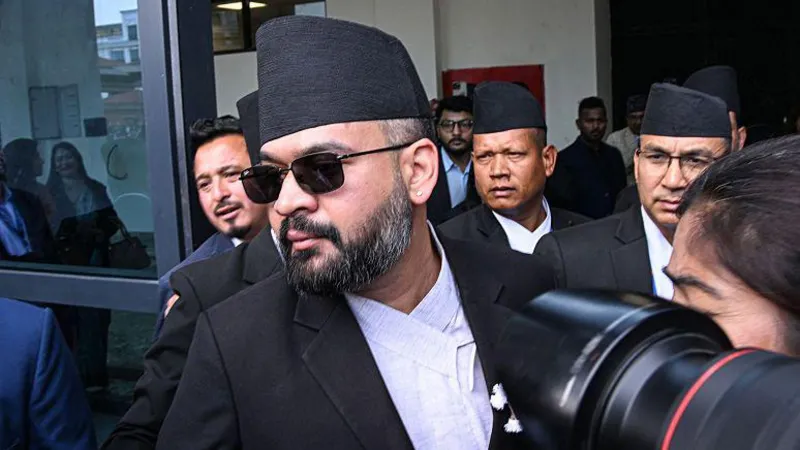
Balendra Shah, a rapper-turned-politician popularly known as Balen, has been sworn in as the new Prime Minister of Nepal following a decisive electoral victory that signaled a major shift in the country’s political landscape.
The 35-year-old reformist leader took the oath of office on March 27 after his party, the Rastriya Swatantra Party (RSP), secured a commanding majority in the country’s parliamentary elections earlier this month.
Shah and his party rode to victory on a platform focused on anti-corruption reforms and youth-driven political change. The election was the first since nationwide protests last year forced the previous government from power.
During the swearing-in ceremony, Shah pledged loyalty to the nation and its constitution.
I, Balendra Shah, in the name of the country and people, pledge that I will be loyal to the constitution,” he said while taking the oath, dressed in his signature all-black outfit and dark sunglasses.
Shortly after the election results were announced, Shah released his first public message in an unconventional way through a rap song shared on social media. The track, which has attracted nearly three million views online, reflects his political vision and message of unity.
“The strength of unity is my national power,” Shah said in the song, which features clips of him campaigning across the country.
In another verse, he declared his determination to bring change to Nepal’s political system.
My heart is full of courage, my red blood is boiling; my brothers stand with me, this time we will rise, he rapped.
Shah had remained largely silent in public following the March 5 elections in which the RSP secured 182 seats in the 275-member House of Representatives, giving the party a clear parliamentary majority.
During the campaign, Shah worked closely with the party’s president, Rabi Lamichhane, a well-known television host and former deputy prime minister who continues to play an influential role within the new government.
The election result represents a dramatic shift in Nepal’s political dynamics, with many voters backing younger leaders who promised to tackle corruption and reform government institutions.
Outgoing interim Prime Minister Sushila Karki, who led the caretaker administration for the past six months, formally handed over power during a televised address to the nation.
Karki, 73, expressed confidence that the new government would usher in meaningful reforms.
I am confident that the new government under the leadership of the youth will work towards ending corruption in the country, establishing good governance, creating jobs, economic development, and social justice,” she said.
She added that the country’s future now lies in the hands of a younger generation determined to reshape the nation’s political system.
Nepal’s recent political transition followed mass anti-corruption protests that led to the removal of former Prime Minister KP Sharma Oli.
Oli, a four-time prime minister and veteran Marxist leader, was also defeated by Shah in his own parliamentary constituency during the election.
The protests that triggered the political upheaval were marked by violent confrontations, with at least 19 young demonstrators reportedly killed during a crackdown on the first day of unrest. So far, no convictions have been secured over the killings.
A commission investigating the protests has reportedly recommended the prosecution of several former officials, including ex-Interior Minister Ramesh Lekhak and former police chief Chandra Kuber Khapung.
With Shah now at the helm of government, many observers say the expectations for reform and accountability in Nepal are high, particularly among the country’s younger population who played a key role in the protests and the election outcome.