


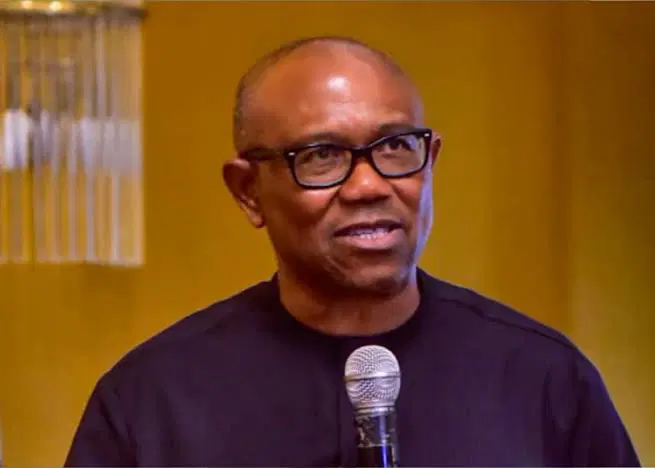
The presidential candidate of the Nigeria Democratic Congress (NDC) for the 2027 general election, Peter Obi, has alleged that President Bola Tinubu failed to contact Oyo State Governor Seyi Makinde more than 50 days after the abduction of schoolchildren in the state, describing the development as evidence of a deepening leadership crisis in Nigeria.
Obi made the claim in a statement posted on his official X account on Monday, where he criticised the Federal Government’s handling of insecurity and questioned the administration’s commitment to protecting Nigerians.
According to Obi, the prolonged captivity of the abducted schoolchildren should not be viewed as an Oyo State issue alone but as a national emergency requiring decisive leadership from the Presidency.
He disclosed that he had publicly appealed to the kidnappers on two occasions to release the children and had also contacted Governor Makinde twice to express his support and solidarity.
Obi said the continued detention of the pupils without meaningful progress toward their rescue has left the people of Oyo State feeling abandoned.
The former Anambra State governor revealed that he visited Ibadan on July 3 alongside renowned economist Prof. Pat Utomi, where they met with Governor Makinde to discuss the country’s worsening security situation.
During the meeting, Obi said he shared his own experiences managing security challenges while serving as governor of Anambra State.
He recalled that former Presidents Olusegun Obasanjo, Umaru Musa Yar’Adua, and Goodluck Jonathan routinely contacted state governors whenever major security crises occurred in their states.
Obi said he was shocked when Makinde allegedly informed him that President Tinubu had not reached out to him since the schoolchildren were abducted more than seven weeks ago.
According to Obi, he had assumed there had been regular communication between both leaders over efforts to rescue the victims.
Drawing comparisons with the 2014 abduction of the Chibok schoolgirls, Obi recalled that Tinubu was among prominent opposition figures who criticised then-President Goodluck Jonathan for allegedly taking too long to contact the affected governor.
He argued that the same standard should now be applied to the current administration.
Obi noted that Nigeria has recorded more than 13 school kidnapping incidents under the Tinubu administration, questioning why the President allegedly failed to directly engage the governor of the affected state after more than 50 days.
He described the situation as unacceptable and suggested that similar communication gaps may have occurred in previous kidnapping incidents across the country.
The former Labour Party presidential candidate maintained that insecurity has worsened under the current administration, insisting that governance has failed to adequately protect Nigerians.
According to Obi, the safety of kidnapped schoolchildren, teachers and other citizens being held by criminal groups should be the government’s highest priority.
He argued that the perceived lack of urgency in addressing the crisis reflects a broader failure of leadership.
Obi therefore called on President Tinubu to either resign from office or decline to seek re-election in 2027.
He insisted that his position was motivated by patriotism rather than politics, saying Nigeria deserves leadership capable of responding swiftly and compassionately to national emergencies.
As of the time of filing this report, the Presidency had not publicly responded to Obi’s latest allegations regarding communication with Governor Makinde or his call for President Tinubu to step aside ahead of the 2027 general election.
The comments add another dimension to the growing political debate over insecurity, governance and leadership as political parties prepare for the next election cycle.


