


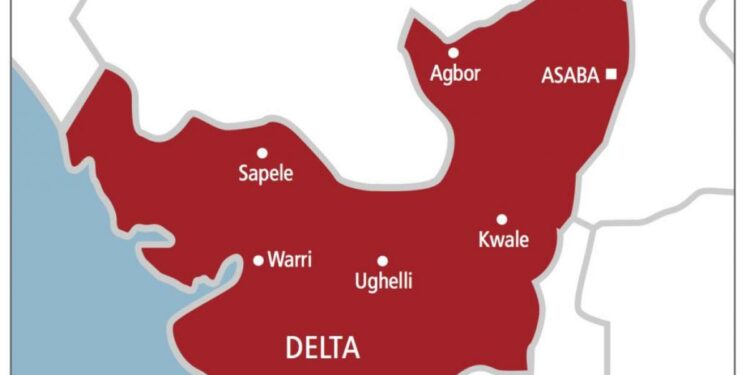
WARRI: Residents of Polobubo (Tsekelewu) and other bloc communities in Warri North Local Government Area of Delta State have protested what they describe as their exclusion from recently approved infrastructure projects valued at more than ₦400 billion by the state government.
The communities expressed concern that despite their significant contributions to the state’s oil production, they were omitted from the list of projects announced by the government.
In a protest statement jointly issued by the president of the Polobubo bloc communities, Paul Toruwei, and youth leader Markson Juwoiye, the leaders said the development had caused widespread disappointment among residents.
They noted that while they appreciate the government’s efforts to improve infrastructure across various parts of the state, the complete absence of projects in Polobubo and its surrounding communities raises serious questions about fairness, equity and balanced development.
According to the statement, the area remains one of the major oil-producing zones in Delta State, hosting several multinational and indigenous oil companies, including Chevron, Nigerian Petroleum Development Company (NPDC), Sahara Energy and Conoil.
Community leaders emphasized that the operations of these firms contribute substantially to the petroleum output of the state, with the Polobubo axis accounting for more than 20 percent of Delta’s crude oil production.
They lamented that despite decades of hosting oil exploration activities and contributing to the state’s economic growth, their communities continue to face severe infrastructural challenges.
For decades, our land and resources have played a critical role in sustaining the economic prosperity of Delta State, the statement read Yet, despite this enormous contribution, our communities continue to suffer from serious infrastructural deficits, poor accessibility and minimal government presence.
The leaders described the omission of their communities from the recently announced projects as troubling, especially given the strategic importance of the area to the state’s economy.
They said residents often refer to the communities as “the goose that lays the golden egg” because of their significant role in generating oil revenue for the state.
According to them, it is therefore difficult to understand why such a key oil-producing corridor was not considered in the infrastructure development plans.
While reiterating their commitment to peace and cooperation with the government, the community leaders insisted that justice, fairness and inclusive development should guide public policy decisions.
They stressed that the people of Polobubo and neighbouring settlements have remained law-abiding and supportive of government programmes despite long-standing development challenges.
As part of their demands, the communities called on the state government to urgently review the project approvals to ensure that Polobubo and its bloc communities are included.
Specifically, they urged the government to prioritise the construction of the Trans-Egbema Road linking Ogbudugbudu and Ogbinbiri to Polobubo, a critical route that residents say would significantly improve accessibility and economic activities in the area.
They also appealed for the implementation of the Polobubo internal road network project, which was reportedly approved during the administration of former Delta State governor Ifeanyi Okowa but has yet to be executed.
According to the statement, equitable distribution of infrastructure is essential to sustaining cooperation between host communities and the state government, especially in areas that contribute heavily to the state’s oil revenue.
The Oil-Producing Communities in Delta Protest Exclusion from ₦400bn Infrastructure Projects
Residents of Polobubo (Tsekelewu) and other bloc communities in Warri North Local Government Area of Delta State have protested what they describe as their exclusion from recently approved infrastructure projects valued at more than ₦400 billion by the state government.
The communities expressed concern that despite their significant contributions to the state’s oil production, they were omitted from the list of projects announced by the government.
In a protest statement jointly issued by the president of the Polobubo bloc communities, Paul Toruwei, and youth leader Markson Juwoiye, the leaders said the development had caused widespread disappointment among residents.
They noted that while they appreciate the government’s efforts to improve infrastructure across various parts of the state, the complete absence of projects in Polobubo and its surrounding communities raises serious questions about fairness, equity and balanced development.
According to the statement, the area remains one of the major oil-producing zones in Delta State, hosting several multinational and indigenous oil companies, including Chevron, Nigerian Petroleum Development Company (NPDC), Sahara Energy and Conoil.
Community leaders emphasised that the operations of these firms contribute substantially to the petroleum output of the state, with the Polobubo axis accounting for more than 20 percent of Delta’s crude oil production.
They lamented that despite decades of hosting oil exploration activities and contributing to the state’s economic growth, their communities continue to face severe infrastructural challenges.
For decades, our land and resources have played a critical role in sustaining the economic prosperity of Delta State, the statement read.
“Yet, despite this enormous contribution, our communities continue to suffer from serious infrastructural deficits, poor accessibility and minimal government presence.”
The leaders described the omission of their communities from the recently announced projects as troubling, especially given the strategic importance of the area to the state’s economy.
They said residents often refer to the communities as the goose that lays the golden egg” because of their significant role in generating oil revenue for the state.
According to them, it is therefore difficult to understand why such a key oil-producing corridor was not considered in the infrastructure development plans.
While reiterating their commitment to peace and cooperation with the government, the community leaders insisted that justice, fairness and inclusive development should guide public policy decisions.
They stressed that the people of Polobubo and neighbouring settlements have remained law-abiding and supportive of government programmes despite long-standing development challenges.
As part of their demands, the communities called on the state government to urgently review the project approvals to ensure that Polobubo and its bloc communities are included.
Specifically, they urged the government to prioritise the construction of the Trans-Egbema Road linking Ogbudugbudu and Ogbinbiri to Polobubo, a critical route that residents say would significantly improve accessibility and economic activities in the area.
They also appealed for the implementation of the Polobubo internal road network project, which was reportedly approved during the administration of former Delta State governor Ifeanyi Okowa but has yet to be executed.
According to the statement, equitable distribution of infrastructure is essential to sustaining cooperation between host communities and the state government, especially in areas that contribute heavily to the state’s oil revenue.
The leaders warned that continued neglect of oil-producing communities could undermine trust and weaken the partnership between host communities, government authorities and oil companies operating in the region.
“It becomes increasingly difficult for our people to understand why communities that contribute so much to the economic strength of Delta State continue to experience neglect in terms of development,” the statement added.
They therefore urged the government to treat the omission as an oversight and take swift action to correct it.
“We urge the Delta State Government to urgently address this oversight in the interest of equity, sustainable development and continued cooperation between host communities and government,” the statement concluded.
The protest highlights the broader debate over resource distribution and development priorities in oil-producing regions, where host communities often demand greater infrastructure investment and socio-economic benefits in recognition of their contributions to the national and state economies.
Leaders warned that continued neglect of oil-producing communities could undermine trust and weaken the partnership between host communities, government authorities and oil companies operating in the region.
“It becomes increasingly difficult for our people to understand why communities that contribute so much to the economic strength of Delta State continue to experience neglect in terms of development,” the statement added.
They therefore urged the government to treat the omission as an oversight and take swift action to correct it.
We urge the Delta State Government to urgently address this oversight in the interest of equity, sustainable development and continued cooperation between host communities and government,” the statement concluded.
The protest highlights the broader debate over resource distribution and development priorities in oil-producing regions, where host communities often demand greater infrastructure investment and socio-economic benefits in recognition of their contributions to the national and state economies.