


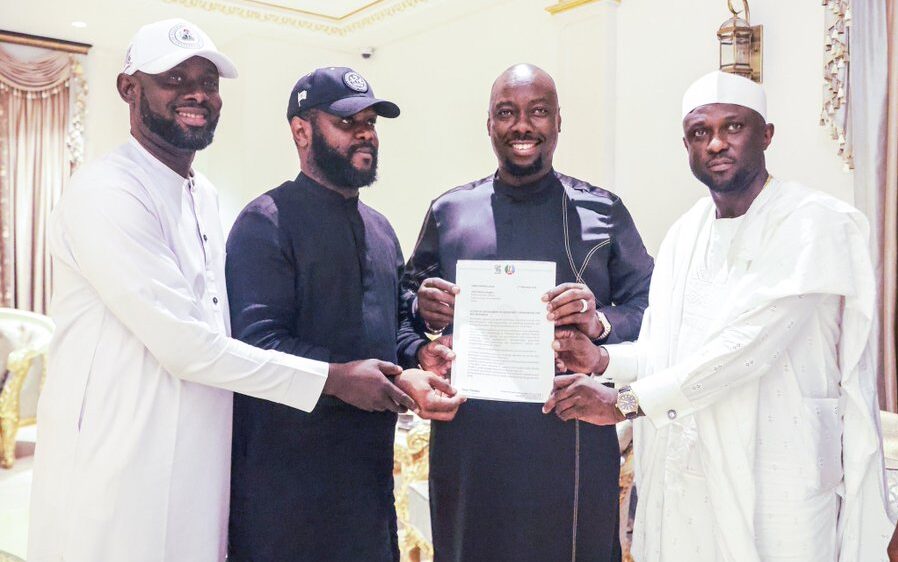
Prominent Nigerian businessman and nightlife entrepreneur, Obi Iyiegbu, popularly known as Obi Cubana, has continued to attract widespread public attention after accepting a political mobilisation role linked to President Bola Tinubu’s anticipated 2027 re-election campaign.
The socialite was recently presented with an appointment letter by Seyi Tinubu, son of the president, naming him South-East Coordinator of the City Boy Movement a political support platform believed to be working to consolidate grassroots backing for the ruling All Progressives Congress (APC).
Responding to criticism that trailed the announcement, Obi Cubana maintained that meaningful national progress requires active participation rather than political detachment. He stressed that his decision was motivated by a desire to contribute positively to Nigeria’s future and not merely political opportunism.
According to him, constructive engagement with governance structures offers better chances of influencing development than remaining on the sidelines.
The development comes amid intensifying political realignments ahead of the 2027 general elections. Several political actors, business figures and youth influencers have increasingly been drawn into early campaign mobilization, reflecting heightened competition among major parties.
Recent national political debates including disagreements over electoral reforms, electronic transmission of election results, and widening economic concerns have also sharpened public scrutiny of high-profile endorsements of political figures.
Analysts say the involvement of influential entrepreneurs like Obi Cubana signals efforts by political blocs to expand appeal among young voters, urban elites and the business community.
Public reaction to Cubana’s new political role has been sharply divided.
-
Business leaders have the right to participate in politics.
-
Engagement with government could help attract investment and development to the South-East.
-
Political neutrality is unrealistic for influential public figures.
-
The move appears insensitive amid economic hardship affecting many Nigerians.
-
Celebrities aligning with political power risk legitimizing unpopular policies.
-
Some view it as opportunistic positioning ahead of future government patronage.
Social media platforms have reflected this divide, with debates ranging from calls for greater civic participation by business elites to accusations of political opportunism and elite detachment from grassroots realities.
Observers say the controversy highlights Nigeria’s evolving intersection of celebrity culture, business influence and politics.
Increasingly, public figures are being drawn into partisan activities earlier in the electoral cycle, a trend likely to intensify as 2027 approaches.
Whether Obi Cubana’s involvement strengthens APC outreach in the South-East a region traditionally less supportive of the ruling party remains to be seen.
However, the debate surrounding his appointment underscores how politically sensitive celebrity endorsements have become in Nigeria’s current socio-economic climate.


