
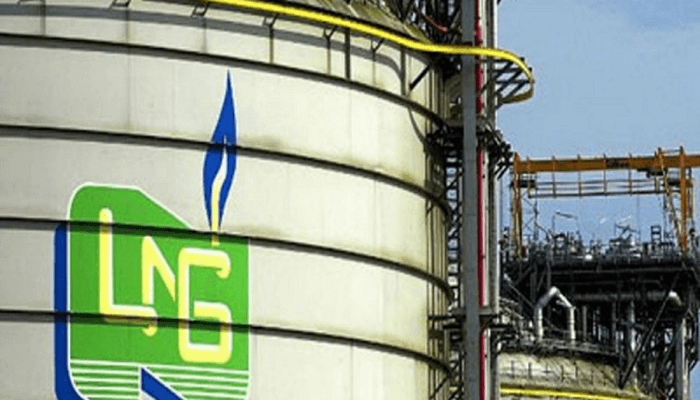
The Managing Director and Chief Executive Officer of Nigeria Liquefied Natural Gas Limited, Adeleye Falade, has disclosed that the company has contributed more than N250 billion in employee taxes to the Rivers State Government over the past decade.
Falade made the disclosure during a courtesy visit to the Government House in Port Harcourt, where he also highlighted the company’s significant contributions to Nigeria’s economy since its establishment.
According to the NLNG boss, the company has generated over $30 billion in revenue since it began operations, with the Federal Government of Nigeria receiving a substantial share due to its equity stake.
He explained that the federal government holds a 49 percent stake in NLNG, which has translated into billions of dollars in dividends and tax revenues.
In addition to shareholder earnings, the company has paid approximately $9 billion in taxes to the federal government purely as a result of the investment,” Falade stated.
Falade further revealed that employee taxes alone have contributed significantly to the revenue of Rivers State over the past ten years.
In the last 10 years, as a company, through employee tax we have paid about N250 billion to the Rivers State Government, and every year the amount continues to increase,” he said.
He noted that about N138 billion of that amount was paid between 2023 and 2026, with the highest annual remittance occurring last year.
Last year alone, the company remitted roughly N46 billion to the state government,” he added.
Falade also disclosed that in the first three months of 2026, NLNG had already paid abou
The NLNG chief attributed the improved revenue performance to the more stable operating environment in the region.
He commended the administration of Siminalayi Fubara for maintaining a strong working relationship with the company and helping address issues such as pipeline vandalism and security concerns.
According to him, the improved security situation has enabled the company to scale up operations and increase productivity.
“Maybe because of the very peaceful environment that we enjoy and the kind of intervention we received last year, our operations have been able to run at a larger scale,” Falade explained.
Beyond tax payments and revenue generation, Falade said NLNG remains committed to the socio-economic development of Rivers State and the wider Niger Delta region.
He highlighted the company’s investments in education, youth empowerment, and community development projects, noting that billions of naira have been spent on school renovation programmes under its General Memorandum of Understanding (GMOU) framework.
In addition, the company has supported vocational training initiatives aimed at equipping young people in host communities with practical skills and employment opportunities.
Falade expressed optimism that 2026 could become one of NLNG’s strongest financial years, driven by improved operating conditions and sustained collaboration with the government and host communities.
Responding to the presentation, Governor Siminalayi Fubara reaffirmed his administration’s commitment to maintaining a strong partnership with NLNG.
He described the company’s continued success as vital not only to Rivers State but also to Nigeria’s overall economic growth.
We are the ones here. If we don’t support you and you don’t succeed, we also will not succeed, and the country will not succeed, the governor said.You can always count on our support.
However, Fubara also used the opportunity to appeal to NLNG to support the revitalisation of the Bonny General Hospital, located in Bonny Island.
The governor noted that the hospital once functioned effectively due to incentive programmes supported by NLNG, which attracted qualified medical personnel to the island.
Over time, however, the facility’s performance declined, forcing many residents to seek healthcare services from unqualified practitioners.
Fubara revealed that the state government had begun efforts to restore the hospital following a tragic incident involving a patient who reportedly died in a quack clinic.
He urged NLNG to complement the government’s intervention by reinstating incentive structures that previously supported healthcare workers in Bonny.
The governor also praised NLNG for its resilience and operational success despite Nigeria’s challenging business environment.
He attributed the company’s longevity to its unique structure, which combines private sector operational efficiency with government oversight.
Fubara stressed that continued collaboration between the government, private sector, and host communities remains essential for sustainable development in the Niger Delta.
He added that strengthening these partnerships would ultimately translate into broader economic benefits for both Rivers State and Nigeria as a whole.