


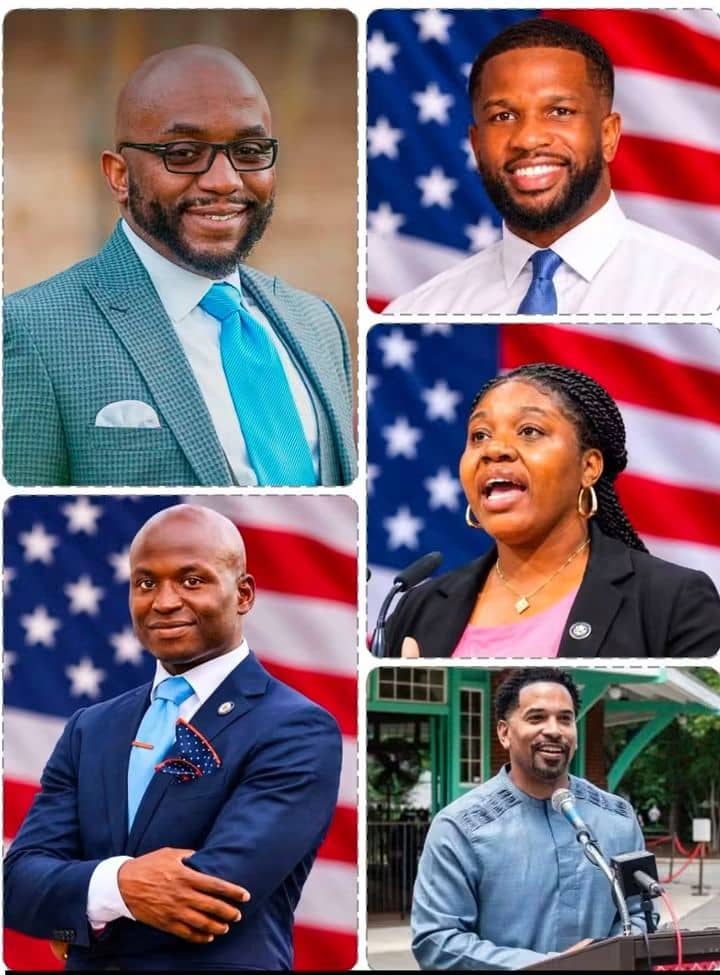
ASABA: The reported electoral victories of Nigerian Americans in the November 3, 2026, United States midterm elections are a source of legitimate pride for Nigerians at home and abroad.
Will Jawando’s election as Montgomery County Executive in Maryland, Junior Ezeonu’s victory in Texas, Oye Owolewa’s election to the Council of the District of Columbia, and Carol Kazeem’s re-election to the Pennsylvania House of Representatives are significant achievements.
They demonstrate the growing participation of Nigerians and Americans of Nigerian descent in public service and political leadership.
However, the initial reports of five victories require clarification. While four candidates had been confirmed as winners in the reports available on November 4, Segun Adeyina’s victory in Georgia was still awaiting confirmation as votes were being counted.
The distinction is important. Celebrating our compatriots should not require sacrificing accuracy.
These achievements also offer an opportunity to reflect on the relationship between political participation, institutional effectiveness and good governance.
The United States has not eliminated racial discrimination, ethnic prejudice or political exclusion. Nor does hard work guarantee political success. Electoral outcomes are influenced by political organisation, campaign resources, party structures, voter participation and the strength of democratic institutions.
Nevertheless, the American experience demonstrates the value of a political system in which citizens of diverse backgrounds can participate, compete for public office and seek the confidence of voters.
That is a lesson Nigeria should take seriously.
Our challenge is not simply that Nigerians vote along ethnic or religious lines. It is that political identity too often takes precedence over competence, integrity, public service and measurable performance.
We must move beyond the politics of shared language, ancestry and religious affiliation to a politics of shared responsibility and common national interest.
A candidate’s ethnic or religious identity should neither guarantee support nor automatically disqualify that candidate. What should matter is the candidate’s character, competence, policies and record.
Similarly, the success of Nigerian-Americans in the United States should not be used to make sweeping claims about the superiority of one country over another. Their achievements are evidence of individual commitment and political opportunity, not proof that the United States has resolved every challenge of democratic governance.
For Nigeria, the relevant question is this: what kind of political and institutional environment will enable our own citizens to realise their potential?
We need credible elections, effective public institutions, accountable leadership, equal opportunity and a political culture that rewards performance rather than identity.
As the 2027 general elections approach, Nigerians must insist that political parties and candidates present credible programmes and submit their records to public scrutiny.
The task before us is not merely to celebrate the achievements of Nigerians abroad. It is to build a country in which similar opportunities for success are available to citizens at home.
Our language and cultural identities are valuable parts of our heritage. But they must never become instruments for denying ourselves good governance.
The Nigerian spirit is resilient. The challenge is to translate that resilience into a national commitment to competence, accountability and inclusive development.
That is the lesson worth learning from the Nigerian-Americans who have succeeded in the United States.
And that is the standard by which every government, including the Tinubu administration, should be judged.
Frank Odion Apokwu is a Public Affairs Analyst, Democratic Reforms, and Inclusive Development Advocate, writing from Asaba Delta State.


