


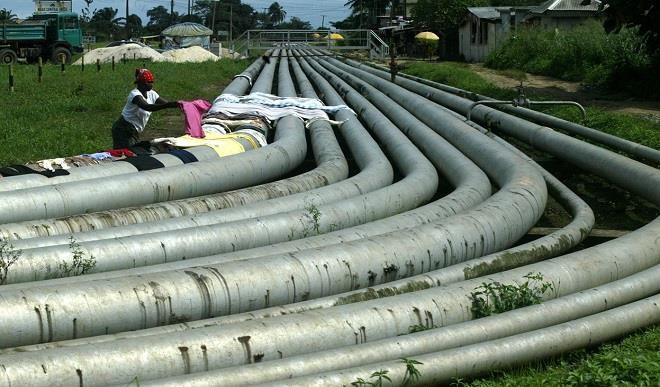
Senior High Chief Bibopere Ajube, one of the Niger Delta’s foremost ex-militant leaders, has intensified calls for the decentralisation of oil pipeline surveillance contracts in the region, describing the advocacy as a matter of justice and fairness rather than a challenge to existing contractors like Tantita or personal rivalry.
Ajube, widely known by his nickname Shoot-at-Sight during the militancy era and currently the CEO of Gallery Security Services Limited convened a high-profile meeting in Rivers State with former colleagues and key Niger Delta leaders, including King Ateke Tom and Victor Ben (Boyloaf).
The discussions focused on reviewing the Federal Government’s pipeline surveillance contracts under the Petroleum Industry Act (PIA) and ensuring equitable participation for all affected communities in the Niger Delta
Addressing journalists in Abuja on Monday, Ajube dismissed claims that his stance represented a betrayal of High Chief Government Ekpemupolo, popularly known as Tompolo. He emphasised that his relationship with Tompolo remains firm and unwavering, but that loyalty cannot overshadow principles of fairness, justice, and equitable resource management.
My relationship with Tompolo is rooted in respect and shared history, but it does not translate into blind allegiance at the expense of the broader Niger Delta cause, Ajube said.
When we confronted multinational oil companies, it was not because pipelines ran through our personal backyards, but because we were committed to resisting injustice and securing economic and social emancipation for our people.
Ajube recalled risking his life during the militancy era to ensure the safety of colleagues, including Tompolo, during critical operations, asserting that such acts of solidarity were guided by conscience and principle.
Ajube provided historical context for his advocacy, noting that when the administration of President Muhammadu Buhari came into office, many Niger Delta leaders faced EFCC investigations. While some resisted, he voluntarily presented himself for scrutiny, demonstrating transparency and accountability.
He also noted that during the Presidential Amnesty Programme, he had declined participation in a pipeline surveillance contract at a time when Tompolo still had unresolved issues with the Federal Government.
I did not reject the opportunity because I lacked capacity, he said. I refused because it was essential that all key stakeholders, including Tompolo, were treated fairly and equitably.
Ajube also recounted past threats to his life and attempts at blackmail, which he attributed to factions within the Niger Delta and individuals linked to Oporoza. Despite these challenges, he has maintained his commitment to dialogue, lawful engagement, and peace.
Ajube highlighted that the call for decentralization is not about undermining existing contractors, but about promoting stability, equity, and security in the region.
When a few individuals control both economic resources and security structures, it creates serious risks, he explained.
Such concentration of power can be weaponized, suppress dissent, and destabilize the Niger Delta. Decentralization ensures local accountability, broader participation, and sustainable peace.
He added that decentralization could help curb illegal oil bunkering, enhance security in host communities, and provide economic opportunities for local youth, ultimately fostering regional stability and trust between communities and government institutions.
Other prominent former militant leaders, including Boyloaf, King Ateke Tom, and leaders from Bayelsa, Delta, and Rivers states, have expressed support for Ajube’s position.
They argue that inclusive management of pipeline surveillance will not only prevent the monopolization of security resources but also strengthen grassroots participation and mitigate risks of conflict over pipeline control.
King Ateke Tom, speaking via his spokesperson, said, our position is clear: equitable involvement of all stakeholders is essential for long-term peace, stability, and justice in the Niger Delta.
This is not about rivalry, but about ensuring that communities directly affected by pipelines have a stake in their protection and management.”
Boyloaf echoed the sentiment, urging the Federal Government to engage Niger Delta leaders meaningfully in reviewing pipeline surveillance frameworks. “Decentralisation is not a threat; it is foresight.
We must ensure that contracts are fair, transparent, and benefit all communities impacted by oil exploration and production.
Ajube reaffirmed his unwavering loyalty to Tompolo, stating, For the avoidance of doubt, my commitment to High Chief Government Ekpemupolo remains firm.
He is my leader. Should circumstances require decisive intervention for his safety or stability, I am among the first to act without hesitation.
He emphasised that advocating for decentralisation and fairness in pipeline security does not diminish respect for Tompolo or other leaders, but rather aligns with the ideals that guided the Niger Delta struggle: justice, equity, and peaceful coexistence.
The renewed call by Niger Delta leaders for decentralisation of pipeline surveillance contracts is gaining momentum and could trigger a major policy review by the Federal Government.
Stakeholders argue that inclusive participation, transparency, and equitable distribution of resources are critical for maintaining long-term peace and development in the oil-rich region.
As discussions continue, the Federal Government is expected to engage with Niger Delta leaders to address concerns, ensure fair contract allocation, and promote regional security and economic empowerment.