


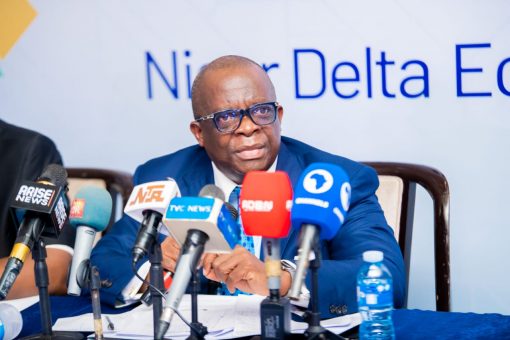
PORTHARCOURT: The Niger Delta Chamber of Commerce, Industry, Trade, Mines and Agriculture (NDCCITMA) has unveiled an ambitious economic development initiative aimed at attracting $5 billion in structured investments into the Niger Delta region over the next five years, a move expected to generate about 500,000 direct and indirect jobs and accelerate industrial growth.
The disclosure was made by the Chairman of the chamber, Idaere Gogo Ogan, during a pre-summit press conference ahead of the Niger Delta Economic and Investment Summit scheduled to hold in Port Harcourt, Rivers State.
According to Ogan, the summit represents a strategic platform to reposition the Niger Delta as a competitive investment destination and stimulate economic activities beyond the region’s traditional oil and gas sector.
Summit to Drive Regional Economic Transformation
The three-day summit, billed to take place from May 19 to May 21, 2026, will be held under the theme “Driving Investment, Innovation, and Industrial Growth in the Niger Delta.”
The event is expected to bring together policymakers, investors, development partners, entrepreneurs, and representatives of financial institutions from across Nigeria and the international community.
Nigeria’s President, Bola Tinubu, is expected to attend the summit as the special guest of honour, while the Prime Minister of Barbados, Mia Amor Mottley, will deliver the keynote address.
The presence of global leaders and international investors is expected to boost confidence in the region and attract strategic partnerships capable of unlocking the Niger Delta’s vast economic potential.
According to the chamber, the summit will focus on key sectors with high growth potential, including:
- Manufacturing and industrial processing
- Agriculture and agro-allied businesses
- Mining and natural resources
- Trade and logistics
- Technology and innovation-driven enterprises
Stakeholders believe these sectors hold the key to diversifying the region’s economy and reducing its long-standing dependence on crude oil revenues.
Ogan noted that although the Niger Delta has historically been the backbone of Nigeria’s oil and gas industry, the region’s long-term prosperity depends on broadening its economic base.
He explained that the chamber’s strategy is to unlock new opportunities capable of creating wealth, improving infrastructure and strengthening enterprise development across the nine oil-producing states.
According to him, the recent Niger Delta Business Roundtable brought together government officials, investors, entrepreneurs and development institutions who collectively agreed that the time has come for the region to transition from policy discussions to concrete economic implementation.
He stressed that the summit would serve as a catalyst for translating ideas into actionable investment projects.
One of the major objectives of the investment initiative is large-scale job creation across the region.
With unemployment and youth restiveness remaining persistent challenges in parts of the Niger Delta, the chamber believes that attracting new industries and expanding existing enterprises will help create sustainable employment opportunities.
By targeting 500,000 jobs, the initiative aims to provide opportunities for young entrepreneurs, skilled professionals and local communities while strengthening economic stability in the region.
Strategic Role of Private Sector Partnerships
The Secretary of NDCCITMA and Chairman of the summit’s local organising committee, Solomon Edebiri, described the investment summit as a crucial step toward building strong partnerships between the public and private sectors.
He said the chamber is working closely with investors, financial institutions and development agencies to identify viable projects capable of delivering measurable economic impact.
Edebiri noted that while the Niger Delta is globally known for its oil wealth, the region also possesses enormous untapped opportunities in agriculture, tourism, trade, and manufacturing.
According to him, unlocking these opportunities requires coordinated efforts among governments, investors and local stakeholders.
To ensure strong participation, the organising committee has launched a series of promotional activities ahead of the summit.
These include investment roadshows across the nine Niger Delta states, as well as outreach events in major economic centres such as Lagos and Abuja.
The campaign is designed to attract both domestic and international investors interested in exploring business opportunities in the region.
The chamber believes that sustained engagement with stakeholders will help build confidence in the Niger Delta as a viable destination for long-term investments.
Several members of the chamber’s leadership were present at the pre-summit briefing, including Financial Secretary Kelechi Obilor and board members Boma Jack and Marcel Odunze.
They reaffirmed the organisation’s commitment to promoting enterprise development and strengthening the economic future of the Niger Delta.
Economic analysts say the proposed $5 billion investment target, if achieved, could mark a turning point for the region.
Beyond job creation, the initiative could stimulate industrial growth, improve infrastructure development and encourage entrepreneurship across multiple sectors.
For decades, the Niger Delta has been central to Nigeria’s economic fortunes through crude oil production. However, stakeholders increasingly believe that the region’s future prosperity will depend on diversifying its economy and empowering local businesses.
The forthcoming investment summit is therefore expected to serve not only as a forum for dialogue but also as a launchpad for new investment partnerships that could redefine the economic trajectory of the Niger Delta in the years ahead.