


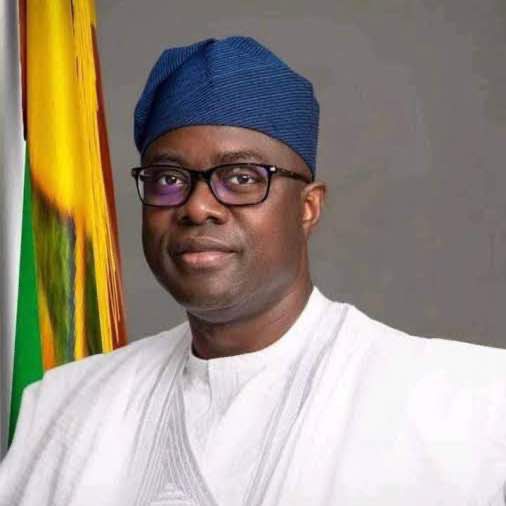
IBADAN: Oyo State Governor, Seyi Makinde, has outlined an ambitious four-pillar policy blueprint known as the Reset Nigeria Agenda, proposing far-reaching reforms in the economy, national security, education and the country’s political and governance structures.
The agenda, which comes as Makinde advances his reported presidential ambition, is built around the argument that government policies should be measured by their impact on the everyday lives of Nigerians rather than budgetary allocations, projects commissioned or macroeconomic statistics.
An analysis of the proposals published by THISDAY and examined by RapidoSpace News indicates that the governor is advocating a shift towards a governance model focused on reducing the cost of living and doing business, improving public institutions, attracting private investment and expanding economic opportunities.
The blueprint identifies four interconnected areas requiring urgent attention: economic restructuring, security reform, education and socio-political transformation.
The economic pillar is at the centre of the proposed national reset, with particular emphasis on reducing the structural costs that make production, transportation, distribution and everyday living expensive.
Makinde’s position is that Nigeria’s economic challenges cannot be addressed sustainably through conventional macroeconomic measures alone without tackling the underlying factors driving the cost of goods and services.
Manufacturers, for instance, continue to contend with high energy costs, particularly those relying on diesel-powered generators. Farmers face challenges associated with insecurity, poor rural infrastructure, inadequate storage facilities and expensive transportation, while businesses struggle with overlapping regulations and bureaucratic bottlenecks.
The proposed agenda therefore advocates an integrated economic strategy that connects infrastructure, energy, agriculture, security, finance and markets.
It also argues that economic performance should be assessed through indicators such as employment opportunities, household income, food affordability, business productivity and citizens’ purchasing power.
According to the blueprint, the ultimate objective is to ensure that economic reforms translate into tangible improvements in the lives of Nigerians.
One of the distinctive proposals associated with Makinde’s economic thinking is the Domestic Energy Value Credit (DEVC), an initiative intended to establish a direct connection between the value generated from Nigeria’s petroleum resources and the welfare of citizens.
The proposal challenges the conventional approach to petroleum revenue management, under which increases in international crude oil prices can translate into higher domestic energy costs while additional petroleum revenue accrues to government.
Makinde argues that Nigerians should enjoy tangible benefits when international crude oil prices rise above the benchmark used in preparing the national budget.
Under the proposed arrangement, additional petroleum-related value would be channelled towards direct benefits for citizens rather than simply increasing government revenue and allocations.
The idea is based on the argument that Nigerians, as owners of the country’s natural resources, should have a recognisable stake in the additional value generated from them.
However, the proposal’s practical viability would depend on clear funding arrangements, transparent distribution mechanisms, effective accountability and a carefully designed implementation framework.
Electricity is another major priority in the proposed economic restructuring, particularly given the impact of unreliable power supply on Nigerian businesses.
The agenda supports greater participation by state governments in electricity generation and distribution under the regulatory framework established by the Electricity Act 2023.
Makinde has also advocated arrangements that would enable manufacturers to connect to the national electricity grid and access more affordable electricity.
The blueprint argues that reliable and competitively priced electricity is essential to improving industrial productivity, reducing production costs and attracting investment.
As an example of his administration’s approach in Oyo State, Makinde points to the commissioning of an 11-megawatt hybrid power plant in Ibadan in 2024, alongside plans to expand solar energy capacity.
The proposal suggests that state governments could play a stronger role in developing electricity solutions suited to their economic and industrial needs.
The Reset Nigeria Agenda also proposes prioritising infrastructure projects based on their economic importance, particularly their ability to connect farms, industrial centres, markets and consumers.
Rather than measuring infrastructure performance solely by the number of kilometres of roads constructed, the proposed framework would assess improvements in travel time, logistics costs, post-harvest losses and commercial activities.
Makinde’s administration identifies road projects such as the Moniya-Iseyin Road, Ogbomoso-Fapote-Iseyin Road and Oyo-Iseyin Road as examples of infrastructure investments intended to improve connectivity across agricultural and commercial corridors.
Another major proposal is a Federal-State Road Compact, which would establish clearer arrangements for financing, construction, reimbursement and maintenance when state governments undertake projects on federal roads.
The initiative is intended to address longstanding disagreements over responsibilities for road infrastructure and ensure that important transportation corridors receive attention regardless of the level of government responsible for them.
Agriculture is another key component of the proposed national economic reset, with the agenda advocating investment in priority agricultural value chains.
The proposal seeks to move beyond the distribution of fertilisers and other farm inputs by connecting agricultural production with storage, processing, financing, transportation and reliable markets.
It argues that farmers require commercially viable opportunities to convert agricultural output into sustainable income.
Makinde points to the Fasola Agribusiness Industrial Hub in Oyo State as an example of this approach.
According to figures provided by his administration, the project attracted 16 agribusiness companies and approximately ₦20 billion in private investment within three years, while more than 5,000 young people received training.
The administration also puts private investment attracted into agribusiness across Oyo State at more than ₦46 billion.
The figures, however, require a distinction between investment commitments and capital actually deployed, particularly when assessing the long-term economic impact of such initiatives.
Another important feature of the proposed economic reset is a redefinition of government’s role in commercial activities.
The agenda argues that public resources should primarily be directed towards public goods, essential services, targeted protection for vulnerable households and infrastructure that the private sector may not adequately provide.
Commercial activities, on the other hand, should attract private capital and competitively selected operators where continuous government funding is unnecessary.
On Nigeria’s publicly owned refineries, the proposal calls for independent technical, financial and environmental assessments, followed by commercially viable arrangements involving private operating partners, conversion into alternative facilities or orderly decommissioning.
The objective is to reduce political interference and repeated public expenditure on assets that have historically failed to deliver commensurate value.
The blueprint also advocates redirecting government expenditure away from duplication, persistent losses and abandoned projects towards investments with measurable economic benefits.
It proposes that borrowing should be reserved for productive investments, statutory obligations and clearly defined counter-cyclical requirements, with repayment sources and expected returns disclosed before approval.
Another proposal, described as the ‘Tell the Government Once’ principle, seeks to simplify government-business relationships through technology.
Under the initiative, citizens and businesses would not repeatedly submit information already provided to another government institution where authorised public systems can securely share such records.
If effectively implemented, the proposal could reduce compliance costs, improve coordination among government agencies and make public services more accessible.
The second pillar of the Reset Nigeria Agenda focuses on restructuring the country’s security architecture around intelligence gathering, early warning, coordination and accountability.
The proposal recognises that insecurity is not merely a law enforcement challenge but also a major obstacle to economic development.
Farmers cannot operate effectively when they are unable to access their land safely. Transport operators face additional costs when highways and communities become dangerous, while investors are discouraged from committing resources to areas affected by persistent violence.
The agenda therefore proposes stronger intelligence gathering, improved information sharing among security agencies and clearer responsibilities for responding to emerging threats.
It also advocates reviewing major security incidents to identify institutional failures and ensure that lessons from such incidents lead to operational improvements.
Rather than measuring security performance primarily through the number of personnel deployed, vehicles purchased, arrests made or checkpoints established, the proposed framework would focus on reductions in attacks, abductions and violent deaths.
Other proposed measures of success include improved access to farms, markets and communities.
Makinde cites Oyo State’s 615 toll-free emergency line, central security control room, CCTV infrastructure and coordination among security agencies as examples of measures introduced under his administration.
However, the success of a similar framework at the national level would depend on effective coordination, institutional capacity, reliable intelligence and accountability across the country’s security agencies.
The third pillar seeks to reposition Nigeria’s education system by placing greater emphasis on learning outcomes, teacher effectiveness and practical skills.
The agenda argues that school enrolment figures, classrooms constructed and examinations conducted do not necessarily reflect the quality of education received by children.
It proposes strengthening foundational literacy and numeracy, particularly among pupils in the early years of primary education.
The blueprint also calls for collaboration with state governments and local communities to identify the reasons children remain outside the education system.
These include poverty, insecurity, long distances to schools, cultural considerations and economic pressures on households.
It further advocates strengthening the relationship between education and employment through technical and vocational education, apprenticeships, tertiary institutions and skills development aligned with the needs of employers and entrepreneurs.
The proposal seeks to address the persistent gap between academic qualifications and the practical competencies required in Nigeria’s labour market.
As part of the experience cited from Oyo State, Makinde’s administration points to the abolition of a ₦3,000 public secondary school levy, the delivery of more than 700 school projects and the reported re-enrolment of 54,569 out-of-school children through the Better Education Service Delivery for All programme.
While these interventions provide context for the governor’s education policy, the proposed national framework would still require clear funding commitments, measurable targets, implementation timelines and monitoring arrangements.
The fourth pillar addresses Nigeria’s political and institutional structure, with Makinde advocating a more functional federation in which responsibilities are assigned to the level of government best positioned to perform them.
The proposal argues that excessive concentration of authority at the federal level has limited the ability of state governments to respond effectively to local development challenges.
It therefore supports greater devolution of powers, particularly in areas such as security and natural resources, alongside stronger institutions and improved public accountability.
The agenda maintains that state governments should have greater responsibility for addressing challenges within their jurisdictions, but also recognises the importance of corresponding financial resources, technical capacity and accountability.
Makinde’s reference to the Bodija explosion in Ibadan, which raised questions about the regulation of mining-related activities, illustrates the complications that can arise from divided responsibilities between federal and state authorities.
Any substantial restructuring of Nigeria’s existing allocation of powers would, however, require constitutional amendments and legislative cooperation.
Beyond devolution, the blueprint emphasises transparent public expenditure, clearly defined institutional responsibilities and governance systems capable of functioning effectively regardless of who occupies political office.
It also raises the possibility of a transitional government of national unity and a national conversation on Nigeria’s political future, proposals that would require careful consideration of their constitutional basis, mandate and duration.
Although the Reset Nigeria Agenda is presented as a proposed national programme, Makinde’s eight-year administration in Oyo State provides an important basis for examining some of its policy assumptions.
The administration points to strategic road construction, agribusiness development, revenue mobilisation, education and security infrastructure as areas where it has pursued reforms.
According to figures provided by the Oyo State Government, its road construction and rehabilitation programme covered almost 1,000 kilometres of roads.
The Fasola Agribusiness Industrial Hub is also presented as evidence of how public infrastructure can attract private investment into agricultural production and processing.
On revenue generation, the administration reports that Oyo State’s monthly internally generated revenue increased from approximately ₦1.7 billion in 2019 to ₦8.7 billion in 2025.
Other initiatives highlighted include investments in education and healthcare, the establishment of the Amotekun Corps and improvements to emergency response arrangements.
These examples offer a basis for assessing Makinde’s governance approach. However, the performance of a state administration does not automatically guarantee that the same policies can be replicated successfully across Nigeria’s diverse economic, geographical and security environments.
A national implementation plan would need to account for differences in state capacity, available resources, institutional structures and local development priorities.
Perhaps the most important question confronting the Reset Nigeria Agenda is how its proposals would be financed and implemented within Nigeria’s existing fiscal constraints.
The blueprint advocates redirecting expenditure from duplication, persistent losses and incomplete projects towards interventions with demonstrable public value.
It also supports greater private-sector participation in commercially viable activities and more disciplined borrowing.
While these principles offer a framework for economic and institutional reform, translating them into measurable national outcomes would require detailed financing arrangements, implementation timelines, clear institutional responsibilities and transparent performance reporting.
The proposed agenda’s credibility will ultimately depend on whether its policies can move beyond broad commitments to deliver measurable improvements in electricity supply, food affordability, employment, security, education and household incomes.
As Makinde’s presidential ambition draws attention to his policy proposals, the Reset Nigeria Agenda presents a vision of a country where government performance is judged not simply by the size of budgets or the number of projects announced, but by the practical difference public policies make in the lives of citizens.


