


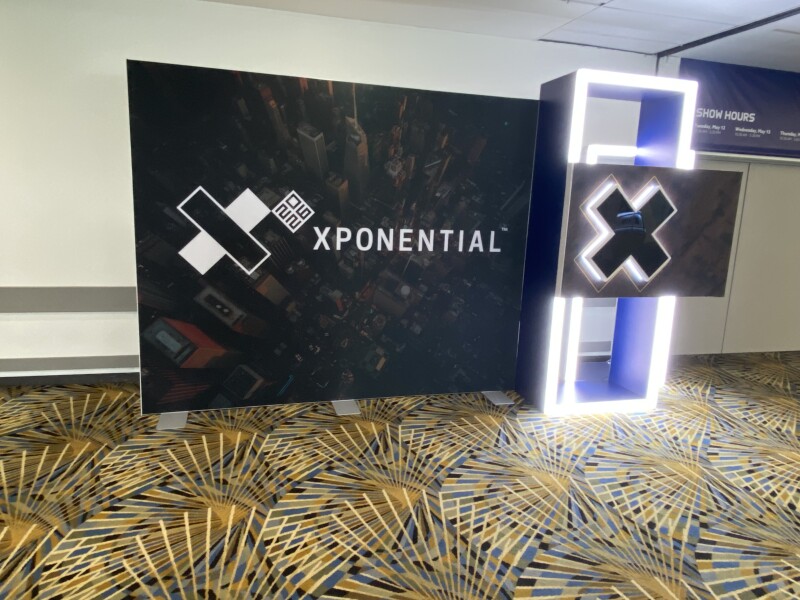
The annual XPONENTIAL conference and exhibition, organized by the Association for Uncrewed Vehicle Systems International (AUVSI), brought together professionals from across the unmanned aerial vehicle (UAV) industry earlier this month.
Held in Detroit, the event highlighted major developments shaping both the commercial and defense drone sectors, while also underscoring the growing importance of domestic manufacturing, workforce development, artificial intelligence, and beyond visual line of sight (BVLOS) operations.
This year’s choice of Detroit as host city carried symbolic significance. Known historically as a manufacturing powerhouse, the city provided a fitting backdrop for conversations centered on rebuilding America’s industrial and technological capabilities. Throughout the week, industry leaders repeatedly emphasized the need to strengthen domestic production for UAV airframes, components, and defense-related technologies.
One of the most discussed issues during the conference was the growing workforce gap facing the UAV and broader STEM industries. Speakers noted that millions of engineering and technical jobs remain unfilled across the United States, while the number of students entering STEM-related fields continues to lag behind demand.
RoboNation President Darrell Davidson addressed the issue directly during a keynote session, warning that current workforce trends are not moving in the industry’s favor.
However, discussions revealed that the challenge extends beyond technical expertise. Panelists stressed that while many young professionals possess strong operational and engineering skills, employers are increasingly struggling to find candidates with communication, leadership, and entrepreneurial abilities.
Andrew Wolfe, co-founder of Drone Brothers, explained that drone pilots are often technically proficient but may lack the professional readiness needed in real-world work environments.
According to several speakers, educational institutions are also finding it difficult to keep pace with rapidly evolving technologies, leaving many training programs outdated almost as soon as they are introduced.
Despite these challenges, efforts to inspire the next generation of UAV professionals were visible across the exhibition floor.
Drone competitions involving middle and high school students attracted significant attention, with students participating in obstacle course races and Capture the Flag style events designed to build technical skills and interest in aviation technology.
Another dominant theme throughout the conference was the increasing overlap between commercial and defense technologies.
Discussions surrounding supply chain security and domestic manufacturing reflected broader concerns about national security and geopolitical competition.
AUVSI President Michael Robbins referenced the historical concept of the Arsenal of Democracy, emphasizing that countries capable of rapidly manufacturing and scaling critical technologies will hold strategic advantages during times of crisis.
The issue was further reinforced by experts who argued that manufacturing strength, defense readiness, and geopolitical influence are now deeply interconnected. Many exhibitors and industry leaders acknowledged that the commercial drone sector is increasingly looking for domestically produced alternatives to foreign-made systems and components.
This growing demand is also encouraging defense-focused companies to explore opportunities within the commercial market. Conversations throughout the event suggested that dual-use technologies, products and systems capable of serving both military and civilian purposes are expected to become far more common in the coming years.
Artificial intelligence remained a major topic across nearly every panel and keynote discussion during the event.
Industry leaders highlighted how AI-powered technologies are already transforming sectors such as public safety, utilities, construction, oil and gas, and infrastructure inspection.
Companies demonstrated how AI can help organizations automate data analysis, improve operational efficiency, and shift maintenance programs from reactive to proactive systems. However, several speakers cautioned that the success of AI adoption depends heavily on the quality of data infrastructure supporting these technologies.
Executives from utility companies including Dominion Energy, American Electric Power (AEP), and the New York Power Authority discussed both the opportunities and challenges associated with implementing AI-driven systems. Some admitted that organizations are still learning how to effectively manage and utilize the massive amounts of data required for advanced automation.
Beyond practical applications, some discussions also explored the broader philosophical implications of artificial intelligence and robotics. Experts encouraged the industry to view AI not simply as a replacement for human intelligence, but as a tool capable of enhancing human creativity and operational capabilities.
Beyond Visual Line of Sight (BVLOS) operations also remained a central topic of discussion, particularly following the release of the Federal Aviation Administration’s proposed Part 108 rule.
While many operators are eager for expanded BVLOS permissions, panelists acknowledged that significant challenges remain before the industry can fully transition into widespread adoption.
Concerns were raised about the lack of a formal phase-in period for the proposed regulations, with some industry leaders warning that many operators may struggle to comply immediately once the final rules are introduced.
Despite the uncertainty, speakers agreed that companies preparing now by investing in operational planning, compliance systems, and advanced technologies will likely gain a major advantage once BVLOS regulations are finalized.
Although challenges surrounding workforce shortages, regulation, and supply chain security continue to shape the UAV industry, the overall mood at XPONENTIAL 2026 remained optimistic.
The event showcased an industry rapidly evolving beyond its early stages and positioning itself as a critical component of future commercial operations, infrastructure management, public safety, and national defense.
From Detroit’s manufacturing legacy to discussions about artificial intelligence and dual-use innovation, the conference made one thing clear: the UAV industry is entering a new era defined by technological integration, domestic capability, and long-term strategic growth.


