


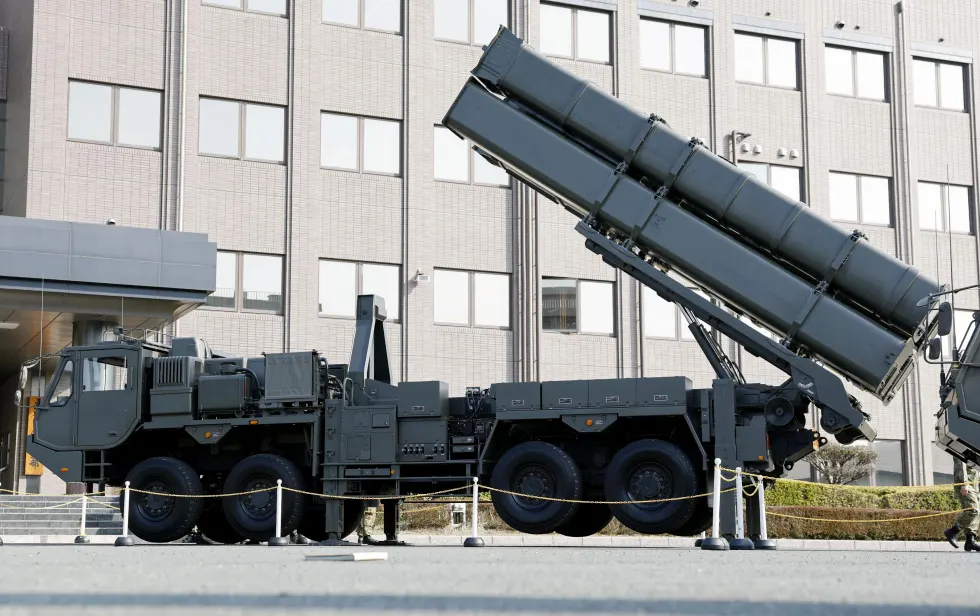
Japan has deployed its first long-range missiles to a military base in the country’s southwest as part of efforts to strengthen national defense amid rising regional security concerns.
The upgraded Type-12 land-to-ship missile systems, developed by Mitsubishi Heavy Industries, have been stationed at Camp Kengun in Kumamoto Prefecture, according to Japanese defense officials.
The deployment marks a major shift in Japan’s military strategy, as the country moves to expand its strike capabilities beyond its traditional self-defense posture.
Japan’s Defense Minister Shinjiro Koizumi said the new missile system will significantly enhance the country’s ability to deter threats and respond quickly to potential attacks.
Speaking to reporters, Koizumi described the current global and regional security environment as the most challenging Japan has faced since the end of World War II.
As Japan faces the most severe and complex security environment in the postwar era, it is extremely important to strengthen our deterrence and response capability, he said.
The upgraded Type 12 missile has an estimated range of 1,000 kilometres (620 miles) a dramatic improvement from the earlier version that had a range of about 200 kilometres.
With the expanded range, the missile system is capable of reaching parts of mainland China, highlighting Tokyo’s growing focus on strengthening its strategic military reach.
The new deployment provides Japan with what defense analysts call a “standoff capability,” allowing the country to strike enemy missile bases from a considerable distance.
For decades, Japan maintained a strictly defensive military posture under its pacifist constitution adopted after World War II.
However, recent geopolitical developments particularly rising military activity in East Asia have prompted Japanese leaders to gradually expand the country’s defense capabilities.
Despite the government’s security arguments, the deployment has sparked protests from residents living near the military base.
Local demonstrators gathered outside Camp Kengun to oppose the presence of the missile system in a residential area, arguing that it could increase regional tensions and make the area a potential target in the event of conflict.
Protesters also raised concerns about safety and the potential risks associated with hosting advanced weapons systems near populated communities.
On the same day, Japan also deployed a hypersonic glide vehicle designed for island defense at Camp Fuji in Shizuoka Prefecture, west of Tokyo.
The hypersonic weapon system is designed to travel at extremely high speeds while maneuvering in flight, making it difficult for enemy defense systems to intercept.
Japanese defense planners say these systems are essential for protecting the country’s southwestern island chain, which lies close to strategic maritime routes in the East China Sea.
Japan’s defense authorities plan to expand the deployment of the upgraded Type-12 missiles and hypersonic glide vehicles to other locations across the country by 2028.
Future installations are expected in Hokkaido in the north and Miyazaki Prefecture in the south.
The government also plans to deploy U.S.-made Tomahawk cruise missiles with a range of about 1,600 kilometres on the Japanese destroyer JS Chokai later this year, with additional warships expected to carry the system in the future.
Japan has increasingly identified China as its primary regional security concern.
In recent years, Tokyo has strengthened military defenses across its southwestern islands amid rising tensions over maritime territory and increased Chinese military activity.
Prime Minister Sanae Takaichi’s government approved a record defense budget exceeding 9 trillion yen (about $58 billion) for the fiscal year beginning in April.
The spending plan aims to improve Japan’s missile strike capabilities, strengthen coastal defenses and expand the use of unmanned defense systems.
Security tensions have also risen following Japanese statements that any Chinese military action against Taiwan could potentially trigger a Japanese military response.
As geopolitical rivalries intensify across the Indo-Pacific region, Japan’s latest missile deployment highlights the country’s growing determination to enhance its military readiness and defend its strategic interests.


