


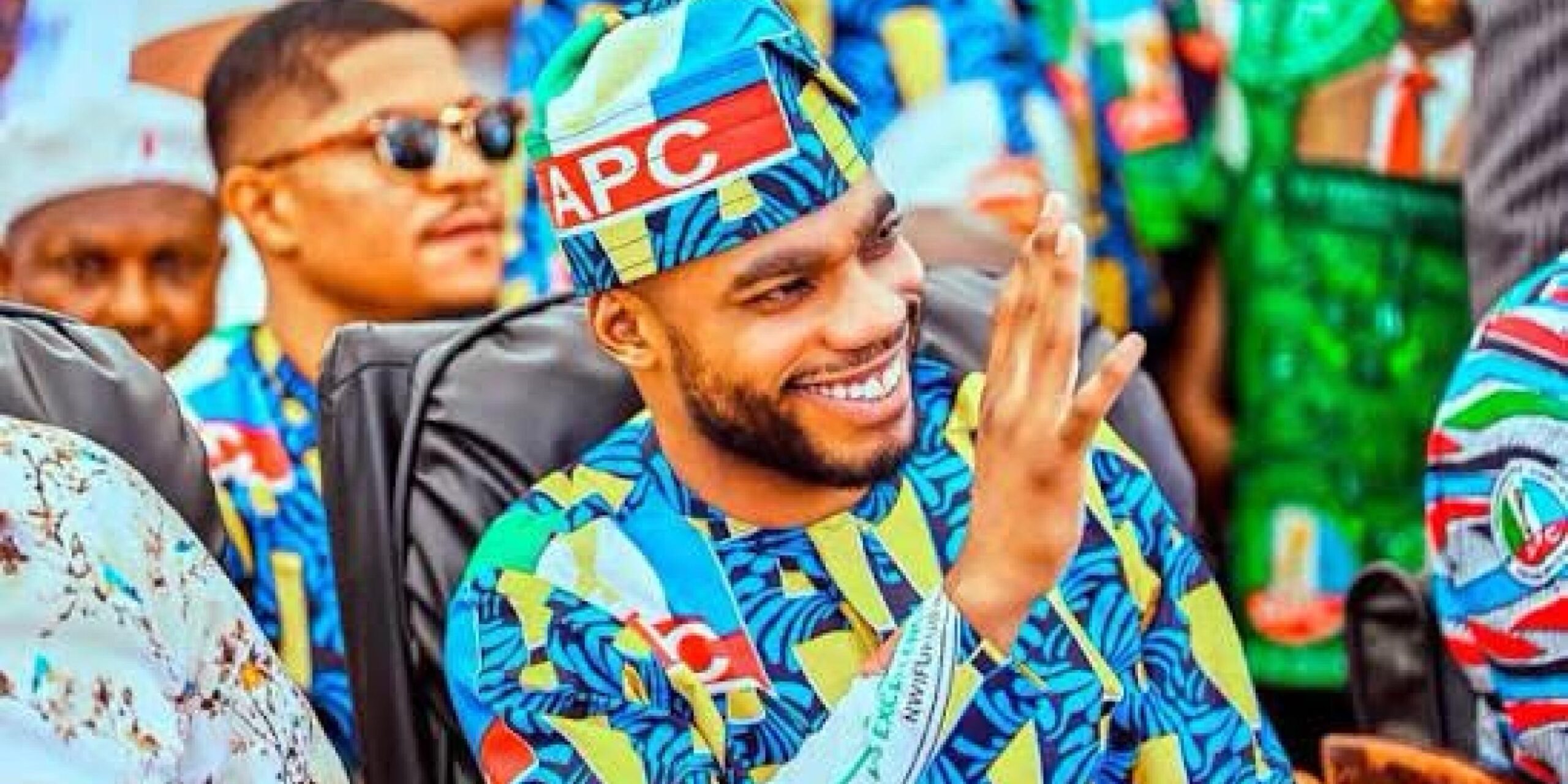
ABAKILIKI: Osborn Nweze Umahi, the 28-year-old son of Nigeria’s Minister of Works, David Umahi, has emerged chairman-elect of Ohaozara Local Government Area of Ebonyi State after winning Saturday’s local government election on the platform of the All Progressives Congress (APC).
The victory has triggered widespread reactions on social media, with Nigerians debating political succession, family influence and the increasing emergence of children of prominent political figures in elective positions.
Osborn Umahi, an engineer and businessman, is among the youngest politicians to win an elective position in Nigeria at 28.
Following his victory, he reportedly pledged to waive his statutory salary and allowances for the duration of his tenure, saying the decision was aimed at placing public service and local development ahead of the financial benefits attached to the office.
He also outlined infrastructure development, youth empowerment, support for businesses and improved local government services as priorities for his administration.
Despite his promises, the election has generated questions over whether his victory was driven primarily by popular support or by the political influence of his father, David Umahi, a prominent APC member and serving federal minister.
Some Nigerians also used the development to raise broader concerns about political dynasties and the concentration of political influence within families.
One social media user, Eman, contrasted Osborn Umahi’s emergence with President Bola Tinubu’s political relationship with his son, Seyi Tinubu.
The funniest thing is that these wicked heartless politicians got men that have been loyal to them for years, but they will choose their Olodo children over these loyal men,” the user wrote.
Another commentator, Yagazielum, criticised what they described as the continued dominance of political families in Ebonyi State.
“Ebonyi people will serve papa and serve pikin at the same time,” the user wrote.
Other reactions focused on the possibility that Osborn Umahi’s political career could extend beyond the local government level.
Ikwo First Son suggested that the younger Umahi could eventually become a candidate for higher office, including the governorship, arguing that his current position could provide a platform for future political advancement.
Chief Ndi Orlu also questioned the concentration of political power within a particular family, linking the debate to the state’s development challenges.
Tell me how a particular family is best in ruling others whereas Ebonyi State is the poorest State in Igbo land, the commentator wrote.
Meanwhile, Radical Duke called on Ebonyi residents to become more involved in determining who controls the state’s political system.
“The power will keep revolving around these corrupt elites if the citizens in Ebonyi don’t summon courage and dominate their political system,” the user said.
Another commentator, HUDOARK Snr, raised concerns about young people who participate in political violence and political thuggery, arguing that some children of political elites receive opportunities and education before returning to occupy influential political positions.
The controversy surrounding Osborn Umahi’s election reflects a wider national debate over political dynasties in Nigeria. In recent years, children and relatives of serving and former political office holders have increasingly entered elective and appointive positions.
Supporters of political participation by political families argue that relatives of public officials should not be denied the opportunity to contest elections simply because of their backgrounds. Critics, however, contend that political connections can provide significant advantages that are unavailable to ordinary aspirants.
For Osborn Umahi, the immediate challenge will be to translate his campaign promises into tangible development in Ohaozara Local Government Area.
His pledge to forgo his official salary and allowances is likely to attract further attention, but his performance in office will ultimately determine whether his emergence is viewed primarily through the lens of family influence or as the beginning of an independent political career.
The development has therefore placed the young APC politician at the centre of a broader conversation about youth participation, political succession, family influence and democratic competition in Ebonyi State and Nigeria.