


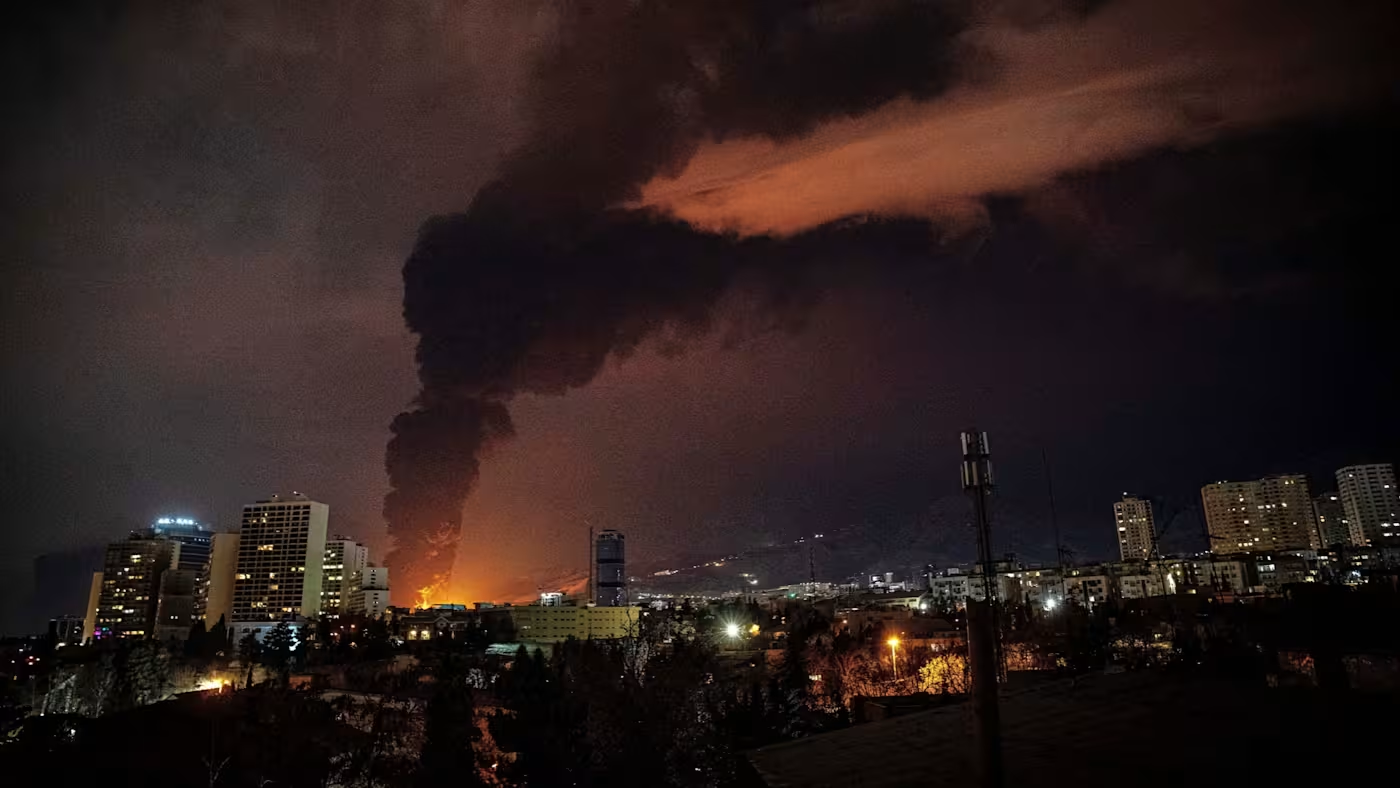
Leaders of the world’s major industrialised economies are preparing to release emergency oil reserves in what could become one of the largest coordinated interventions in the global energy market in recent history.
The move comes as the Group of Seven nations, the G7 – Group of Seven scramble to contain a surge in global oil prices triggered by the ongoing conflict involving the United States, Israel and Iran.
Following an emergency meeting, finance ministers from the G7 said they stand ready to release strategic reserves of crude oil, petrol and diesel if necessary to stabilize global energy markets and shield the world economy from further shocks.
The planned intervention is expected to be coordinated with the International Energy Agency (IEA), which manages emergency oil-sharing mechanisms among major energy-consuming nations.
Global oil markets have experienced sharp volatility in recent days, with prices soaring above $100 per barrel following renewed strikes on oil facilities in Tehran.
Energy analysts say the geopolitical tensions have raised fears of major disruptions to global oil supply, particularly from producers in the Persian Gulf region.
At the start of the week, benchmark crude prices briefly surged close to $120 per barrel before easing later in the trading session.
The price jump rattled financial markets, triggering declines in both stocks and bonds as investors braced for another wave of inflation linked to higher energy costs.
Officials involved in the discussions say a coordinated release of between 300 million and 400 million barrels of oil is being considered.
Such a move would rival the historic 300 million barrel release in 2022, when global reserves were tapped following the Russian invasion of Ukraine.
The strategic stockpiles are maintained by members of the International Energy Agency, which requires participating countries to hold emergency reserves that can be used in case of supply disruptions.
Currently, 32 member countries collectively hold about 1.2 billion barrels of oil in government-controlled strategic reserves, while an additional 600 million barrels are stored by companies under government obligations.
Despite the scale of these reserves, they have been deployed only five times since the agency was created in response to the Arab oil crises of the 1970s.
The current crisis has intensified concerns about supply disruptions in the Middle East, particularly around the strategic maritime route known as the Strait of Hormuz.
The narrow waterway serves as one of the world’s most important oil shipping routes, carrying a significant share of global crude exports from Gulf producers.
Iran has reportedly threatened shipping traffic in the region, raising fears among traders that large volumes of crude could become stranded or delayed.
At the same time, several major oil producers have scaled back output in recent days, including:
-
Saudi Arabia
-
Iraq
-
United Arab Emirates
-
Kuwait
Together, Gulf producers typically supply more than 20 million barrels of oil per day, representing about one-fifth of global demand, which currently stands at roughly 105 million barrels per day.
Energy consultancy S&P Global warned that the disruption could potentially become the largest oil supply shock in history if the conflict escalates further.
According to Fatih Birol, executive director of the International Energy Agency, global oil markets are already showing signs of stress.
He said the situation has “deteriorated in recent days, adding that the agency and its partners are evaluating all available options, including the deployment of emergency reserve
The oil price surge is also creating political pressure in the United States, where rising fuel costs could become a major economic issue ahead of upcoming elections.
US President Donald Trump has faced increasing calls to address the sharp rise in energy prices as American consumers feel the impact at the pump.
The average petrol price in the United States climbed to $3.478 per gallon, marking a 16 percent increase in just one week.
While the administration initially downplayed the need to release strategic reserves, officials are now said to support a coordinated international response.
Energy ministers from the G7 are expected to meet shortly to decide whether to approve the coordinated release.
Officials familiar with the discussions say the plan could be approved within days, although the final decision may be delayed until a broader meeting of G7 leaders.
Participants in the talks include representatives from:
-
United States
-
Japan
-
Germany
-
United Kingdom
-
France
-
Canada
-
Italy
One official involved in the meeting said there was broad support among participating nations, with no major opposition to the plan.
European officials have warned that the crisis could trigger wider economic shocks if the conflict continues.
Valdis Dombrovskis, the European Union’s economy commissioner, said the situation could create “substantial stagflationary shocks for both European and global economies if it drags on for more than a few weeks.
He stressed that the priority must be to de-escalate the conflict as quickly as possible.
The sooner this conflict ends, the more contained its impact on the global economy will be,” he said.